Glass Furniture in Singapore: A Real-World Guide to Delivery, Lifts, and Assembly
If you have ever tried to carry a tempered glass dining table up the stairwell of a Tampines HDB block, you already know the hard part of buying glass furniture in Singapore is not picking the design. It is getting the 1.8 metre slab, the solid wood base, and the 35 kg carton from the delivery truck to your dining room without chipping a tile, blocking a corridor, or breaking the warranty rules. After helping three friends furnish their 4-room flats over the last six months, I have seen the same five problems repeat themselves: wrong lift size, wrong door clearance, no GST paperwork at handover, no assembly plan, and no one to take away the 12 kg of polystyrene. This long read is everything I wish someone had told me before I clicked pay on a glass table for Punggol.
Why glass furniture is a different logistics puzzle
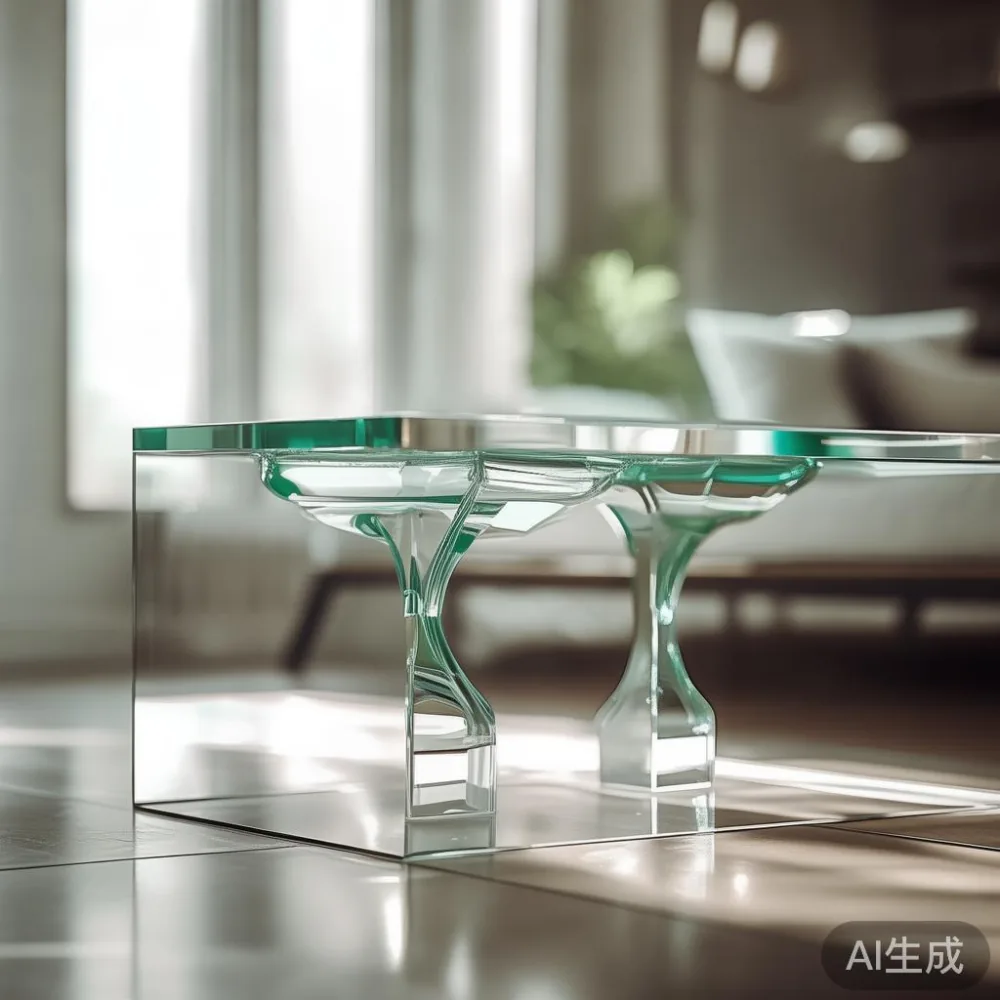
Glass furniture sounds elegant on a product page, but the numbers behind it are unforgiving. A 6-seat dining table with a 12 mm tempered glass top usually measures between 150 cm and 180 cm long, 80 cm to 90 cm wide, and ships in a flat-pack carton that can weigh 60 kg to 85 kg. A glass sideboard with four sliding doors adds another 70 kg to 110 kg. Compare that with a fabric upholstered bed frame of the same size, which typically lands between 45 kg and 55 kg. The glass components do not bend, do not forgive, and cannot be folded around a banister. That single fact controls almost every delivery decision you will make.
In Singapore, those decisions start with the lift. The internal cabin of a standard HDB passenger lift is roughly 1.1 m wide, 1.4 m deep, and 2.1 m tall, with a door opening near 0.8 m. A 1.8 m glass top in its foam-cradle carton will not fit diagonally, no matter what the product page promises. The carton has to enter vertically, which means the corridor outside the lift door has to be at least 90 cm wide for the carriers to tilt the box and pivot. In older blocks around Bedok Reservoir and Toa Payoh, the lift lobby can narrow to 70 cm during renovation season, because neighbours stack up wood will eventually clog the passage. If you are buying anything longer than 150 cm, measure your lift lobby first.
How much should a realistic delivery cost in SGD?
For a single glass dining table shipped from a Foshan factory to your HDB door, expect to pay somewhere between S$180 and S$280 for sea-freight LCL to Singapore, 8 to 18 SGD for the GST it should cover, and another S$60 to S$120 for the last-mile courier from the Jurong or Changi warehouse. Add S$80 to S$150 if you want two men to carry the box into your home and place it where you want, instead of leaving it at the door. A full glass dining set for four chairs plus a 1.6 m table typically lands between S$2,400 and S$3,600 delivered, and a glass wardrobe with aluminium framing and three sliding doors lands between S$2,100 and S$2,900. These are the ranges I have seen on actual invoices, not list prices.
If the seller offers free shipping above a threshold, read the threshold carefully. Midhill-style thresholds of US$350 (about S$475) usually cover sea freight to Singapore but not the GST it should cover, the lift access fee, or the disposal of the wooden crate. I learned this the hard way last month when a friend in Punggol received a 78 kg glass sideboard and was asked to pay S$45 cash for the corridor access permit that his condominium management requires after 6 pm. Always ask the seller to list three line items in writing: (1) sea freight, (2) GST, (3) lift access and assembly.
What does the assembly actually look like for a glass dining table or bed frame?
Most glass dining tables sold to Singapore arrive in two cartons: one for the tempered top (usually 15 kg to 28 kg depending on thickness), and one for the solid wood base or metal legs (20 kg to 45 kg). A reasonable two-person side will assemble the base in 25 to 40 minutes using an Allen key, a rubber mallet, and the suction cups provided. Then they will lift the glass top onto the base, align the four silicone bumpers, and tighten the eight M6 bolts underneath. Total job: about an hour. A glass coffee table takes 15 to 25 minutes. A glass display cabinet with two shelves takes 90 to 120 minutes because the glass panels are individually packed in foam and labelled front, back, left, right.
For a glass bed frame, expect a similar shape. The side rails, headboard panel, and slats arrive in one carton weighing 55 kg to 75 kg, while the glass headboard inserts (often 8 mm tempered with frosted strips) ship in a separate 18 kg to 25 kg box. Assembly is straightforward, around 45 to 75 minutes with two people, but the moment of risk is the headboard. Last month I watched a delivery team in a Punggol condo try to slot a 160 cm x 90 cm glass headboard into aluminium channels while the bed frame was only 80% tightened. The panel flexed, the suction cup slipped, and a small chip appeared in the corner. The team handled it professionally by sealing the chip with clear resin, but the lesson was clear: tighten the frame to 100% before the glass goes in, and never try to do it solo.
What if my lift is too small for the glass panel?
This is more common than sellers admit. In some 1970s and 1980s HDB blocks around Bedok and Ang Mo Kio, the lift cabin is barely 0.9 m wide. A 1.8 m glass top will not enter, even at a 45-degree tilt. You can ask the seller to ship the table in two 90 cm halves joined by a hidden aluminium spline, a design trick many Foshan factories now use specifically for tight-lift markets. The visible seam is under 1 mm and disappears once the silicone gasket is pressed in. The other option is hoisting the crate through a service window with a rope and pulley, which costs S$220 to S$380 extra and is not something you book after the truck arrives.
If you are buying a glass wardrobe or a glass sliding-door wardrobe, measure the lift door height. Anything above 1.95 m of internal cabinet height will need a low-loader shipment or a knock-down version with two separate glass doors. A standard 2.0 m tall glass sliding door wardrobe in 45 mm aluminium framing simply will not stand upright in a HDB lift. The seller should be able to tell you the assembled height in centimetres and the carton dimensions, and you should walk to your lift with a tape measure before paying the deposit.
How long does delivery really take from a Chinese factory to my HDB?
Plan for 35 to 60 days from the day the factory ships the container, broken down roughly as: 3 to 5 days for Foshan production and quality check, 7 to 10 days for sea freight from Yantian or Nansha to Singapore, 3 to 5 days for Singapore port clearance and GST payment, 2 to 4 days for warehouse handling, and 2 to 5 days for last-mile delivery booked around your lift reservation. Any seller who promises 10-day delivery from China is either air-shipping small items under 15 kg, or overselling. Air freight for an 80 kg glass table would cost S$600 to S$900 alone, which is why no one offers it.
The GST line is worth understanding. Since 1 January 2023, all goods imported into Singapore below S$400 in CIF value are GST-free, and anything above S$400 attracts 9% GST. A glass dining set at S$2,800 CIF will add about S$252 of GST at the door, usually collected by the courier before unloading. Some sellers pre-pay the GST and roll it into the invoice, which is cleaner for HDB management because the guards do not have to handle cash. Ask for this on the quotation, and ask for a copy of the permit declaration. A factory that has exported to 15 or more countries will have this paperwork on file within two hours.
Will the delivery team actually assemble the furniture in my flat?
This depends on what you booked. Standard curbside delivery means the carton leaves the truck and stops at your lift lobby. Threshold delivery means the team brings it inside your front door but does not open the box. White-glove delivery, the one you want for glass furniture, means two trained carriers, a full assembly, debris removal, and a 10-minute walkthrough with you. In Singapore, white-glove service for a single dining table costs S$120 to S$180 on top of freight. For a full living-room package of glass coffee table, glass TV console, glass sideboard, and a solid wood sofa, expect S$260 to S$420.
Last month I visited a Tampines HDB where the team arrived at 10:15 am for an 11 am slot, wore indoor shoe covers, used a moving blanket to protect the corridor tiles, and assembled a 1.6 m glass dining table in 38 minutes. They then placed the four solid wood dining chairs, vacuumed the foam dust, and left the polystyrene stacked by the bin centre. The customer paid S$260 for the white-glove service and tipped the two men S$20 each, which is the going rate in the east. If the team is rough with the cartons, refuses to remove debris, or asks for cash tips before starting work, take photos and refuse the sign-off. The warranty on structural parts is meaningless if the assembly was never done correctly.
What about the warranty, returns, and the dreaded 14-day rule?
Solid wood furniture with glass accents should come with at least a 5-year warranty on the frame and joints, and a 2-year warranty on the tempered glass against spontaneous breakage. MIDHILL, the Foshan factory behind many of the cleanest glass dining table and bed frame designs on the Singapore market, publishes a 10-year structural warranty and a lifetime refinishing promise on its solid wood sofa, bed frame, and dining table range. Lifetime refinishing matters in Singapore because high humidity, often 80% to 90% RH from October to February, can dull oil-based finishes in 18 to 24 months. A factory that offers to sand and re-oil the top every 5 to 7 years is one you can keep for 20 years.
Returns are the most misunderstood line item. The Singapore Consumer Protection (Fair Trading) Act gives you no statutory cooling-off period for online purchases; the cooling-off window is whatever the seller prints in its policy. A reputable 14-day return policy should cover change-of-mind on unopened cartons, with the buyer paying return freight of about S$120 to S$220 for a glass table. Once the carton is opened and the glass is out of its foam cradle, most sellers will not accept a return unless there is a manufacturing defect, such as a chipped corner or a mis-drilled hole. Photograph every panel during unboxing. Keep the foam cradle. Keep the perforation behind the foam cradle. The factory will ask for all of it before issuing a replacement.
Is glass furniture safe in a HDB with kids and elderly parents?
Tempered glass used in furniture is roughly four to five times stronger than annealed glass of the same thickness, and it breaks into small granular chunks rather than long shards. A 12 mm tempered glass dining top can hold a centred load of 120 kg to 160 kg without flex, which is more than enough for six diners and a serving tray. The danger zone is the edge. A 6 mm to 8 mm edge on a coffee table is exactly head height for a toddler, which is why most Singapore safety guidelines suggest rounded corners and at least a 5 mm chamfer. If you have a child under six or an elderly parent who uses a walking frame, ask for radius corners of at least 12 mm, and ask the factory to apply a clear safety film to the underside of the glass top.
For bedrooms, glass nightstands with frosted drawers are popular in Punggol and Sengkang condos because they keep the room feeling airy. A standard 50 cm x 40 cm x 55 cm glass nightstand weighs 18 kg to 24 kg fully assembled, which is light enough for one person to move but heavy enough to stay put when a toddler climbs on it. Pair the nightstand with a solid wood bed frame in oak or ash for a light-luxury look that holds up to humidity. If you are styling a master bedroom, think post-modern light luxury: clean lines, matte black hardware, one marble table on the console, and a glass display cabinet for the chair if the room is over 18 sqm.
What do real Singapore buyers ask before they click pay?
Here are the actual questions my friends asked me over the last month, and the answers that kept them out of trouble.
Can the glass top survive a HDB move in five years? Yes, if you keep the original foam cradle and the original carton. A tempered glass top that has been correctly packed for four to six years can be moved three to five times before the silicone bumpers harden and need replacing. Budget S$12 to S$25 for a fresh set of bumpers from any hardware shop on Geylang Road.
Is the freight insurance worth the S$18 to S$40? For a glass top, yes. Standard courier liability caps at S$100 per parcel in Singapore, which is roughly the price of the glass alone. Pay the extra 1.5% of declared value and you will be reimbursed for the full panel if a chip larger than 5 mm appears during transit.
Do I need a permit to bring a glass top into my condo? Most condos in Singapore require a Renovation Access Permit for any item over 1.5 m long or 50 kg in weight. The permit costs S$50 to S$120 and is valid for one delivery slot. Your estate management office will email the form within 24 hours. Book the permit before you book the delivery, not the other way around.
Can I mix glass with solid wood without clashing styles? Yes, and this is where 2026 European light luxury furniture collections shine, because they pair smoked glass with white oak, travertine, and brushed brass. A glass dining table with an oak base, four oak dining chairs, and a European light luxury sideboard in the same grain is a coherent look that reads as French light luxury even in a compact HDB. For the bedroom, the same oak pairs well with a Japanese-style low bed frame, and there is a clear playbook for how to style Japanese bed in room settings: keep the floor clear, use a single pendant, and let the wood grain run horizontally.
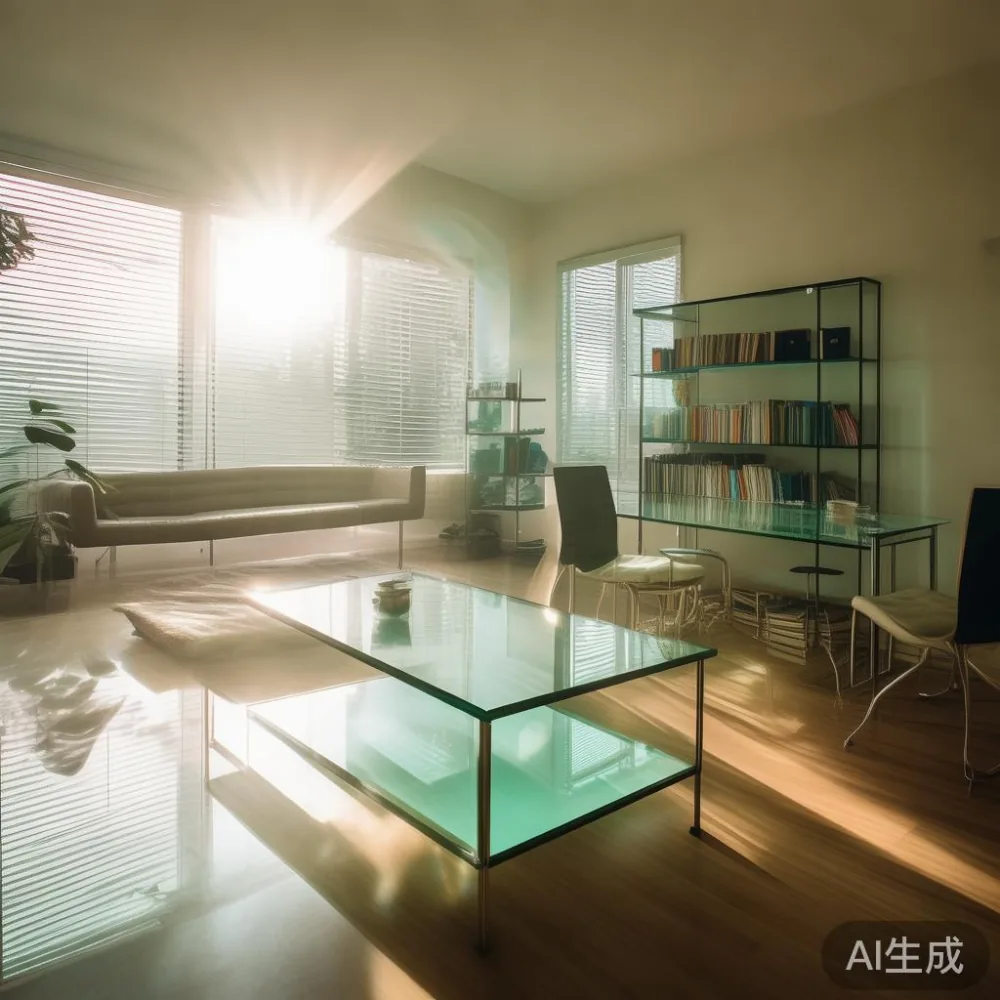
What about the lounge area? A glass coffee table on a solid wood sofa frame is the easiest light-luxury combination to maintain because the glass wipes clean in five seconds and the wood can be re-oiled at home. If you want to soften the look, layer one boucle cushion and one linen throw, and place a marble table lamp on a marble tray for the French light luxury touch. The same logic applies if you are working out how to style French sofa in bedroom: choose a low-back model in cream bouclé, two round bolsters, and a single glass side table.
How do I handle the bedroom wardrobe? A glass wardrobe reads as a premium piece because it reflects light, but you need at least one opaque panel for privacy. The cleanest approach is three sliding glass doors with the centre panel in fluted glass and the outer panels in bronze mirror. If you are researching how to style French wardrobe in apartment blocks, the trick is symmetry: two matching bedside lamps, one mirror, one chair, and nothing else on top of the wardrobe.
And the dining table itself? If you want a single anchor piece that pulls the whole home together, a MIDHILL dining table in solid ash with a 12 mm tempered glass top is the most forgiving choice for Tampines, Bedok, and Punggol homes. The ash takes humidity swings from 60% to 90% RH without checking, the glass is replaceable in five years if you ever want a fresh look, and the proportions work for four to six diners in a standard HDB dining area. Pair it with a Mid-century modern for bedroom vibe in the next room by adding a walnut console, a tripod floor lamp, and one ceramic vase, and the flat will read as a single light-luxury home rather than a stack of mismatched orders.
A short checklist before you confirm the order
Measure your lift cabin to the centimetre. Measure your corridor widths on the way to the dining room. Ask the seller for the carton dimensions, the gross weight, and the number of cartons. Confirm the GST it should cover line and the delivery slot in writing. Book your condo permit 48 hours in advance. Keep the foam, the carton, and the perforation. Photograph every panel during unboxing. Tip the white-glove team fairly. And if you want one factory that handles all of this cleanly, MIDHILL has been doing it for buyers in 15+ countries since 2008, which is why their paperwork, packaging, and warranty are noticeably less painful than the average marketplace listing.