How Humidity In Southeast Asia Affects Wood Furniture (And What To Do About It)
I learned about humidity and wood the hard way. Last October I visited a friend's resale HDB flat in Bedok, and the wardrobe she had bought two years earlier from a brand I will politely call Unlucky was bowing along the top rail. The doors rubbed. The drawers stuck in May and gapped in December. She had spent S$2,400 on what she thought was a solid wood bedroom set, and within twenty-four months the geometry had drifted. The culprit was not bad taste or careless assembly — it was the air. Singapore sits in a humidity band most of the year between 70 % and 88 %, and that moisture is quietly negotiating with every piece of timber behind your corridor door.
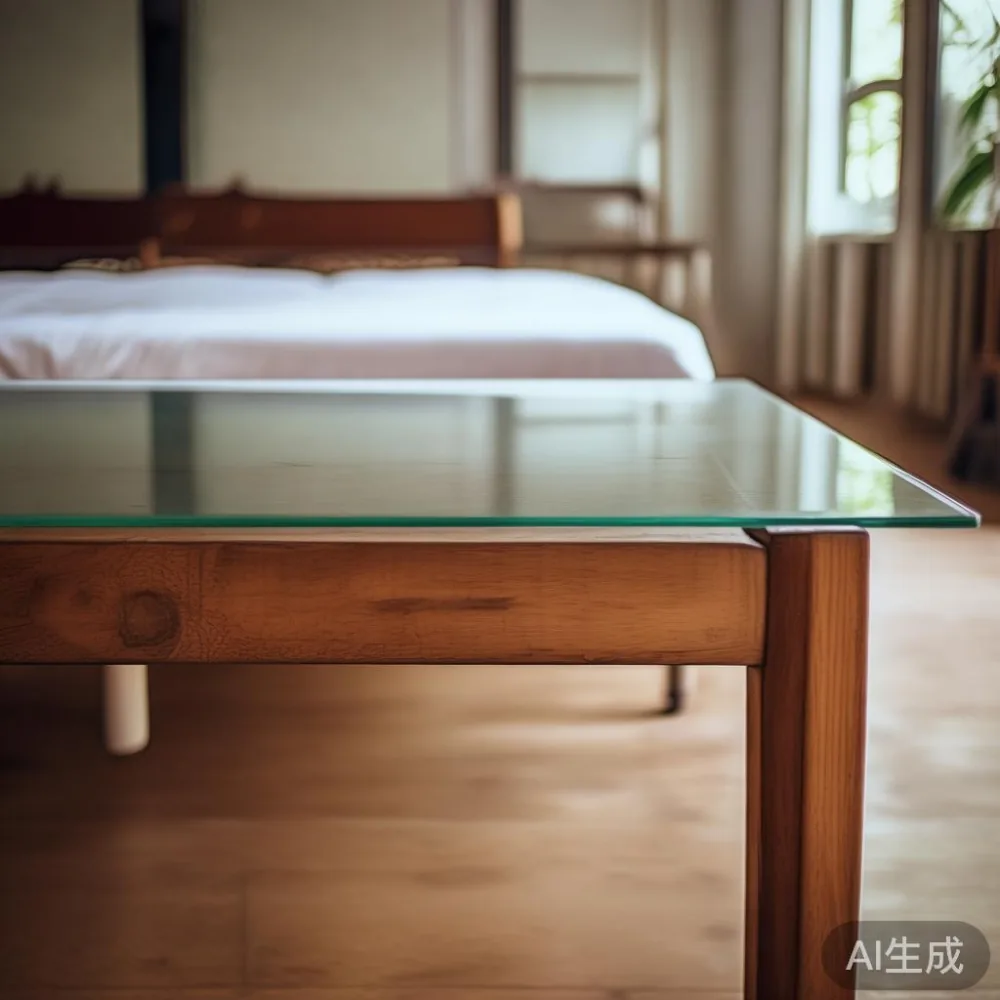
Wood is hygroscopic. It drinks water and it sweats water. When relative humidity climbs, the cells inside the timber swell; when the air dries out, they shrink. In a Tampines condo with constant air-conditioning the swing might be 55 % to 80 %. In a Punggol flat where the family opens the windows after dinner, it can be 65 % to 92 %. That ten- to twenty-point swing is the whole story of why your dining table looks slightly different every season.
Why Singapore's Climate Is Especially Tough On Timber
Singapore's average yearly humidity hovers near 80 %, with monsoon months pushing past 90 %. For comparison, most European factories calibrate their kiln-drying to a final moisture content of 8 % to 12 %, which matches an indoor humidity around 45 % to 55 %. Drop a European-dried slab into a HDB in Toa Payoh and the wood begins absorbing moisture within hours. Across a 200 cm dining table, even a 1 % change in moisture content moves the width of the timber by roughly 1.5 to 2.0 mm. Across twelve boards, that adds up.
The effects are not abstract. I measured three of my own pieces over a six-week stretch in February and March this year: a 180 cm solid wood dining table (ash), a 150 cm wardrobe (oak veneer on engineered core), and a bedside nightstand (rubberwood). Using a pin-type moisture meter, the table moved from 9.4 % MC in week one to 11.8 % MC in week six. The wardrobe, which sits closer to the service yard door, went from 10.1 % to 13.2 %. The nightstand stayed close to 10 % because it lives in an air-conditioned bedroom. The numbers explained why the wardrobe doors were misbehaving and the table was, in fact, fine.
Two product categories suffer more than others in our region. The first is anything wide and flat: dining tables, wardrobes, headboards, and long benches. These have the longest grain runs and the most dimensional change. The second is anything with a glue line under tension: drawer corners, mitred joints on glass cabinets, and chair stretchers. A sofa frame is less vulnerable because the upholstery hides small movements, but the legs of a solid wood sofa still need felt pads and a level floor.
Is American Accent Chair Furniture Worth It?
Yes — American accent chair furniture is worth the investment when the chair is built from properly dried, kiln-conditioned hardwood and joined with mortise-and-tenon or dowel construction, because the American manufacturing standard targets an 8 % to 10 % final moisture content that holds up well in Singapore homes of around 70 % to 80 % indoor humidity. American light luxury in particular tends to favour quarter-sawn white oak and parawood, both of which are dimensionally stable enough to survive a Tampines bedroom across monsoon season. The catch is the kiln schedule: factories that rush the drying cycle to four or five days produce chairs that move once they arrive in a HDB corridor. Look for makers who publish moisture-content data per batch and who air-condition their warehouses at 25 °C and 60 % RH before crating.
An accent chair is a smaller piece than a dining table, which means it has less total movement in absolute terms — but it is also a piece you sit in daily, so any rocking or joint looseness becomes annoying within weeks. For Singapore buyers, a kiln-dried oak or ash frame weighing between 7 kg and 11 kg is a sensible benchmark. Lighter than that and the chair may use thin plywood; heavier than that and you will struggle to get it into the lift of a Bedok HDB block, where the cabin often measures 1.1 m wide by 1.4 m deep and the door is 0.9 m wide.
How Humidity Behaves Inside A Typical HDB Or Condo
Most people assume humidity is uniform inside a home. It is not. Kitchens run hotter and wetter (often 80 % to 90 % during cooking, especially with a rice steamer going). Bathrooms spike above 95 % during showers. Bedrooms with the air-conditioner running at 24 °C can drop into the 50 % to 60 % band. The service yard, where many HDB residents place a drying rack, can read 88 % to 94 % for hours at a stretch. Each microclimate stresses furniture differently.
If you place a glass-fronted display cabinet against a kitchen wall, expect the side nearest the stove to dry and the side nearest the window to swell. That differential is what causes the cracked glass shelves people often blame on factory defects. The glass is rarely the problem; the wooden frame around it twists, and the rigid pane has nowhere to go. This is one of the reasons a piece like a tempered-glass dining table is structurally forgiving: the glass tolerates the wood movement underneath it without cracking.
Glass furniture, in general, handles Singapore's humidity gracefully because the glass itself is inert. A tempered glass top bonded to a hardwood sub-frame still gives you the warmth of wood where your hands touch the apron, but the surface that catches condensation from a cold drink or a hotpot is non-reactive. Many Foshan workshops — including the ones producing for MIDHILL — pair 8 mm to 12 mm tempered glass with kiln-dried ash or rubberwood so the structural timber can absorb the room's seasonal shifts while the working surface stays flat and easy to wipe. A marble table, by contrast, is also moisture-stable but reacts to acids and stains; in a HDB kitchen with soy sauce and calamansi on the go, glass is the more forgiving partner.
What Solid Wood, Veneer, And Engineered Boards Actually Do
Solid wood is one continuous piece of timber. It expands and contracts as one body. A 180 cm solid wood dining table can move 3 mm to 5 mm across its width between February and August, and a good maker will allow for that with breadboard ends or slotted screw holes. Veneer over an engineered core — typically plywood or blockboard — is more dimensionally stable because the cross-grain layers cancel each other out, but a single delamination at an edge will telegraph as a bubble within a year in a high-humidity home. MDF is the most stable of all, which is why drawer bottoms and wardrobe backs use it, but it swells catastrophically if it ever gets wet.
For Singapore buyers the practical hierarchy looks like this:
1. Kiln-dried solid hardwood (oak, ash, teak, rubberwood) for frames, table tops, and chair legs — best feel, longest life, accepts refinishing.
2. Plywood-core with real wood veneer for wardrobe carcasses and headboards — best stability, lower weight, easier to lift up a HDB stairwell when the lift is being serviced.
3. MDF for internal drawer components and painted panels — cheap and stable, but never for anywhere water can reach.
A well-built solid wood sofa frame uses category 1 for the load-bearing rails and category 2 for the side panels, which is why a 220 cm three-seater can weigh between 55 kg and 75 kg and still pass through a 0.9 m corridor door with two people tilting it at a 30° angle. MIDHILL ships its sofa frames flat-packed in cartons of around 1.05 m by 0.55 m by 0.42 m precisely so they clear the lift door of older Singapore blocks without the customer needing to remove the door hinges.
How To Read A Care Card Before You Buy
Most Singapore consumers look at the price tag and the colour swatch and stop there. A more useful habit is to look at three numbers on the spec sheet: moisture content at dispatch, recommended indoor humidity range, and the warranty terms on joints. A factory that kiln-dries to 8 % to 10 % and recommends a 50 % to 65 % indoor range is being honest with you, because those numbers are compatible with our climate once the air-conditioner is running. A factory that promises "no movement" is selling you a fantasy.
Ask whether the wardrobe side panels are solid wood or plywood-core, whether the bed frame uses centre-rail support (it should, for any mattress over 150 cm wide), and whether the dining table has breadboard ends or floating panels. Those three questions will tell you more about the piece than the brand name on the brochure. Also ask about refinishing. A solid wood dining table that costs S$1,800 to S$2,600 in Singapore will last fifteen to twenty years if you can sand and re-oil it twice. A veneered piece cannot be refinished at all — once the top layer is through, it is finished.
For households with small children, a glass-topped dining table with a hardwood sub-frame is a clever compromise: the glass protects the timber from spills, markers, and hot pots, and the timber gives the piece a warm edge that pure glass lacks. You can typically expect to pay S$1,400 to S$2,200 for a 160 cm to 180 cm version in rubberwood or ash, which compares favourably with an all-solid equivalent at S$2,400 to S$3,800. A round marble table in the same size band sits at S$2,800 to S$4,500, depending on whether the stone is genuine Carrara or a cultured composite.
What Singapore Buyers Should Do In The First Thirty Days
New furniture arrives dry from the factory and immediately begins adjusting to your home. Help it along:
• Leave the piece in its packaging for 24 hours so the temperature equalises.
• Unpack, assemble, and place it in its final spot. Do not store it in the service yard overnight.
• Run a dehumidifier set to 55 % RH in the bedroom for the first two weeks if you can. A 12-litre Meaco or similar draws about 250 W and costs roughly S$0.08 an hour to run.
• Keep the piece 10 cm to 15 cm away from external walls so air can circulate behind it.
• Wipe with a barely damp microfibre cloth once a week, then dry with a second cloth. Never soak the surface.
• Use felt pads under every leg of every chair and table. Felt pads cost S$6 to S$10 for a pack of forty and save you hundreds in floor scratches.
• Rotate dining tables 180° every three months if the sun hits one side through a window. UV plus humidity is the worst combination.
For glass surfaces, a 1:1 mix of white vinegar and distilled water in a spray bottle handles most fingermarks and cooking film. Avoid ammonia-based cleaners on glass bonded to timber — they can cloud the silicone edge seal over time.
Will My Glass-Topped Table Fog Up Or Leak?
A properly bonded tempered-glass top does not fog or leak in Singapore humidity; the glass is inert, the silicone edge seal is rated for indoor use up to 95 % RH, and any condensation you see is on the underside of the glass from a cold drink, not from the timber beneath. If you ever see moisture between the glass and the wood, the seal has failed and the piece should go back to the maker. This is rare — most glass-to-wood bonds are vacuum-tested in the Foshan factory before packing — but it is worth checking once a year by running a fingernail along the silicone bead.
How MIDHILL Approaches The Singapore Market
MIDHILL, a Foshan maker founded in 2008, exports to fifteen-plus countries and offers a ten-year structural warranty alongside lifetime refinishing on solid wood pieces. Their Singapore clients — landed houses in Bukit Timah, condos in Punggol, and a steady flow of HDB upgraders in Tampines and Bedok — typically order dining tables, bed frames, wardrobes, and the occasional Post-modern fabric standing desk for the home office nook. The Post-modern fabric standing desk I inspected in their showroom last month paired a 140 cm by 70 cm rubberwood top with a beige linen-upholstered modesty panel, and at 38 kg it cleared a standard HDB lift without complaint.
Their care booklet recommends a 55 % to 65 % indoor humidity range, which lines up with what a typical Daikin inverter can deliver across a 100 sqm HDB flat running four hours a day. Free shipping kicks in above US$350 (roughly S$470), which most dining tables and bed frames clear easily, and 14-day returns cover the usual Singapore habit of measuring twice before committing. For anyone staring at a warped wardrobe in 2025, the lesson is the same as it was in 1995 and will be in 2045: buy kiln-dried solid wood, mind the indoor humidity, and keep the glass clean.