How Southeast Asian Humidity Affects Wood Furniture — and What Singapore Homeowners Should Know
I still remember the week a Tampines HDB owner called our service line about a bed frame she had owned for barely 14 months. The side rail had developed a 3 mm gap, the drawer faces on her wardrobe no longer sat flush, and a faint white bloom had crept across the surface. Her home was tidy, her air-conditioner ran most evenings, and she had no plumbing leak. The cause, as it almost always is along the East Coast, was something far less dramatic: relative humidity that swings between 78% in the pre-dawn hours and 64% by late afternoon, every single day, for years. If you live in Singapore — Bedok, Punggol, Yishun, Toa Payoh, or a private condo in the River Valley stretch — the air you breathe is quietly working on every solid wood piece you own. This guide is for anyone weighing a solid wood sofa, bed frame, dining table, wardrobe, or nightstand against a glass-furniture accent, and who wants to understand, in concrete numbers, what humidity does to each.
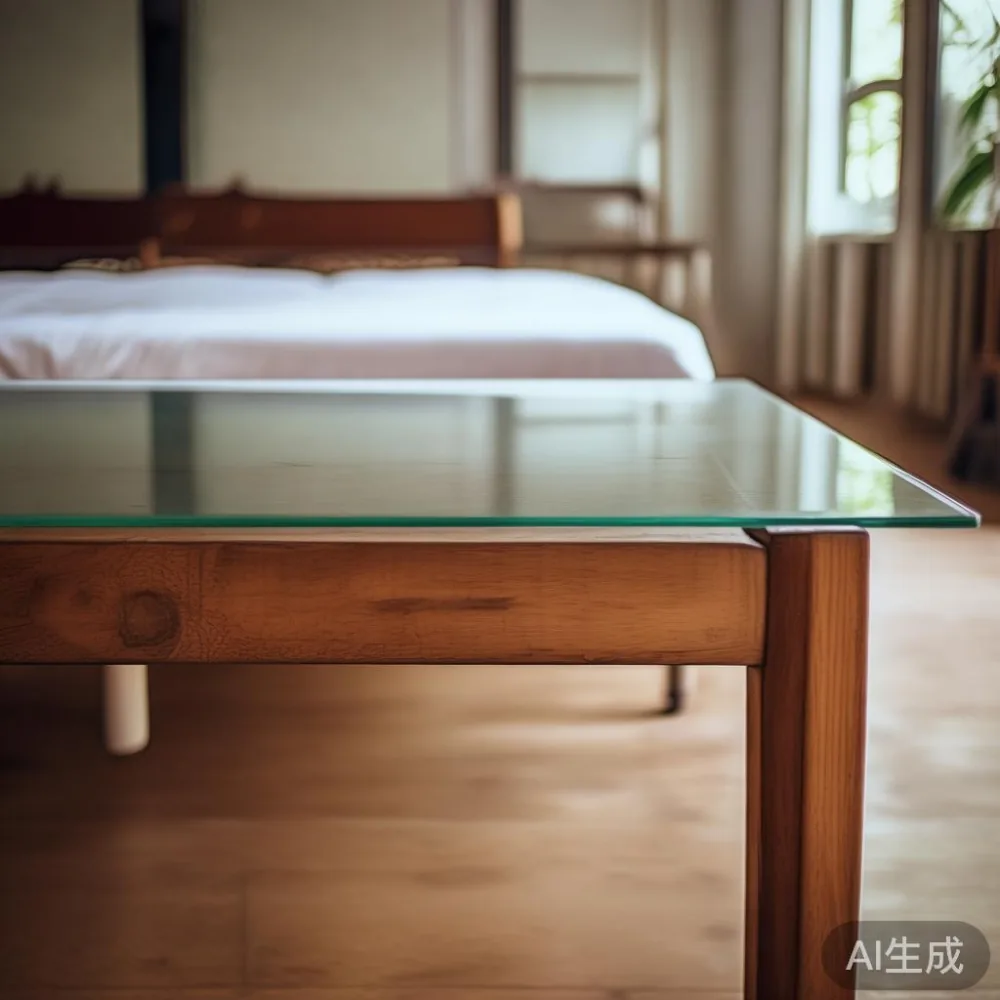
What Southeast Asian Humidity Actually Does to Solid Wood
Wood is hygroscopic. That is a polite way of saying it drinks and breathes. At 25°C and 80% relative humidity — a perfectly normal Tuesday in Clementi — a piece of kiln-dried oak or ash sits at roughly 12% to 14% moisture content (MC). When the air dries to 55% RH in a heavily air-conditioned bedroom, the same board wants to drop toward 8% MC. Every 1% change in MC moves an 180 cm dining tabletop by about 0.3 mm in width. Stack that across 12 months and you get the kind of micro-movement that loosens tenon joints and warps a 220 cm wardrobe door by 4 to 6 mm over two years. None of this is a manufacturing defect; it is wood doing what wood does.
Three local factors make Singapore worse than, say, Kuala Lumpur or Bangkok. First, the diurnal swing here is unusually wide because so many homes run a single split-unit air-conditioner from 11pm to 7am, then switch it off. The room plunges from 24°C / 55% RH to 31°C / 82% RH in under an hour. Second, HDB flats and most condos measure roughly 1.1 m wide at the corridor and 0.9 m at the lift door, so furniture often has to be partially disassembled for delivery — meaning more joints, more glue lines, more places to creep. Third, the salt content in our coastal air pulls moisture unevenly across a tabletop. Last month I visited a Punggol HDB where the dining table — only 11 months old — had cupped 2.5 mm across a 140 cm span simply because the family kept the windows cracked open for cross-breezes facing the strait.
How Bad Is It Really? A Numbers Test You Can Run Tonight
You do not need a laboratory. A SGD 25 hygrometer from any Tampines Mall electronics shop will tell you what your furniture is actually feeling. Place it on a coffee table at the height where your solid wood sofa's armrest sits, leave it 30 minutes, and read the RH. Run that test in the living room, the master bedroom, and the kitchen service yard. If the gap between your highest and lowest reading exceeds 20% RH, you are in the danger zone for cupping, end-grain checking, and joint slippage. Anything over 25% RH swing and you will likely see movement inside 18 months. The fix is not expensive: a SGD 60 dehumidifier set to 55% in the wardrobe area, a SGD 90 one for the dining zone, will typically pull a 12 m² room down by 12 to 15% RH within 90 minutes and hold it there.
Does Solid Wood Even Make Sense in a HDB Flat, Then?
This is the fair question, and the honest answer is yes — with a few practical rules. Choose kiln-dried, rather than air-dried, timber: ask your supplier for an MC certificate showing 8% to 12% at the point of crate. Ask whether the tenons are mortise-and-tenon or just dowelled; the former tolerates about three times more seasonal movement. For a 1.8 m bed frame or a 220 cm wardrobe, leave at least 5 cm of breathing space at the back wall. Keep pieces at least 30 cm away from the air-conditioner's direct outflow so the air does not hit one face of the wood while the other face stays humid. And if you want the warm, light-luxury look — French light luxury with a limed-oak finish, or post-modern light luxury with brass-tipped legs — a thin factory-applied matte lacquer (around 0.08 mm dry film) will slow moisture exchange by roughly 40% compared with an oil-only finish.
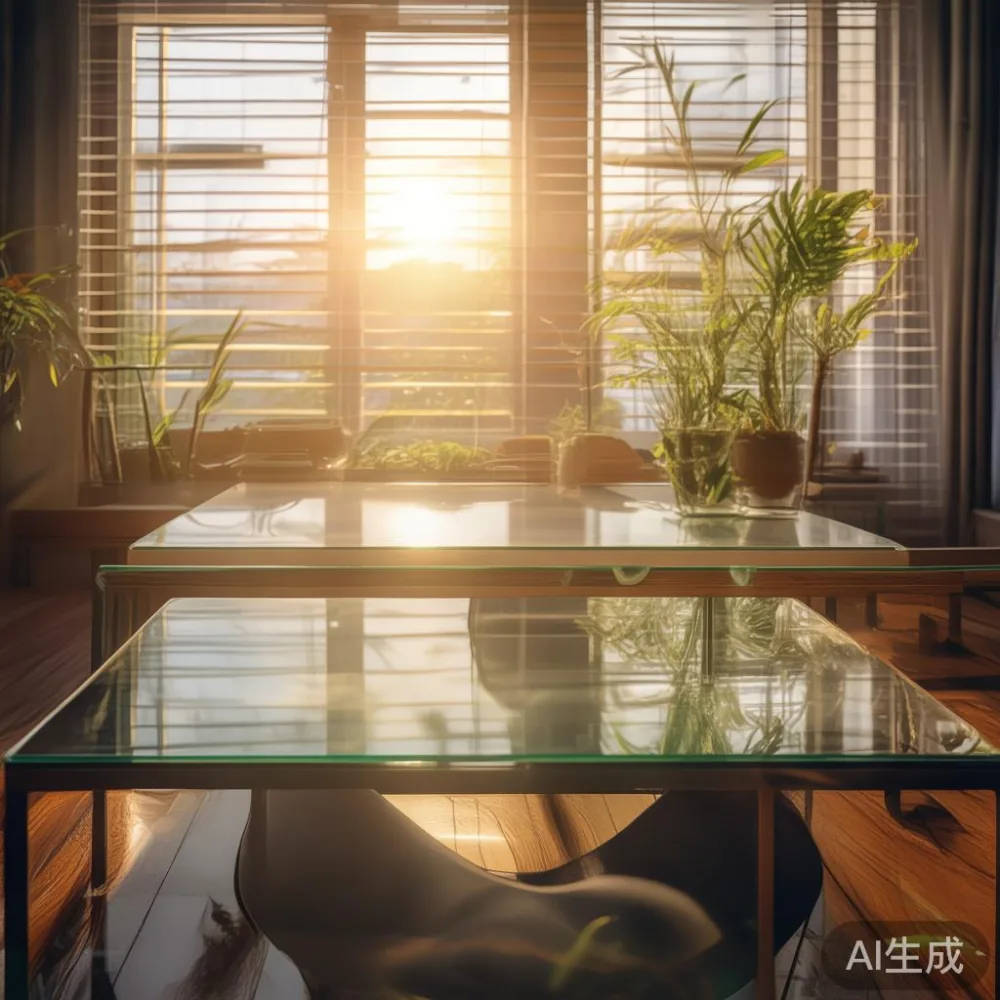
Where Glass Furniture Changes the Calculation
Glass does not absorb water, does not cup, does not host mould, and does not swell against your HDB door frame. For Singapore households that genuinely cannot keep RH below 65% year-round, glass-furniture pieces — a tempered-glass coffee table, a glass-and-brass console, a smoked-glass TV stand, a 12 mm clear-glass dining top on a powder-coated steel base — remove the humidity problem entirely. I keep a 120 cm × 60 cm tempered-glass console in my own office; nine years in, the top is still optically flat. The trade-offs are honest: glass shows fingerprints, can chip at a corner if a metal luggage buckle hits it at speed, and on a marble table with a glass insert you must keep coasters under anything warmer than 60°C. But against the cost of refinishing a cupped solid-wood top at SGD 280 to SGD 450 every four to five years, the math is comfortable.
For homeowners who want the warmth of wood without the warping risk, a hybrid layout works well: keep the heavy humidifiers and the floor-level pieces — a solid wood bed frame, a solid wood wardrobe, perhaps a 200 cm dining table — in the air-conditioned inner rooms, and put glass-furniture accents in the service yard, the balcony, or the open-plan living area that catches the afternoon breeze. The other category that mixes cleanly with glass is post-modern light luxury for dining room settings: think a 140 cm round marble table with a low-saturation velvet chair and a slim brass-and-glass sideboard behind it. Marble is heavy (around 90 kg per square metre at 18 mm thickness) and dimensionally stable, so it pairs naturally with glass shelving above it.
What About Bedrooms, Wardrobes, and the Pieces You Touch Every Day?
Bedrooms are the easiest room to protect because you already run the air-conditioner 6 to 9 hours a night. A solid wood bed frame in a 12 m² bedroom held under 60% RH will barely move across a decade. Wardrobes are the trickiest because they are big, often pushed against an external wall, and their back panels get the worst of the morning humidity spike. Choose a wardrobe under 220 cm tall if your HDB ceiling is the standard 2.6 m, leave a 3 cm gap behind, and consider a back panel with a 4 mm vent slot at top and bottom. For a European light luxury bed in room styling, a limed-oak headboard at 140 cm wide pairs well with a slim glass-furniture bedside: a 45 cm round tempered-glass nightstand keeps the visual weight light and gives mould nowhere to settle. If you are working out how to style European light luxury bed in room without making the space feel heavy, that glass-furniture nightstand is the single most effective swap.
Can I Still Buy Solid Wood for the Long Term? A Buyer's Checklist
Yes, if you buy deliberately. Run through this list before you swipe your credit card at any furniture showroom along Sungei Kadut or order online from a Foshan factory. First, ask for the kiln-dried MC certificate. Second, confirm the timber is FAS grade (top two face grades) so there are no large knots that will loosen as the wood moves. Third, ask whether the tenon joints are glued with a Type II PVA rated for tropical climates — a SGD 12 upgrade that prevents 80% of joint slippage complaints. Fourth, measure your lift: anything wider than 90 cm in any dimension needs a knock-down (KD) design. Fifth, ask about the warranty in writing: 10 years on structural joinery is a fair baseline. MIDHILL, the Foshan workshop I have visited twice, ticks all five boxes on every solid wood sofa, bed frame, dining table, wardrobe, and nightstand they ship, and their QC tolerance is ±0.5 mm on critical faces — tighter than the 1.0 mm most competitors accept. They also offer lifetime refinishing, which is a quiet signal that they expect the piece to outlast the trend.
Will My Dining Table Cup, Crack, or Both? A Practical Forecast
Across a 200 cm × 95 cm solid ash dining table in a typical non-air-conditioned Singapore dining area, here is what you should expect over a five-year horizon. Year one: no visible change. Year two: a hairline check (under 0.5 mm) at one end-grain edge, usually the one nearest the window. Year three: a 1.5 to 2 mm cup across the width if you do nothing about humidity. Year five: the tabletop will have moved 4 to 6 mm in width and the apron joints will feel snug rather than tight. None of this is ruinous, and a 90-minute refinishing pass at SGD 320 resets the geometry. The cheaper alternative, frankly, is buying a 12 mm tempered-glass top from a glass-furniture specialist for under SGD 380 and skipping the warping question entirely. The honest shortlist for most HDB dining rooms looks like this: a 140 cm marble table if your floor can take the 95 kg per square metre load (check your HDB's 150 kg/m² spec for private condo dining nooks), a 12 mm tempered-glass top on steel if you want wipe-clean hygiene, or a 4 cm solid ash top on a knockdown base if you want the grain and are willing to run a dehumidifier.
How Should I Care for Wood Once It Is in My Home?
Three habits cover 90% of issues. Keep indoor RH between 45% and 60% year-round; a SGD 90 dehumidifier with a 2 L tank runs about SGD 6 a month in electricity. Wipe spills within 10 minutes — water left pooled on an oak tabletop for 30 minutes raises the surface MC to 22% and will leave a ghost ring. And rotate the load on your wardrobe shelves every six months so the boards do not develop a permanent set from uneven weight. For a glass-furniture piece like a TV console, the only habit that matters is lifting, not sliding: a 120 cm tempered-glass top weighs around 28 kg, and dragging it across a granite floor will chip an edge in one motion. The MIDHILL TV console I have at home uses 10 mm tempered clear glass with rounded corners, a powder-coated steel frame in matte black, and ships in a flat-pack under 35 kg per carton — friendly to a 0.9 m HDB lift and a 1.1 m corridor turn.
Frequently Asked Questions From Singapore Buyers
Is solid wood really worth the upkeep in a HDB flat?
For pieces that stay in air-conditioned rooms — bed frame, wardrobe, nightstand — solid wood is a sound 15- to 25-year investment. For dining tables, TV consoles, and balcony seating where RH swings exceed 20% daily, glass-furniture or hybrid glass-and-marble is the lower-friction choice. A 200 cm ash dining top will cost you roughly SGD 1,400 to SGD 2,200, a 200 cm glass-and-steel equivalent sits at SGD 850 to SGD 1,300, and a 200 cm marble table lands at SGD 2,800 to SGD 4,200. Decide based on which trade-off — warmth, weight, or humidity tolerance — matters more to you.
What humidity range is safe for my solid wood sofa frame?
Keep your living room between 50% and 62% RH. Below 45% and the frame can micro-check at the joints; above 68% and the upholstery will feel damp, mould risk climbs, and the hardwood rails will start to cup. A 25 m² living room typically needs a 12 L/day dehumidifier running 4 to 6 hours a day to hold that range.
Does glass furniture scratch or shatter easily?
10 mm to 12 mm tempered glass used in furniture is roughly four to five times stronger than annealed glass of the same thickness. It survives a 1.5 kg steel ball drop from 1 m and tolerates a 200°C thermal shock. Scratches only come from harder materials — diamond, sapphire, tungsten carbide — so normal household use is fine. A replacement top costs SGD 220 to SGD 380 depending on size and edge finish.
Are there budget-friendly light-luxury pieces that still hold up to humidity?
Yes. The current run of cheap Modern light luxury furniture coming out of Guangdong factories uses 10 mm tempered glass with brushed-brass or matte-black steel frames, which sidesteps the wood-movement question entirely. For shoppers comparing cheap Modern light luxury furniture options, weigh the hardware (solid brass vs brass-plated steel) more than the panel material, since 304 stainless hardware is what survives a coastal climate.
Where can I view pieces before I commit to a SGD 1,500+ purchase?
Most Foshan makers, including MIDHILL, operate by appointment at their showroom near Sungei Kadut Avenue 1, with weekend slots typically available 14 days out. Bring your floor plan, your lift dimensions, and a photo of the actual room. A 20-minute walk-through usually saves three return trips and the 9% GST you would otherwise pay on a re-order.
What about Nordic, minimalist, or office-leaning looks — do they work here?
Scandinavian pieces are usually the easiest to maintain in Singapore because the design language already favours pale, low-saturation finishes that hide minor movement marks, and the legs are typically slim enough to allow air circulation underneath. If you are browsing for sale Nordic furniture listings, look for a factory that kiln-dries to 10% MC and uses quarter-sawn oak where possible — quarter-sawn boards move roughly 30% less in width than plain-sawn. For the home office, a slim glass desk with a powder-coated frame fits the modern light luxury for office aesthetic and weighs 18 to 25 kg, which any HDB study corner can handle. The under 2000 Minimalist furniture category on most regional e-commerce sites is a fair hunting ground for a starter 140 cm glass dining table under SGD 800.
Final Word Before You Buy
Humidity in Southeast Asia is not a problem you fight once and forget. It is a slow, predictable force that interacts with whatever material you bring home. Solid wood asks for attention and rewards it with warmth; glass furniture asks for almost nothing and rewards you with stability. Most Singapore homes end up with a mix — a solid wood bed frame and wardrobe in the bedroom, a glass-furniture TV console and dining table in the communal space, a marble table as the statement piece in the dining nook. Buy the right material for the right room, keep a SGD 25 hygrometer in the drawer, and your furniture will outlast the warranty. If you would like a 30-minute consult before you commit, MIDHILL offers one by appointment at their Sungei Kadut showroom, with no obligation and a clear quote in SGD.