Glass Furniture in Singapore Homes: A Practical Buyer's Guide for HDB Flats and Condos
Is glass furniture actually a good idea in Singapore's humidity?
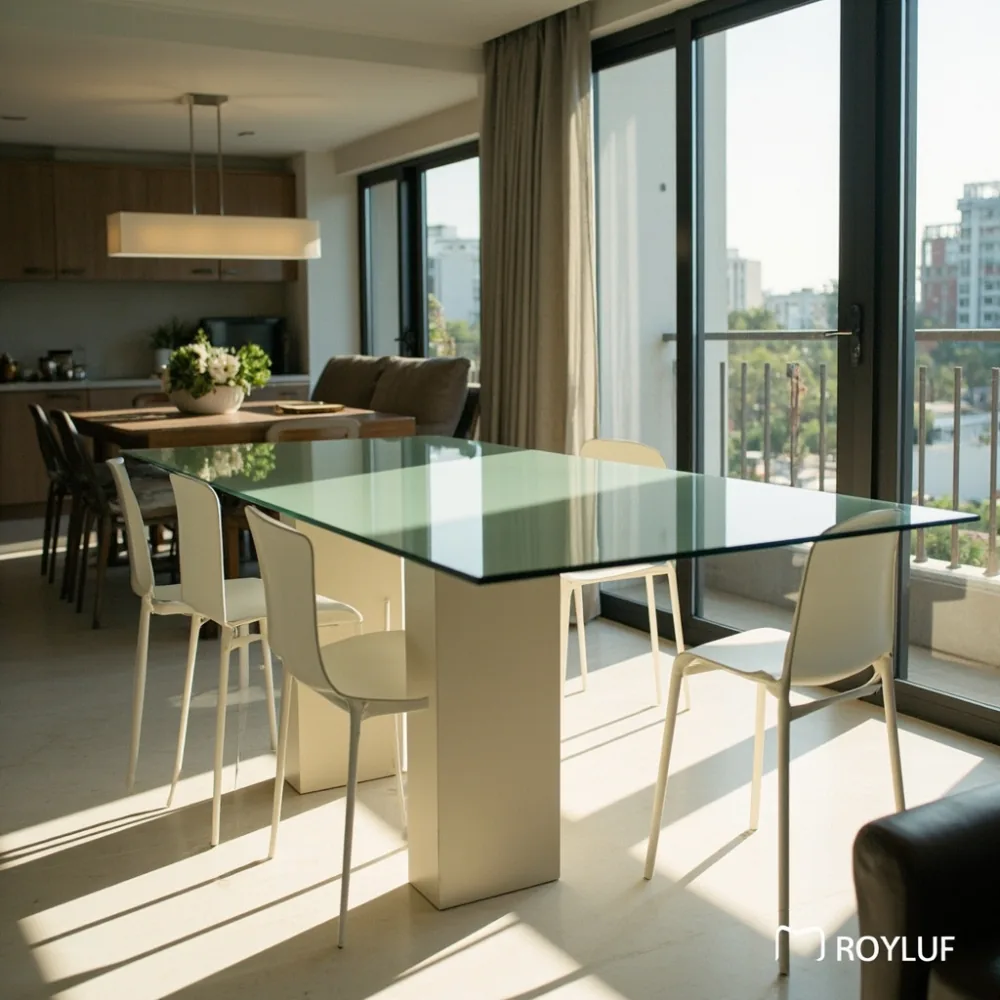
I get this question almost every time I show a tempered glass dining table in a Tampines HDB. The short answer is yes, glass behaves very differently from solid wood in our climate. Glass does not absorb moisture, it does not swell, and it does not grow surface mould the way an untreated oak top can. The catch is everything around the glass: the metal connectors, the rubber bumpers, the wooden dowels hidden inside the frame.
What I watch for during inspections is the point where glass meets another material. A powder-coated steel base is fine. A chrome-plated mild steel base is a problem within 18 months in a non-aircon utility corner. For glass furniture Singapore buyers should assume the glass itself will outlast the hardware by a factor of three.
- Glass: zero moisture absorption, stable from 0% to 100% RH
- Powder-coated aluminium or stainless steel: safe for bathroom-adjacent zones
- Chrome-plated steel: avoid near windows that get afternoon sun and rain
- MDF or particleboard cores under glass tops: high risk of delamination
How thick should tempered glass be for a dining table or coffee table?
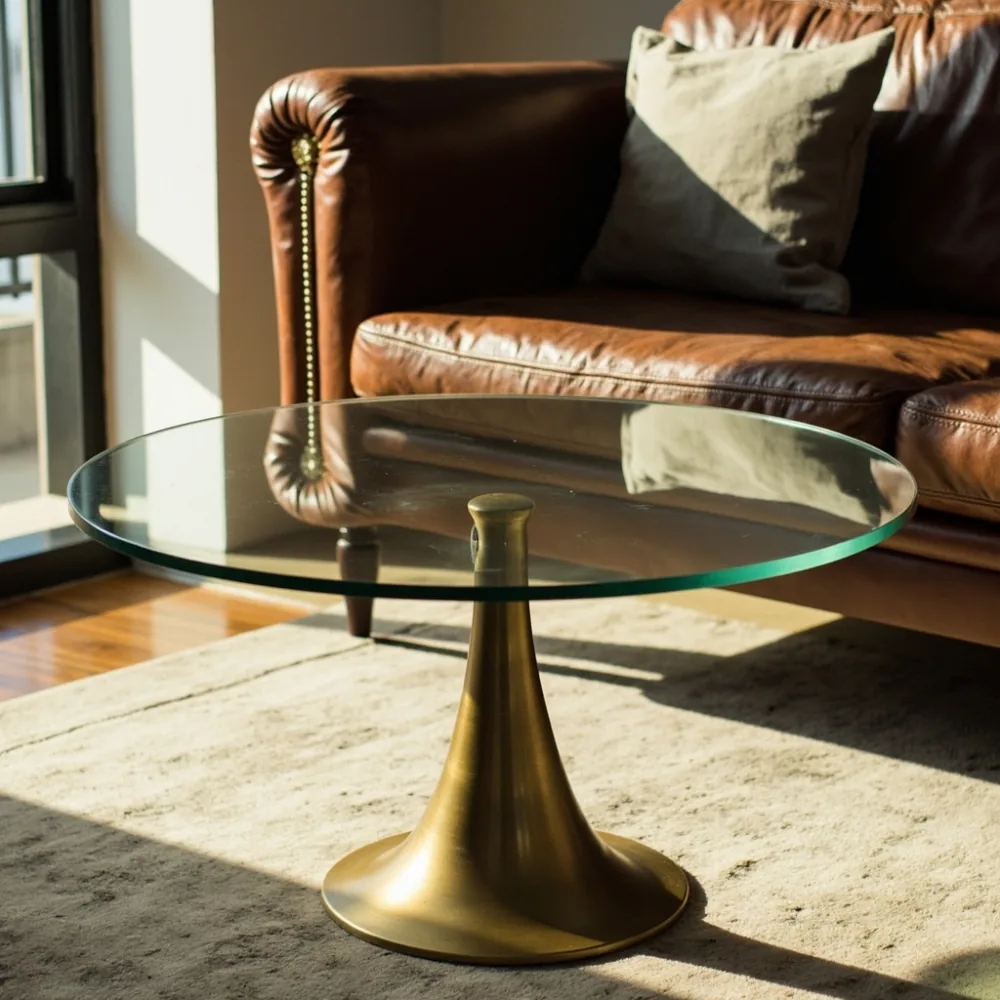
Thickness is the single most misunderstood spec on glass furniture. A 6 mm top on a 1.4 m coffee table flexes when you set down a laptop. A 6 mm top on a 60 cm side table is perfectly rigid. The rule I use: glass thickness in mm should be roughly 4 to 5 percent of the shortest unsupported span in centimetres.
For Singapore buyers, here is the thickness map I walk through in showrooms:
- Side table up to 50 cm: 8 mm tempered glass is the safe minimum
- Coffee table 90 to 120 cm: 10 mm tempered, ideally 12 mm
- Dining table 140 to 180 cm: 12 mm tempered, 15 mm if the top is cantilevered
- Console table against a wall: 10 mm is acceptable because the wall acts as a support
Above 12 mm you start feeling the weight. A 150 x 90 cm top in 12 mm weighs about 40 kg, which matters when you are carrying it up a HDB stairwell without a service lift.
What sizes actually fit a 4-room HDB or a small condo living room?
Standard HDB living rooms in a 4-room flat run about 3.6 m to 4.2 m long and 3.0 m to 3.4 m wide once you exclude the kitchen and balcony door. A typical condo living room in a 700 to 800 sq ft unit is tighter, often 2.9 m wide because of the structural column placement. That single dimension decides whether a glass coffee table fits or fights you.
| Room type | Usable floor area | Recommended coffee table | Recommended dining table | Clearance around table |
|---|---|---|---|---|
| 4-room HDB (90 sqm) | 3.6 x 3.2 m | 110 x 60 cm | 140 x 80 cm (4-seater) | 90 cm walkways |
| 5-room HDB (110 sqm) | 4.2 x 3.4 m | 120 x 65 cm | 160 x 85 cm (4 to 6) | 90 to 100 cm |
| Condo 700 sqft | 3.0 x 2.9 m | 100 x 55 cm | 130 x 75 cm (4-seater) | 80 cm minimum |
| Condo 1000 sqft | 4.5 x 3.4 m | 130 x 70 cm | 180 x 90 cm (6-seater) | 100 cm preferred |
Clearance is non-negotiable. A dining chair needs about 60 cm to pull back comfortably and a person needs another 30 cm behind it to pass. That is 90 cm total, every time.
How much does glass furniture cost in Singapore, and is custom sizing worth it?
Pricing in Singapore splits into three tiers. The first is the mass-market furniture mall on Sungei Kadut or the Jurong East cluster, where a 120 cm tempered glass coffee table with a chrome base runs SGD 180 to SGD 320. The second is the design boutiques in Tan Boon Liat and Tuas industrial showrooms, where the same footprint in 12 mm glass with a powder-coated steel frame starts around SGD 650. The third is custom fabrication, which is where custom furniture becomes a real conversation rather than a marketing line.
A custom 12 mm tempered glass top cut to 165 x 88 cm with a 25 mm radius corner and a brushed brass base usually lands between SGD 1,400 and SGD 2,200 in Singapore. The same brief sent to a Foshan workshop that pairs with local installers comes in around USD 700 to USD 950, plus SGD 280 to SGD 450 for crating, sea freight, and a single delivery slot. I have run this comparison for clients in District 09 and District 15 and the offshore route wins on price above the SGD 1,200 threshold.
- Off-the-shelf tempered glass coffee table: SGD 180 to SGD 650
- Off-the-shelf tempered glass dining table for 6: SGD 900 to SGD 2,800
- Local custom 12 mm top with metal base: SGD 1,400 to SGD 3,200
- Custom order shipped from a solid wood furniture maker in Foshan with a metal base: USD 700 to USD 1,400 landed
Is tempered glass really safe, and what should I check before I pay?
Tempered glass is roughly four to five times stronger than annealed glass of the same thickness, and when it fails it breaks into small granular chunks rather than long shards. That granular pattern is what you want to see if a sample breaks in front of you. Long splinters mean you are looking at heat-strengthened or, worse, annealed glass mislabelled as tempered.
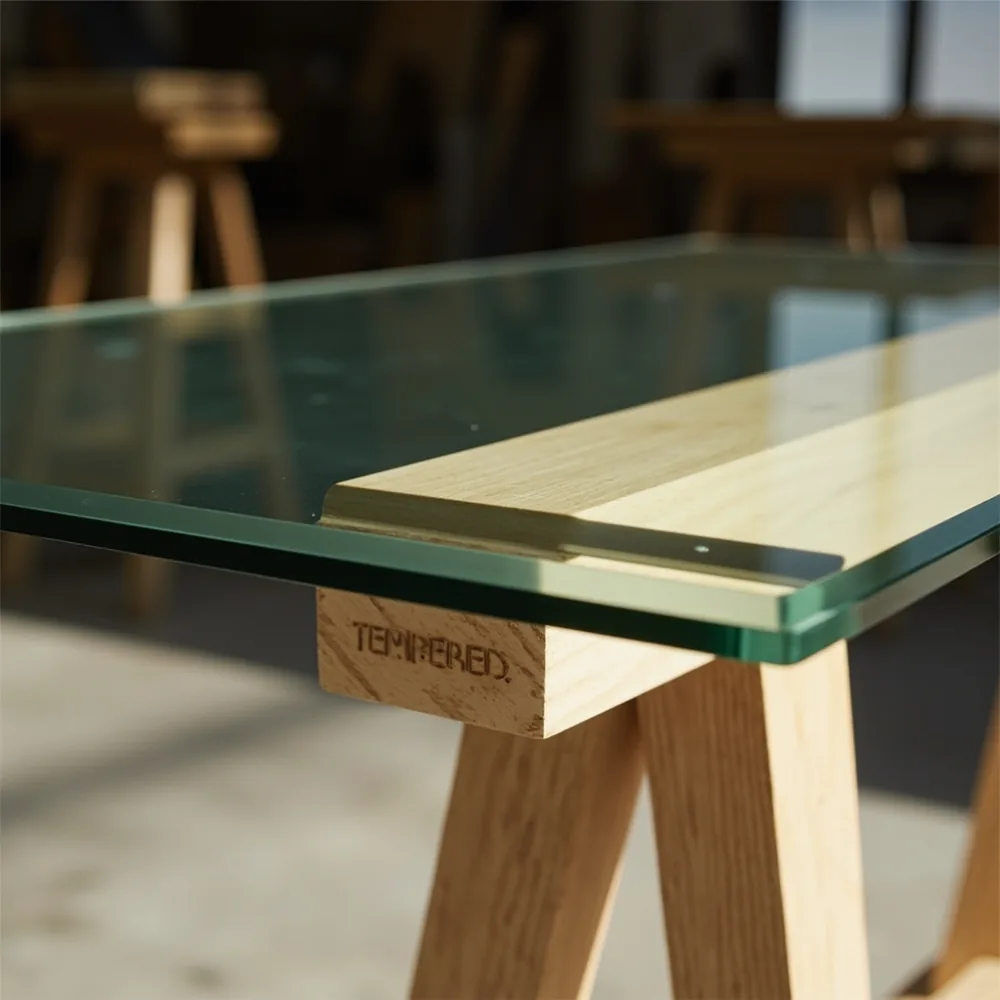
Before I sign for any glass furniture Singapore delivery, I check three things. First, a small stamp or laser etch in one corner reading "T" or "TEMPERED" plus the standard, usually EN 12150 or SGCC in the US. Second, the edge quality: a polished edge with a slight chamfer reduces chip risk during transport up HDB staircases. Third, the packaging: foam corners, corrugated wrap, and a wooden crate are the difference between a working top and a rejection at your door.
- Look for the tempered stamp or laser mark
- Run a finger along the edge to feel the chamfer
- Confirm the supplier accepts replacements if a corner cracks in transit
- Ask for a sample of the base hardware so you can inspect the welds
How is glass furniture actually delivered to a HDB without a lift?
This is where most glass damage happens, not in daily use. A 150 x 90 cm top in 12 mm glass weighs close to 40 kg and cannot be bent around a tight HDB staircase turn. The realistic options are a service lift (most newer BTOs from 2015 onwards have one, older flats in Queenstown and Tiong Bahru often do not), a scaffolding hoist through a service yard window, or a two-person carry up the stairwell with the glass held vertically.
Vertical carry is the standard method and it requires two people trained for the job, not two random movers. I budget 30 to 45 minutes for a vertical carry to a fourth-floor HDB and I add SGD 80 to SGD 150 to the delivery quote for it. Some condo managements in District 09 and District 10 require a Move-In Permit and a specific time window, usually weekday mornings, which adds a 2 to 5 day wait.
How do you clean glass furniture so it stays clear in Singapore's hard water?
Singapore tap water leaves calcium spots on glass within minutes if you let it dry. The fix is a microfibre cloth and a spray bottle of distilled water with a small amount of isopropyl alcohol. Skip the ammonia-based Windex near wooden frames, because the ammonia will haze the lacquer on a solid wood furniture base within a season.
- Daily: dry microfibre wipe, no chemical needed
- Weekly: distilled water plus 10% isopropyl alcohol
- Monthly: a dedicated glass cleaner for the edges
- Avoid: vinegar on coated glass, abrasive pads, newspaper
What glass furniture styles actually age well in a Singapore home?
Trends in glass furniture turn over fast, but a few silhouettes hold up for a decade. A round tempered glass dining table with a central pedestal avoids the leg-corner collision that plagues rectangular bases in tight HDB dining corners. A low rectangular coffee table in 10 mm clear glass on a slim powder-coated frame reads quietly next to a leather sofa without competing with it.
Frosted or tinted glass looks dramatic in showrooms and shows every fingerprint in a HDB with morning sun. Ultra-clear low-iron glass is a noticeable upgrade over standard clear glass, and the price premium dropped from about 30 percent five years ago to roughly 12 percent today. For small space furniture choices in a condo, I lean toward low-iron clear glass on slim metal because it disappears visually and lets the floor read as continuous, which makes a 70 sqm living room feel closer to 80.
Should I buy from a local retailer or order custom glass furniture from overseas?
I have bought both ways, and the deciding factor is warranty response time. Local retailers replace a cracked top in 5 to 10 working days. An overseas order, even from a reputable maker like MIDHILL, a Foshan solid-wood furniture maker established in 2008 that supports glass-on-wood pieces with a 10-year structural warranty, takes 45 to 75 days door to door including production, sea freight, and local crating. You trade time for price and for a wider customisation window.
My rule of thumb for Singapore buyers: if the piece is a standard size from a local catalogue, buy local and get it next week. If you need a 168 x 92 cm top with a specific edge profile and a matching wooden trestle base, the offshore route pays for itself once you are above SGD 1,400 of order value.
What are the most common glass furniture mistakes Singapore buyers still make?
Three mistakes show up again and again. The first is buying a 6 mm top because it is cheaper, then watching it bow under a hot pot. The second is placing a clear glass table on a busy patterned rug, which destroys the floating effect the glass is supposed to deliver. The third is skipping the rubber bumper between the glass and the metal frame, which leads to a hairline crack within a year of thermal cycling in an aircon-cooled living room.
If you want a single piece of advice from my own furniture buying experience, it is this: spend the extra SGD 120 to SGD 200 for 2 mm more glass thickness. It is the cheapest upgrade on the entire invoice and the one you will appreciate every day for the next decade.
Frequently asked questions
How long does a tempered glass dining table last in Singapore?
A 12 mm tempered glass top typically lasts 15 to 25 years in Singapore homes. The glass itself is stable, but the metal base and rubber bumpers may need replacement every 8 to 12 years. Avoid placing hot cookware directly on the surface to prevent thermal shock.
Can glass furniture go into a HDB bathroom?
Yes, if the base is stainless steel or powder-coated aluminium and the glass is at least 8 mm tempered. Avoid chrome-plated steel bases because they will rust within 18 months in a non-ventilated bathroom. Wipe down the glass weekly to prevent soap scum build-up.
Is tempered glass furniture safe for households with children?
Tempered glass is safer than annealed glass because it breaks into small granular pieces rather than long shards. For households with young children, choose rounded corners, a lower-profile coffee table around 35 to 40 cm height, and add silicone corner guards during the toddler years.
What is the difference between tempered and regular glass furniture?
Tempered glass is heat-treated to be four to five times stronger than regular annealed glass. When it breaks, it shatters into small dull pieces. Regular glass forms dangerous long shards. Always confirm the tempered stamp on the corner before purchasing any glass furniture in Singapore.
Do glass furniture suppliers in Singapore offer installation?
Most local retailers include basic assembly and placement in the delivery fee, which ranges from SGD 60 to SGD 180. Custom orders from overseas workshops usually require a third-party installer, adding SGD 120 to SGD 250 depending on the complexity of the base assembly.
Questions about specifications, fabric or delivery? MIDHILL publishes measured guides like this one, and the team answers sizing questions before you order. See the full collection or contact the team.