Caring for Lacquered Surfaces in a Tropical Climate: What Singapore Owners Need to Know
Last month I visited a friend’s new 4-room HDB flat in Punggol, and within twenty minutes of stepping inside I could see the problem she was describing. The lacquered top of her new dining table — a piece she had spent S$1,430 on — was already showing faint cloudy rings, even though the apartment had been empty for only six weeks. The culprit was not the piece itself, which was well made, but the climate we live in. Singapore averages 75–95% relative humidity year-round, indoor temperatures of 26–30°C, and in newer BTO flats the afternoon sun through east-facing windows can push a lacquered surface past 38°C. A finish that behaves itself in a Guangzhou showroom behaves very differently on the 12th storey of a Punggol Plaza block.
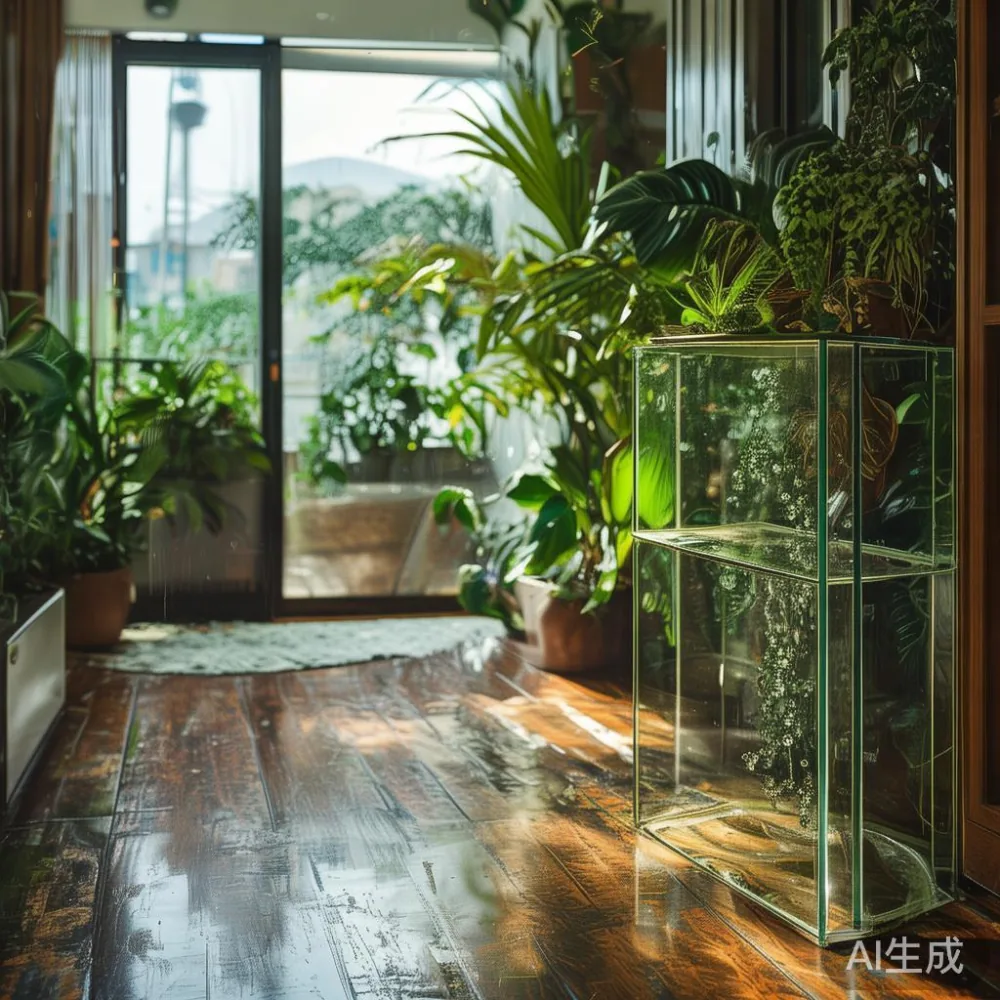
Glass furniture, lacquered cabinets, and high-gloss solid wood frames all share one weakness in this climate: moisture gets under the finish faster than it can escape, and the resin softens in heat. The good news is that the problem is solvable. With the right routine — and the right expectations when you buy — a lacquered surface in Singapore can stay beautiful for a decade or more. I have spent the past few weeks talking to installers, finishers, and homeowners across Tampines, Bedok, and Toa Payoh to put together this field report, and what follows is what they told me.
Why does lacquer fail so quickly in Singapore?
Lacquer is a film finish — it sits on top of the wood like a thin sheet of glass — and it cures by solvent evaporation. In a dry climate that film hardens into something close to a shell. In Singapore the air is already carrying 18–22 g of water per cubic metre on a typical afternoon, so the solvents in the finish never leave as cleanly. The result is a softer, slightly porous film that is more sensitive to heat, ring marks, and household chemicals. A lacquered dining table that would survive a hot mug without a trace in a Beijing apartment will show a white ring in a Tampines HDB within ninety days if the finish was applied at the lower end of the quality scale.
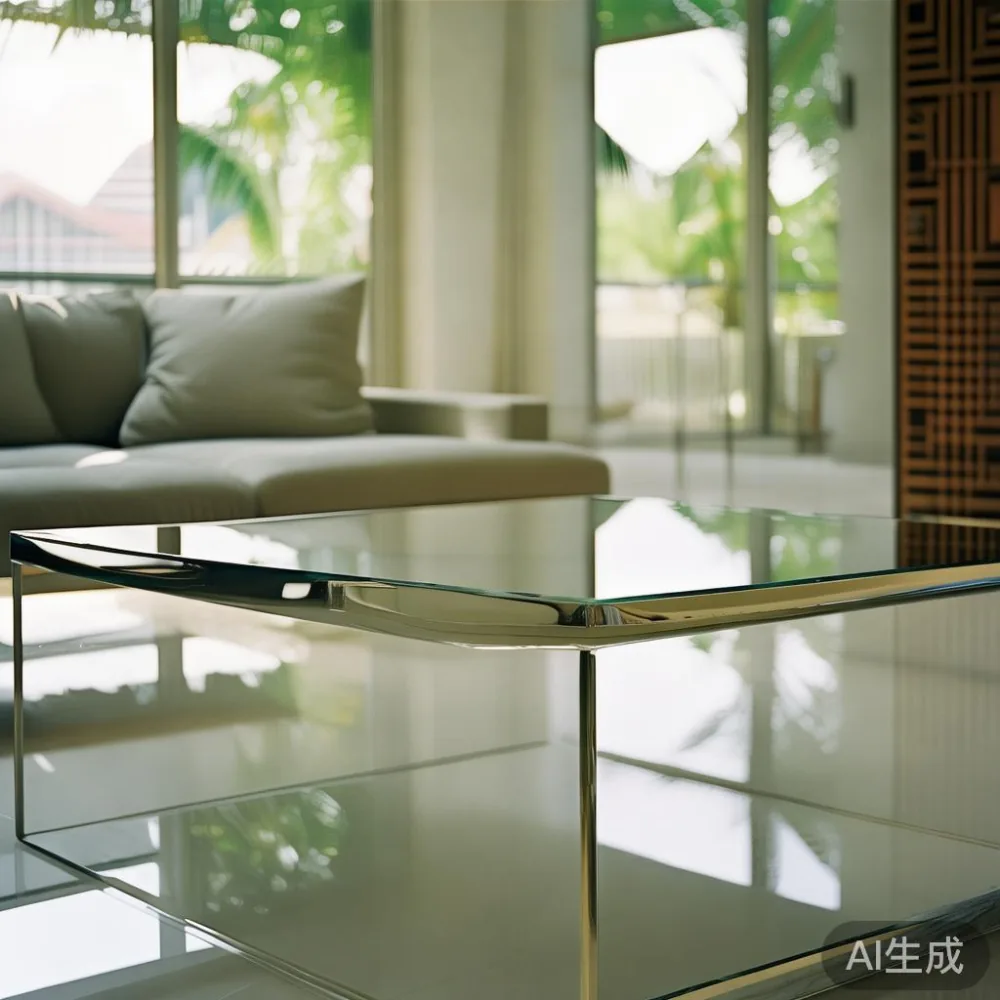
The second problem is UV. Lacquered finishes — particularly the clear coats used on walnut, ash, and white-oak solid wood beds and wardrobes — yellow and become brittle when exposed to direct tropical sun for more than two to three hours a day. In a Punggol flat with floor-to-ceiling glazing facing the afternoon sun, that yellowing can show within eight months. The fix is not to fear lacquer; the fix is to control the environment around it.
What is the ideal indoor environment for a lacquered piece?
The target numbers are simple: keep the room between 22°C and 28°C, and the relative humidity between 45% and 60%. Anything above 65% RH for a sustained period is what makes lacquer bloom, blush, and lift at the joints of a solid wood bed frame or dining table. A basic hygrometer from Tampines Mall costs S$12–S$18 and is the single best purchase a new owner of a lacquered wardrobe can make.
Air-conditioning is your friend here, but with a caveat. The new inverter systems common in newer BTO flats pull humidity down very quickly, and a swing from 80% to 35% in three hours can crack a thick lacquer edge on a marble-top side table or a glass-front display cabinet. Aim for a 5–7% RH drop per hour, not more. If you run a 9 kBTU Daikin unit in the living room where your lacquered American light luxury coffee table sits, set it to 25°C and let it ramp gently.
Sunlight control is the other half of the equation. 3M or Llumar window films reject 65–75% of UV and run about S$18–S$28 per square foot installed. For a 90 cm wide × 180 cm tall window in a Bedok condo, expect to pay S$260–S$380 installed. Keep the film out 120 mm from the glass if you can — modern films with nano-ceramic layers handle the gap, but the extra air space gives the lacquer another barrier against radiant heat.
Is French provincial corner sofa furniture worth it?
Yes — if you understand what “French provincial” actually buys you, and if you are buying for the right room. In Singapore showrooms the label is usually attached to a corner sofa with a rolled arm, a carved solid wood base, and either a matte chalk-painted finish or a low-sheen lacquer on exposed wooden feet. The price band runs from about S$5,800 for a 2.4 m L-shape in fabric to S$11,400 for a 2.8 m version with down-blend cushions and a genuine French light luxury carved frame. The question is whether the look justifies the cost over a generic post-modern light luxury modular in bonded leather.
What you are paying for is the joinery — mortise-and-tenon on the solid wood base, dovetailed drawers if a console is bolted on, and a hand-rubbed lacquer on the feet that is applied in three to five coats. The fabric is usually a heavy 380–420 g/m² Belgian or Italian linen blend, which behaves better in our humidity than the thin 180–220 g/m² polyester used on S$2,400 fast-furniture corner sofas. In a 1,100 sqft Punggol HDB the 2.4 m version fits a 3.2 m × 3.6 m living room with a 60 cm walkway on either side; in a 1,400 sqft Bedok condo the 2.8 m version suits a 4.0 m × 4.5 m space. Lift access in most HDB blocks accepts a packed sofa carton up to 2.4 m long × 0.95 m wide × 1.1 m tall, so check the packing dimensions before you commit — a corner sofa that has to be hand-carried up a 1.05 m wide service staircase is a bad afternoon waiting to happen.
The honest answer: a French provincial corner sofa is worth it if you keep the room cool, dry, and out of direct sun. It is not worth it if your living room has unfiltered afternoon sun and no air-conditioning for half the day.
How should you clean a lacquered surface without damaging it?
Step one is to put the wrong products away. Anything containing silicone, alcohol above 5%, citrus oils, or ammonia will soften a polyurethane or acid-catalysed lacquer within thirty seconds of contact. That includes most “wood polish” sprays sold at NTUC and most multi-surface wipes. The only cleaners you need are a soft 220–280 GSM microfiber cloth and either plain distilled water or a tiny amount of pH-neutral dish soap (about 2 ml per 500 ml of water) for greasy marks.
Wipe in the direction of the grain, not across it. Use a damp cloth rather than a wet one — the surface of the cloth should not be able to leave a visible water line when squeezed. Dry immediately with a second clean cloth. For a white ring from a cold glass on a dining table — the most common mark we see — try rubbing gently with a cloth barely moistened with a 50/50 mix of distilled water and white vinegar. The acetic acid softens the mark just enough to redistribute the finish. Buff dry within ten seconds.
For glass furniture with a lacquered wood base — a common combination in modern dining and console designs — clean the glass with standard glass cleaner sprayed onto the cloth, not onto the surface. Most glass cleaners contain 3–8% isopropanol, which is fine for glass but will dull a lacquered oak base in under a year of weekly use. Spray onto the microfiber, then wipe the glass, then use a separate dry cloth on the wood. The extra fifteen seconds preserve the finish.
How do you store lacquered pieces during renovations or moves?
The single biggest destroyer of lacquered finishes in Singapore is not daily use — it is the three to six weeks of a renovation when dust, paint splatter, and humidity swings are at their worst. Cover every lacquered surface with breathable cotton sheeting, not the blue plastic painter’s drop cloth most contractors default to. The plastic traps moisture and creates a microclimate under the film that lifts lacquer in 7–10 days. Cotton allows the surface to breathe while blocking dust.
If you are moving into a Punggol BTO and the renovation is not finished, ask your furniture supplier to deliver no earlier than seven days after the final coat of paint has cured. Most water-based wall paints need 5–7 days to off-gas; solvent paints 14–21 days. Bringing a S$2,200 lacquered solid wood bed frame into a room that is still off-gassing is a guaranteed way to trap solvents under the lacquer film and cause permanent blushing.
Glass shelving and lacquered display cabinets need extra attention during a move. Remove all glass shelves and pack them separately in foam-padded cartons. Carry a lacquered wardrobe upright whenever possible; tipping it onto its side flexes the 35–45 mm thick solid wood panels and can crack a thick lacquer edge on a corner within the first year.
What about scratches, ring marks, and small repairs?
Surface scratches in a single coat of lacquer can often be repaired without refinishing the whole panel. For shallow marks no deeper than 0.05 mm, a paste wax tinted to the wood colour — applied with a soft cloth, allowed to haze for 3–4 minutes, then buffed — hides the scratch by filling the micro-valley rather than coating the area. Hard paste waxes (Renaissance Wax is the common reference) cost about S$28–S$42 per 65 ml tin and treat a dining table six to eight times.
White heat rings are the next step up. They are usually a thin layer of moisture trapped under the lacquer film. Holding a hairdryer on low, held 250–300 mm above the surface, for 60–90 seconds, drives the moisture back out. Follow immediately with a soft cloth buff. Test on the underside of a leaf first — too much heat will blister a thick lacquer in under thirty seconds.
Deeper damage — a gouge, a water mark that has gone brown, or a cracked corner on a solid wood bed frame — should go back to the maker. A maker with a proper refinishing service can sand back to bare wood, re-stain to within 0.3–0.5 colour units of the original, and re-lacquer with two to three new coats in about 10–14 working days. That kind of after-sale service is rarer than it should be in the Singapore market, but it exists. MIDHILL, for example, publishes a lifetime refinishing commitment on its lacquered dining tables, wardrobes, and nightstands — which is one of the reasons their pieces turn up so often in the new BTOs I visit across Punggol and Sengkang. The point is to ask, before you buy, what the refinishing path looks like five or ten years down the line.
What should you look for when buying lacquered pieces in Singapore?
Three numbers matter on the spec sheet. First, the number of lacquer layers. Anything under three is thin; anything over five is built to last. Second, the lacquer system — acid-catalysed (AC) and conversion varnish (CV) are harder than nitrocellulose (NC), but they are also less repairable in a home setting. Third, the warranty — a 10-year structural warranty on a solid wood bed frame is becoming common among serious exporters and is a useful proxy for finish quality, because the makers willing to guarantee the structure are usually the same ones willing to guarantee the finish.
Delivery and after-care matter just as much. Free shipping above US$350 is the kind of threshold a serious exporter builds into its pricing — it is not a gimmick — and a sensible 14-day returns window covers the period in which most latent lacquer defects show up. A bed frame that survives the first fourteen days in a Punggol flat usually survives the next ten years. Lift dimensions in most HDB blocks allow a packed bed frame carton of 2.2 m × 0.55 m × 0.45 m; corridor widths of 1.2–1.5 m handle a sideboard or wardrobe carton of 2.0 m × 0.65 m × 0.55 m with about 200 mm of clearance on each side. Confirm those numbers before the truck arrives, because a S$80 redelivery fee is the least interesting part of getting it wrong.
Glass furniture and lacquered solid wood share one rule in this climate: control the room, not the finish. Air-condition the humidity down, keep the direct sun out, and clean only with a damp cloth. Do that, and a well-made lacquered dining table or French light luxury corner sofa will outlast three sofa replacements and two air-conditioner units. Skip those steps, and no finish in the world will save the surface.