Glass Furniture in a 60-SqM HDB: How We Styled a Tampines Flat Without Making It Feel Crowded
Last month I visited a colleague's new 65-square-metre HDB flat in Tampines GreenRidges. She had moved in with two cats, a stack of vinyl records, and a clear instruction from her partner: nothing heavy, nothing bulky, nothing that blocks the corridor when the lift doors open on the 14th floor. The corridor outside her unit is 1.2 m wide, the lift cabin is 1.5 m deep, and her dining wall sits 2.8 m away from the kitchen counter. Every choice she made was filtered through those numbers, and the piece that surprised me was how often glass furniture carried the load of the design without adding visual weight. If you live in a Bedok reservoir-area four-room flat, a Punggol condo at 50 sqm, or a compact EC, the same logic applies. Below is what worked, in centimetres, kilograms, and Singapore dollars.
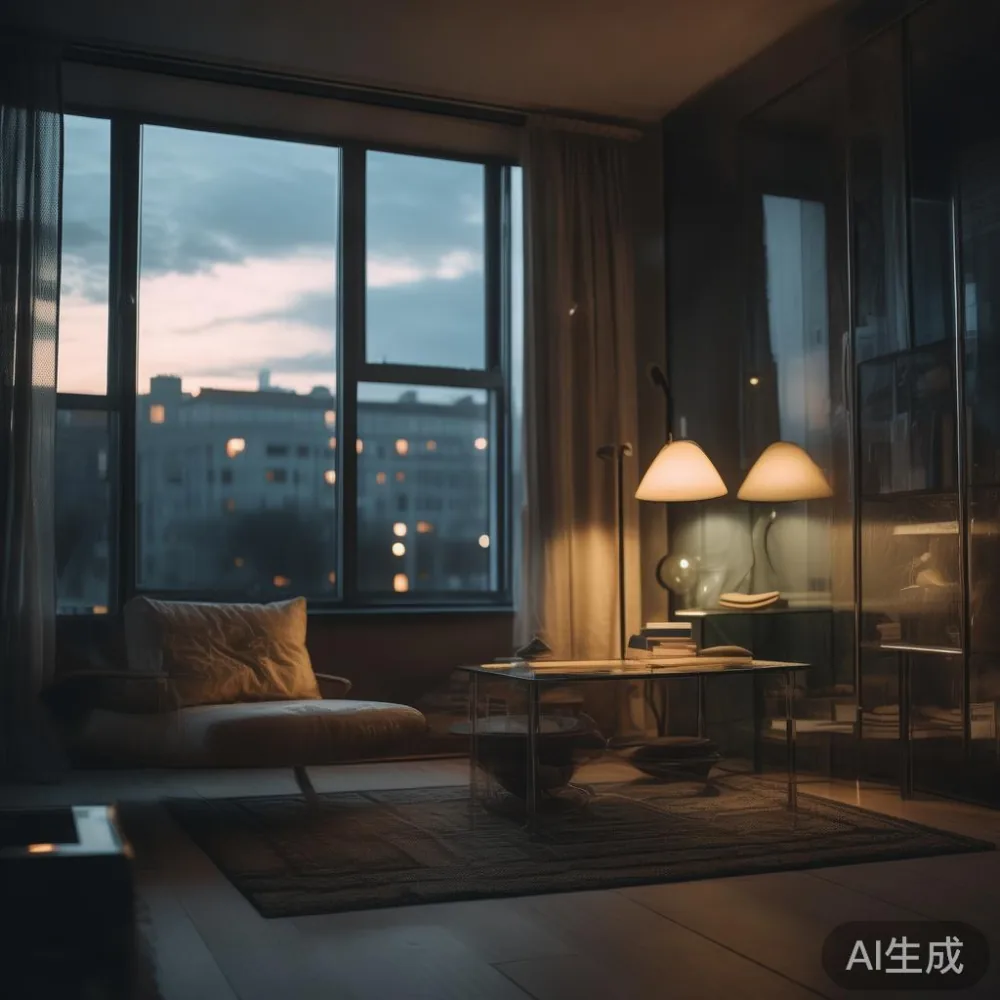
Why Glass Furniture Reads as "More Room" in a Small HDB
Glass furniture has a measurable optical effect: because the surface transmits light rather than absorbing it, the eye keeps travelling past the table, console, or shelving unit instead of stopping. In a 2.8 m x 2.4 m living room, a 120 cm x 60 cm tempered-glass coffee table on a slim solid-wood base occupies roughly 0.72 sqm of floor space, yet visually the eye reads less than half of that, because the legs (typically 3 cm x 3 cm oak or ash) disappear into the floor line. A solid-oak chest in the same footprint reads as a full block. This is why designers in Tampines and Punggol keep coming back to glass tops for small-format consoles, side tables, and dining tables in light-luxury, post-modern light luxury, and French light luxury interiors. The product is structurally strong (a 12 mm tempered glass top handles roughly 80 kg of static load) yet optically almost invisible.
One caveat from my colleague's experience: tempered glass tops need careful transport through a 1.2 m HDB corridor. MIDHILL, a Foshan solid-wood furniture maker that has shipped to Singapore since around 2014, packages their glass-on-wood pieces with edge protectors and ships them in two boxes (wood base in one, glass in another) so a single mover can carry each component separately past the lift and the door. That detail matters more in an HDB than in a landed terrace.
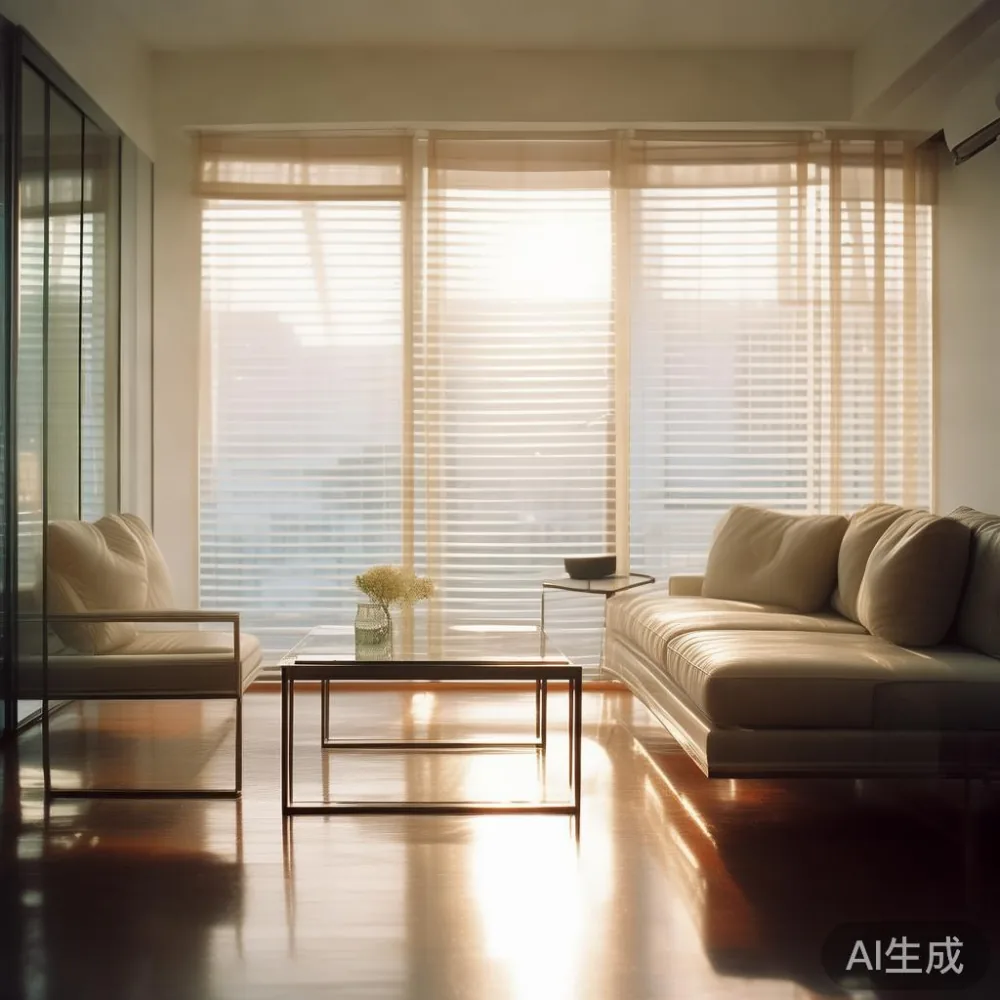
How Do You Stop a Glass-and-Wood Combo from Looking Cold?
This was my colleague's recurring worry during the second week. Glass has a reputation for feeling clinical, and in a small flat the risk is real: too much transparent surface and the room reads like a waiting area. The fix was warm wood. A 140 cm x 70 cm glass dining table on an American walnut base costs around SGD 1,180 delivered, and the walnut tone breaks up the chill. Add a 180 cm x 90 cm solid-wood sofa in oak (around SGD 2,450) facing the table, and the eye now has a warm anchor on either side of the room. The glass dining top is what keeps the layout breathable; the wood is what keeps it human.
Two things helped. First, a 60 cm x 60 cm solid-wood nightstand in the bedroom (around SGD 320) was chosen to match the dining base, so the wood tone repeats across rooms. Second, she kept all rugs, throws, and curtain linings in undyed linen and undyed cotton. The total soft-furnishing budget was about SGD 540 for a 4 x 6 m wool-blend rug (SGD 320), linen curtains for two windows at SGD 110 each, and a cotton throw at SGD 45. None of it competes with the wood. The glass surfaces then become quiet reflectors of texture rather than cold plates.
What Sizes Actually Fit a Tampines or Punggol Layout?
Numbers matter more than mood boards here. Below is what my colleague measured and ordered, with widths checked against her 1.2 m corridor and her 1.5 m lift cabin. The lift cabin door is 0.9 m wide, which means anything wider than 0.9 m on its longest side must be tilted on its edge or carried vertically. Most furniture movers in Singapore will refuse to take an item wider than 1.0 m through a standard HDB door frame of 0.9 m without unboxing.
- Living room: 180 cm x 90 cm solid-wood sofa (depth 90 cm), seat height 42 cm, weight 62 kg.
- Coffee table: 120 cm x 60 cm tempered glass top (12 mm) on solid-wood base, total weight 28 kg.
- TV console: 160 cm x 35 cm x 45 cm glass-fronted solid-wood unit, weight 41 kg.
- Dining table: 140 cm x 70 cm tempered glass on American walnut, seats four, weight 34 kg.
- Dining chairs: four solid-wood chairs at 45 cm x 48 cm x 85 cm, stackable, weight 4.2 kg each.
- Bed frame: 150 cm x 200 cm solid-wood platform, weight 54 kg.
- Wardrobe: 180 cm x 60 cm x 200 cm three-door solid-wood wardrobe with one mirrored panel, weight 92 kg.
- Two nightstands: 50 cm x 40 cm x 55 cm each, weight 14 kg each.
For shoppers comparing across categories, the best Italian light luxury wardrobe for 2026 in this footprint will typically be 180 cm to 200 cm tall, 55 cm to 65 cm deep, and finished in a satin lacquer over a solid-wood carcass rather than MDF. If your priority is a softer, more relaxed reading, the best Boho wardrobe for 2026 tends to use cane-fronted doors on a solid-wood frame, which is lighter visually but slightly heavier per door (roughly 11 kg per door versus 7 kg for a lacquered solid-wood door).
Should the Sofa Be Japandi, American, or Italian Light Luxury?
This was a 30-minute argument at the Tampines flat, so I am going to lay out the trade-off without dodging it. A Japandi-style 200 cm x 90 cm solid-wood sofa in ash or oak with linen cushions, seat height 38 cm, frame depth 80 cm, weighs about 58 kg and costs around SGD 2,150. An American-style 210 cm x 95 cm solid-wood sofa with deeper seats (55 cm) and rolled arms weighs 78 kg and runs around SGD 2,950. An Italian light luxury version at 195 cm x 90 cm in walnut with leather belts and down-wrapped cushions lands closer to SGD 3,600 and weighs 71 kg.
If your corridor is the standard 1.2 m HDB width and your lift cabin is 1.5 m deep, all three will fit when boxed, but the unboxed Italian version is the one most likely to require two movers at SGD 120 per mover for a four-hour window. The question "is Japandi sofa worth it" depends entirely on how low and how firm you want to sit. In my colleague's case, her partner is 188 cm and preferred the deeper American seat, so they went with American. For shoppers asking which is the best American sofa for 2026 in this size bracket, look for a kiln-dried solid-wood frame (ash, oak, or walnut), a sinuous-spring or eight-way hand-tied base, and a seat depth of at least 55 cm if you are over 175 cm yourself.
Bedroom Storage: Choosing the Right Wardrobe Without Swallowing the Wall
Bedrooms in four-room HDB flats run roughly 3.2 m x 3.0 m, which gives you a 200 cm wardrobe wall and roughly 80 cm of breathing room on either side. A 180 cm x 60 cm x 200 cm three-door solid-wood wardrobe with one mirrored door panel reads as a single vertical plane when closed, which keeps the room calm. The mirrored panel, combined with the glass furniture in the living room, is what bounces daylight from the bedroom window into the centre of the flat. Two 50 cm x 40 cm x 55 cm solid-wood nightstands on either side of a 150 cm x 200 cm solid-wood bed frame finish the room without crowding the side access.
For shoppers prioritising a Japandi reading, the best Japandi wardrobe for 2026 in this footprint will use flat solid-wood sliding or hinged doors in oak or ash, with no visible hardware and a continuous grain across the panels. If you prefer Italian light luxury, expect satin-lacquered fronts, soft-close hinges rated for 100,000 cycles, and an internal lining in flannel-backed melamine rather than bare MDF. MIDHILL's wardrobe line uses 18 mm solid-wood panels with dovetail drawer joints, which keeps the unit under 95 kg even at 200 cm tall, manageable for one HDB stairwell trip. A glass-fronted display section in the wardrobe, similar to the glass-on-wood TV console, keeps the upper third of the unit visually light.
Living Room Anchors: The Italian Light Luxury Coffee Table and a Marble Side Touch
For the centre of the living room, an Italian light luxury coffee table with a 12 mm tempered-glass top on a brushed-brass or walnut base, around 110 cm x 60 cm x 38 cm, weighs roughly 22 kg and costs between SGD 880 and SGD 1,150 in Singapore retail. The brass detail is what gives the piece its quiet luxury feel; the glass top is what keeps the room from feeling furnished-to-the-brim. Pair it with a smaller marble side table, 45 cm in diameter, 50 cm tall, around SGD 460, used for the lamp and the cats' water bowl. Marble here is a small dose rather than the main surface, which is the typical Italian light luxury move in compact apartments.
If you want a single brand to source the whole room from, MIDHILL's showroom range covers a 120 cm glass coffee table, the matching TV console, and a 140 cm glass dining table in the same walnut or oak finish, so the wood tone carries through without buying from three different suppliers. Their standard 10-year structural warranty covers the wood frame; glass tops carry a separate 3-year warranty against delamination and chipping. Delivery to a Singapore address is around SGD 80 for orders under US$350 equivalent and free above that threshold, with 18 to 28 working days from Foshan via consolidated sea freight plus local last-mile. Returns are accepted within 14 days for unused pieces, which is useful when you are measuring against a 2.8 m dining wall and want a second look at home.
Practical Numbers: Budget, Delivery, and the HDB Access Checklist
For a full small-apartment outfit of the kind my colleague did, the realistic Singapore budget, before GST, lands between SGD 9,500 and SGD 13,200. Add 9% GST and you are looking at SGD 10,400 to SGD 14,400 all-in. A breakdown that actually shipped: sofa SGD 2,150, coffee table SGD 980, TV console SGD 1,250, dining table SGD 1,180, four dining chairs SGD 520, bed frame SGD 1,380, wardrobe SGD 2,180, two nightstands SGD 640, marble side table SGD 460, soft furnishings SGD 540, plus SGD 240 for assembly and SGD 320 for a four-hour two-mover slot. Delivery lead time from order to doorstep was 24 days, with two boxes arriving on a single lorry and the movers calling 40 minutes ahead.
Before you place any order, measure three things: the lift cabin depth, the corridor width outside your unit, and the door frame width of the room where the largest piece will live. Standard HDB lift cabins in Singapore are 1.5 m deep with a 0.9 m door; corridors are 1.2 m; interior door frames are 0.9 m. Anything boxed wider than 1.0 m will need unboxing at the corridor, which means the mover should be prepared to open the carton, carry the unassembled frame through, and assemble inside. If a brand refuses to commit to that workflow, it is usually because the piece was not designed for HDB access in the first place. Glass furniture, ironically, often passes this test more easily than solid-wood chests, because the glass top ships separately and the wood base is typically under 30 kg per box.
For further reading, brand-and-fitment notes, and current Singapore-ready SKUs, the team publishes their catalogue at m.midhill.co, where each glass-on-wood piece lists corridor clearance, lift-cabin clearance, and unboxed weight side by side. That single page saved my colleague at least one return trip to a showroom.