How to Match Solid Wood and Glass Furniture to a Warm Minimal Interior
I spent the better part of last month walking through three model units in Punggol with an interior designer friend, measuring lift doors and timing corridor turns while the air-con hummed. We were testing how a warm minimal interior — beige walls, micro-cement floors, a single oak console — actually behaves when you start dropping in real pieces: a 1.8m solid wood bed frame, a marble-top dining table, a glass display cabinet. The HDB corridors in newer estates like Punggol are roughly 1.2m wide, lift cabins around 1.1m by 1.4m, and a flat-pack European dining table Korea shipped in a single carton will usually clear them if the longest dimension stays under 1.5m. None of that matters if your chosen piece fights the room. This article is about making a glass furniture, warm wood, and neutral wall palette behave like one quiet, calm composition rather than a showroom.
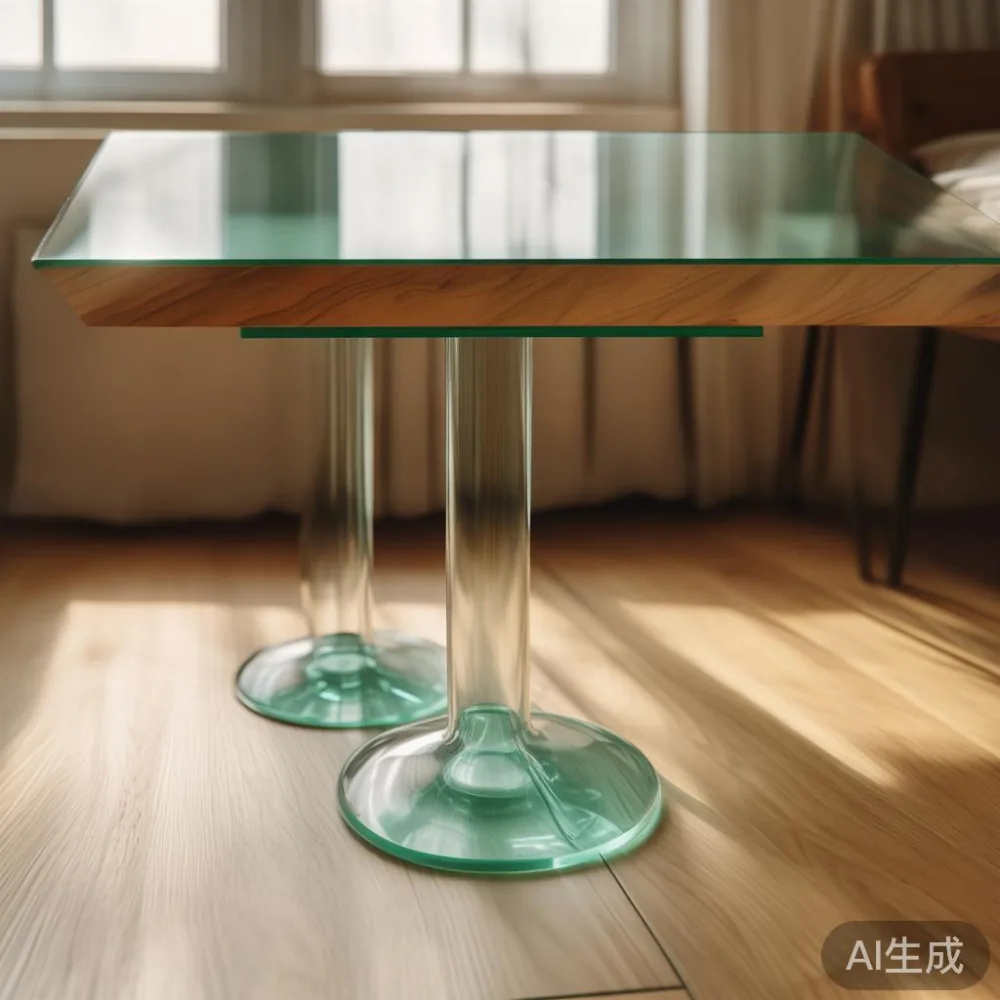
What does "warm minimal" actually mean for a 4-room HDB in Tampines?
Warm minimal is not the stark Scandinavian box some neighbours in Bedok mistake it for. It is a small, quiet room where every surface has one job: to make the next surface look better. The walls do most of the work in a 92 sqm BTO flat — usually a warm off-white like Jotaplast 5784 or a soft greige such as Dulux 30YY 64/060. The floor is usually 1.2m by 0.6m micro-cement tiles in a 600x600mm or 900x900mm format, in a tone like Raw Concrete Grey. Furniture stays in a tight palette: one warm wood, one cooler stone, one transparent material — and that is where glass furniture earns its keep. A glass cabinet reads as space; a solid wardrobe front reads as mass. In a 92 sqm flat, you want roughly 70 percent mass, 20 percent glass, and 10 percent metal or ceramic accents. Miss that ratio and the minimal reads as cold; overshoot and it reads as cluttered.
How do I style a color mismatch in a modern Singapore home?
If your brand-new walnut dining table arrives and clashes with the teak-toned parquet the previous owner left behind, the cleanest move is to re-tint one of the two surfaces, not to add a third material to bridge them — a direct answer my colleague now gives every client in Tampines and Punggol after we watched her fix three mismatched flats in one week. Walnut pulls orange-yellow, teak pulls red-orange, and the eye reads them as the same wood until you put them next to each other in raking afternoon light. Pick the surface you can sand and refinish — usually the older floor — and shift it one tone cooler with a neutral grey stain such as Osmo 3501, sealed with two coats of Polyx-Oil 3032. The change costs about SGD 380 in materials for a 14 sqm dining area if you hire a local sander at S$8 per sqm, plus two days of curing. The walnut table then reads as the warmer object, and the eye accepts the contrast because the wood grain does the bridging, not a decorative object.
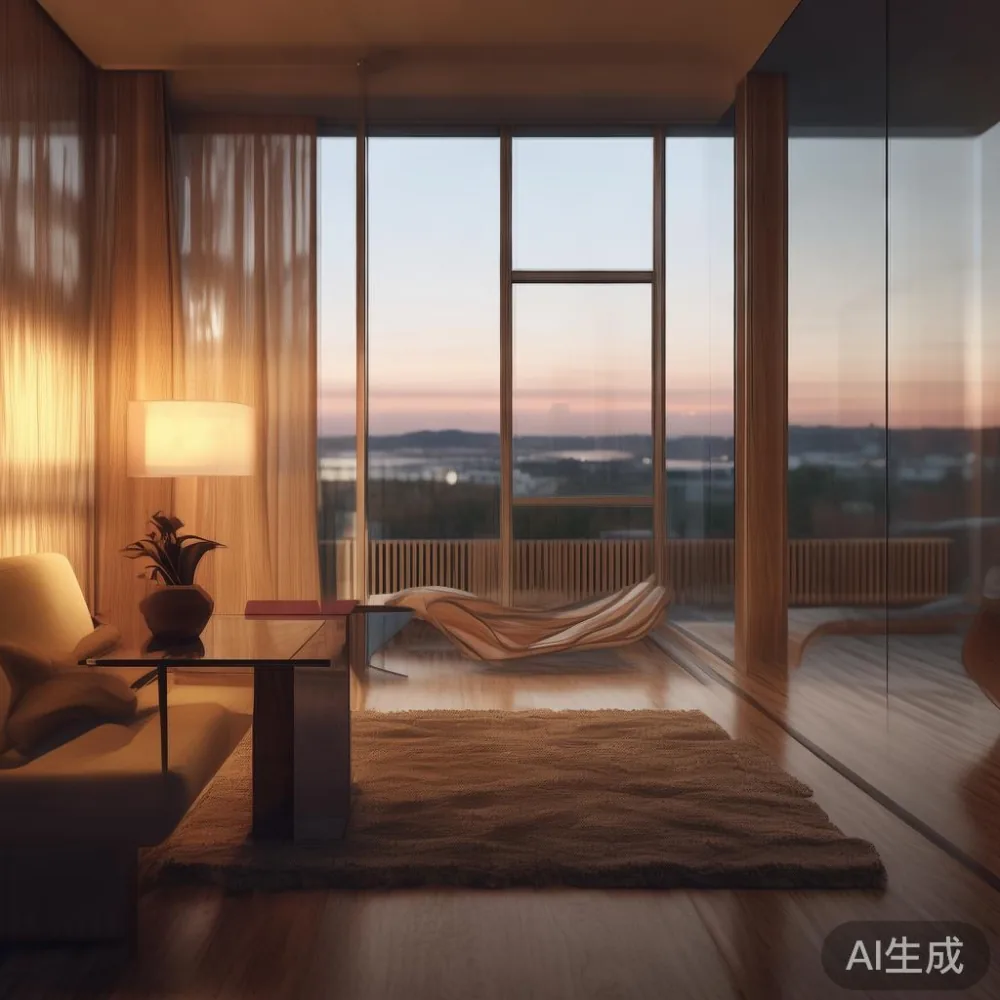
Which materials should anchor the room: solid wood, glass, or marble?
Anchor with one material per zone, not one material for the whole flat. In a typical 4-room HDB, the living zone gets a solid wood sofa frame in white oak or ash (the seat cushions can be linen or boucle, but the frame must read as a single timber block); the dining zone gets a marble table or an oak dining table on slim black steel; the bedroom gets a solid wood bed frame in the same oak as the sofa so the eye carries a single wood note across the corridor. Glass furniture earns its slot in the dining or display zones — a glass display cabinet against a feature wall, or a tempered glass coffee table that lets a jute rug show through. A wardrobe is the one piece that should stay opaque: a full-height solid wardrobe in the same wood species as the bed frame keeps the bedroom visually quiet. Nightstands should match the bed frame within half a shade; mismatched nightstands are the fastest way to break a warm minimal scheme.
For marble, choose a vein cut that the supplier can rebook across at least four slabs so the dining table, the console, and the window sill read as one stone. MIDHILL's approach with its post-modern light luxury dining line is exactly this — a Calacatta vein with a controlled book-match, set on a matte brass base that will not date the way polished chrome did in 2014. We saw a similar setup in a 1,200 sqft condo off Tampines Street 21, where a single 1.8m marble dining table anchored an open-plan living-dining area, and the entire flat looked twice as expensive as its S$980,000 asking price simply because the stone was the loudest object in the room.
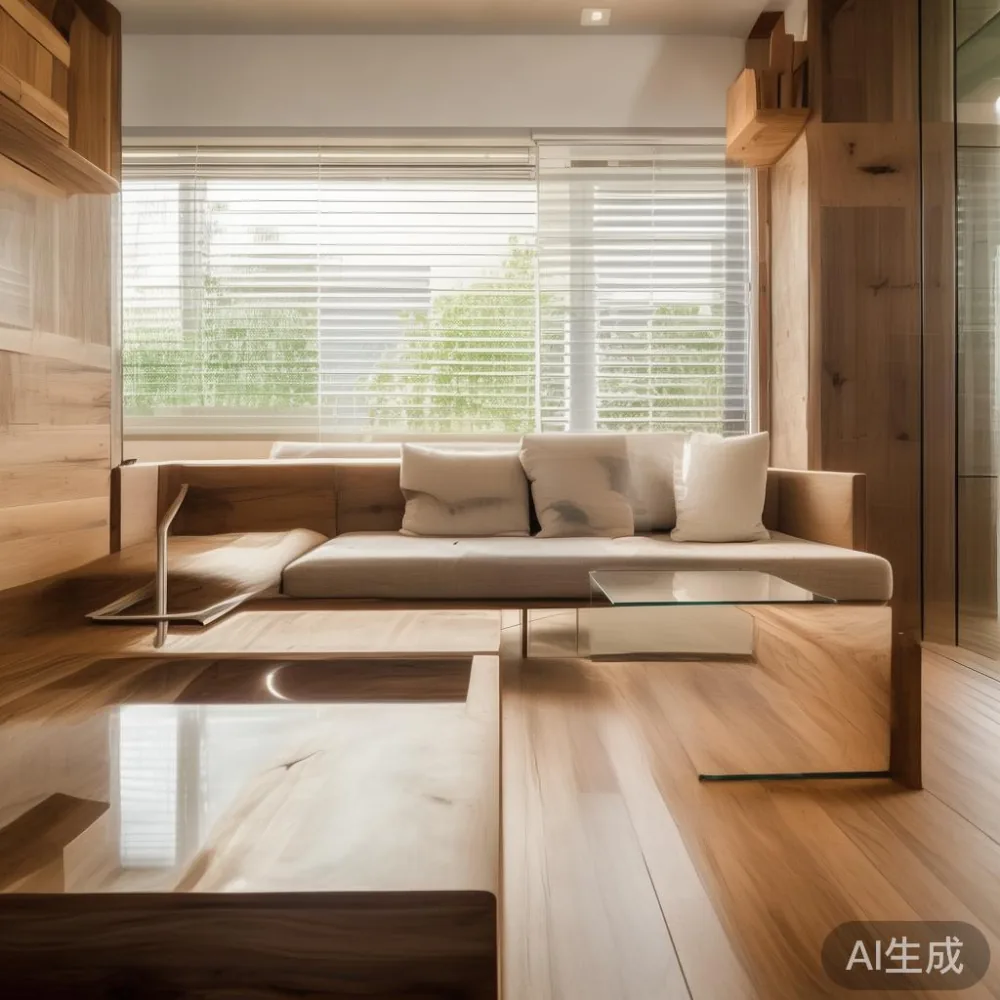
What sizes will actually fit through HDB lifts and corridors?
Measure before you order, every time. HDB passenger lifts in newer BTOs are typically 1.1m wide by 1.4m deep with a 2.1m ceiling, and the door opening is around 0.9m. Service lifts in older blocks such as those along Bedok Reservoir Road can be 1.3m by 1.7m, but you need to check with the town council. A European dining table korea-imported flat-pack will usually arrive in a box no longer than 1.6m if the legs are detached; assembled, the same table can run 2.0m to 2.4m and will not fit. This is the single most common reason for failed deliveries in Punggol — I watched a neighbour refuse a 2.2m marble table last month because the lift simply could not accept the diagonal of the tabletop even after the runner tried two lifts. The fix is always the same: order the longest length that fits your shortest lift, or choose a table with removable legs and a two-piece top. A 1.6m table seats six in comfort; a 1.8m table seats six to eight and is the practical ceiling for a 4-room HDB dining area.
For bedroom pieces, a king-size solid wood bed frame in 1.8m by 2.0m will clear most lifts when flat-packed. The internal slats should be solid wood, not plywood — a 25mm ash slat will outlast a 12mm plywood slat by roughly eight to ten years in Singapore humidity, which sits at 70 to 80 percent most nights. A wardrobe deeper than 0.6m is hard to angle into older corridors; stick to 0.55m and you can usually clear a 90-degree corner without lifting the piece off the ground. We learnt this the hard way when a 0.62m wardrobe we ordered for a Bedok client had to be carried up the stairs because the lift door was a tight 0.85m.
How do I budget honestly for a warm minimal flat in 2026?
A realistic budget for a warm minimal interior in a 4-room HDB, excluding renovation works, lands in the SGD 18,000 to SGD 35,000 range once you include the 9 percent GST and delivery. Break it down by piece and the picture gets clearer: a solid wood bed frame in white oak runs S$2,400 to S$3,800 depending on whether you choose French light luxury detailing (fluted headboard, hand-rubbed lacquer) or a simpler post-modern light luxury profile. A marble dining table for six runs S$3,200 to S$6,500; a glass display cabinet of the same height runs S$1,800 to S$3,400. A solid wood sofa frame in ash with linen cushions lands around S$3,600 to S$7,200. A full-height solid wood wardrobe for the master bedroom runs S$3,200 to S$5,800. Two nightstands add another S$700 to S$1,400. Delivery from Jurong or from a Foshan supplier shipping CIF to Singapore typically takes 35 to 55 days by sea, plus 5 to 10 days for customs clearance and final-mile delivery. Watch for MOdern-style retailers that promise 7-day delivery for solid wood pieces; that almost always means flat-pack MDF with a wood-look laminate, not a solid timber frame.
MIDHILL ships directly from Foshan to Singapore via a single container that consolidates orders every 14 days; pieces are unpackaged at our local warehouse in Kaki Bukit for acclimation to 1.4m by 1.6m and inspected for moisture content. Our kiln is targeted to 9 to 11 percent moisture content to survive Singapore humidity without cupping. On a warm minimal flat in Tampines I visited, a single shipment of one bed frame, one wardrobe, one dining table, and two nightstands came in at SGD 11,200 inclusive of GST and final-mile delivery to the door — the buyer only added the sofa, the glass display cabinet, and the rug from local retailers. Total landed cost: SGD 14,900, against a renovation budget of SGD 32,000. The furniture-to-renovation ratio of roughly 1 to 2 is a healthier target than the 1 to 4 some buyers chase, because it keeps the wood visible without forcing it to carry the design.
How do I keep glass furniture from looking cheap or fragile?
Glass furniture in a warm minimal flat either looks like a 2010s condo show flat, or it looks like a 1990s Italian villa, and the difference is almost always the glass specification. Use tempered glass at 10mm minimum for shelves and 12mm for tabletops; anything thinner flexes under a laden tray and reads as disposable. The edges should be polished, not raw — a flat polish on a glass shelf is the difference between a S$400 piece and a S$1,200 piece that looks right next to a Calacatta marble dining table. Joinery in brass, not chrome, ages into a warm patina that suits an oak bed frame in the next room. A glass display cabinet with a brass frame and reeded glass doors reads as French light luxury; the same cabinet in chrome and clear glass reads as a suburban office lobby. Place the glass piece where the room needs light — opposite a window, not against a blank wall — and the refraction does the work a picture light would do in a more traditional interior.
Should I commit to one wood species for the entire flat?
Yes, with one small caveat. The single biggest mistake my colleague sees in new Punggol BTOs is buyers mixing three wood tones in one open-plan space: teak parquet, walnut dining table, ash bed frame. The eye reads that as three separate rooms pretending to be one. Pick white oak or ash as your spine — both take a neutral stain well, both photograph the same under warm 2700K lighting, and both are available from Foshan factories in solid timber rather than veneer. Allow yourself one exception: a piece of reclaimed teak or a darker walnut accent, used in a single object such as a small side table or a picture frame. Two wood tones in one flat is a controlled palette; three is a coincidence the room will punish you for. The same logic applies to glass furniture — clear glass, reeded glass, and tinted glass in one flat is three different materials; clear and reeded is one material with one voice.
What lighting turns warm minimal from flat to finished?
Lighting is the cheapest upgrade per square foot in any HDB flat, and the one buyers skip because it is invisible on a moodboard. Warm minimal needs 2700K to 3000K throughout — anything cooler than 4000K will make an oak bed frame look grey and a marble table look blue. Layer three sources: ambient downlights at 3000K on a dimmer (about 6 to 8 fixtures for a 92 sqm flat, each at 9W LED or 800 lumens), task lighting at the dining table (a single brass pendant at 1500 to 2000 lumens hung 70cm above the marble top), and accent lighting at the glass display cabinet (a 3W LED strip at 2700K inside the cabinet, on a separate switch so you can leave it on overnight as a night light). Add a single floor lamp in the reading corner — a 12W LED at 2700K with a fabric shade, not a metal one — and the room stops looking like a catalogue. Budget about SGD 1,400 to SGD 2,200 for the full lighting plan, including dimmers and smart switches, and the flat will photograph with the same glow a 2,400 sqm sample library uses for its moody shots.
Is the warranty and after-sales story actually meaningful here?
For solid wood furniture in Singapore humidity, yes. A 10-year structural warranty is the minimum you should accept on a solid wood bed frame and a solid wood wardrobe — anything shorter and the supplier is not confident in the kiln-dry process. Refinishing matters even more: Singapore sun will bleach an oak dining table within 18 months if it sits within 1.5m of an unfilmed window, and a free or low-cost refinishing service turns a S$3,200 table into a S$3,200 table that looks new in year five. Lifetime refinishing, where the factory takes the piece back, sands it, re-stains it, and re-lacquers it for a nominal fee, is the single most under-valued service in the industry. MIDHILL offers exactly this on its solid wood sofas, bed frames, dining tables, wardrobes, and nightstands — the buyer ships the piece back to the Foshan consolidation warehouse via a scheduled 14-day container, and the cost is roughly SGD 280 to SGD 540 per piece inclusive of return shipping. Add a 14-day return window for unassembled pieces still in the carton, free shipping over a landed order value of SGD 480, and the after-sales package is the reason some buyers in Tampines and Bedok stay with one supplier across multiple rooms instead of mixing sources.
Final thought: what should you order first?
Order the biggest, heaviest, longest-lead piece first. In a 4-room HDB that is almost always the wardrobe or the dining table — both run 35 to 55 days from order to delivery, and a missed measurement on either can set the whole schedule back by a full container. Once the anchor pieces are in, the bed frame and nightstands arrive on the next cycle (28 to 42 days), and the glass furniture — display cabinet, coffee table, console — is usually in stock locally or ships in 21 to 35 days. The order matters because the wood tone of the anchor pieces dictates the stain on every other timber piece. Get the dining table wrong and the entire flat reads as a mistake; get it right and the rest is just patience, a tape measure, and one consistent wood species carried from the front hall to the master bedroom.