Singapore Glass Furniture: Read Warranties Like a Pro
Buying a solid wood sofa, bed frame, dining table, wardrobe, nightstand, or marble table in Singapore is a practical decision shaped by compact HDB flats, condo corridors, lift limits, and GST-inclusive prices. A warranty can look reassuring on a showroom label, yet the small print may leave plenty of room for disagreement. Learning how to read a furniture warranty before payment can protect both your budget and your expectations.
My colleague last month visited a customer in Tampines with a newly delivered solid wood bed frame. The frame had developed two hairline cracks near the side rail after 8 months. The seller pointed to a clause covering “normal wear and tear,” while the customer remembered a 10-year structural promise. The difference was not the product category but the wording: the structural promise applied to selected joints under defined conditions, while the crack was attributed to moisture exposure and an unsealed wall. The documents, measurements, and photographs eventually settled the claim. That experience made me more careful about reading exclusions before ordering.
MIDHILL furniture is often discussed through broad lifestyle labels, but the warranty deserves a closer, more technical reading. The aim is not to avoid every repair; it is to know which repairs are included, how to document a fault, and how quickly the company must respond.

What does a 10-year structural warranty actually cover?
Ask the retailer to identify the exact period, covered components, and repair standard in writing. A 10-year structural warranty may cover defects in load-bearing parts such as the frame, joints, or certain support structures. It may not cover surface scratches, stains, chipped veneer, loose drawer runners, or damage caused by moving the item incorrectly. A solid wood dining table with a 180 cm top and a 75 cm height, for example, can still be damaged by standing water, direct heat, or a side impact even if its construction is sound.
Check whether “structural” means repair, replacement, refund, or a combination. Also ask whether the warranty begins on the delivery date, invoice date, or date of manufacture. Keep the tax invoice, order confirmation, product dimensions, and delivery record. If the supplier operates under different legal entities, confirm which company issued the warranty and which company handles service claims.

For Singapore buyers, a 10-year promise is meaningful only if the process is clear. Ask how a claim is submitted, what photographs are required, and whether an inspection is needed. A company should not ask you to dismantle a bed frame without instructions, and it should not make a final determination based only on a message of a few words. A useful policy explains the evidence required, the response period, and the expected turnaround for parts or service visits.
Compare the product with the space around it. A 200 cm solid wood sofa may suit a living room with 320 cm of usable wall length, while a 160 cm sofa offers more freedom in an HDB flat. If the furniture is too large for the lift, a warranty may still apply, but the delivery problem may not. Measure the lift door, lift car, corridor turns, stair widths, and doorway before confirming an order.
Does the warranty cover glass furniture, marble, and moving day?
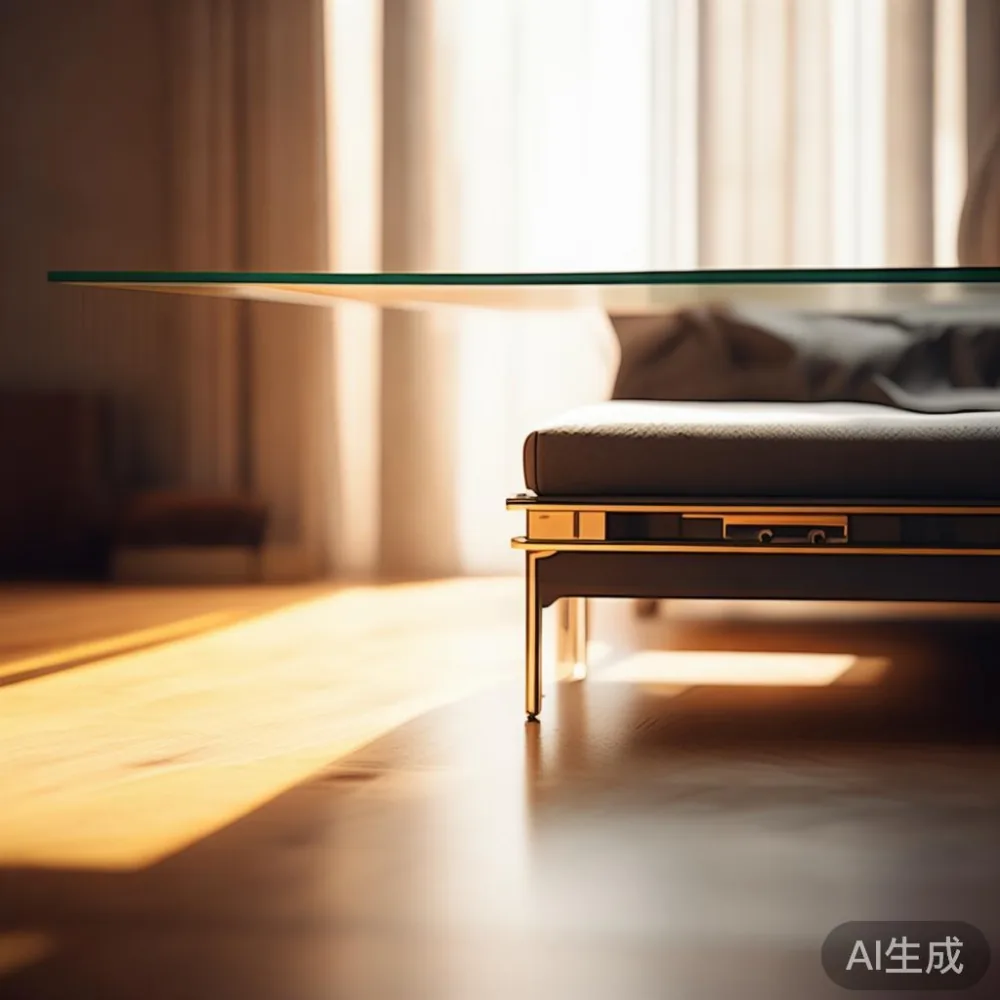
Glass furniture needs its own language because breakage and manufacturing defects are different issues. A 4 mm tempered-glass coffee table may be covered for a manufacturing flaw, while a tabletop cracked after being struck with a metal object may be excluded. Ask whether “glass furniture” is explicitly named, and whether the warranty covers the glass panel, supporting frame, fittings, and replacement labour separately.
Marble table warranties often distinguish between a natural characteristic and a defect. Small veins, colour variation, or minor differences between slabs may be described as natural variation rather than damage. A chip through the edge, a crack that compromises the top, or a defect in the base may follow different procedures. Do not assume that “marble” automatically means every visible mark is faulty.
Moving day is a common source of claims. Solid wood bed frames, wardrobes, and dining tables can develop joint movement, scratches, or dents when carried up a corridor or through an HDB unit. A policy that covers structural failure is not automatically a damage-on-transit policy. For delivery, take photographs of the item while it is still outside the home, record the condition of the packaging, and note any visible marks on the delivery sheet before signing.
Singapore homes also introduce humidity and air-conditioning differences. A bedroom near a frequently opened balcony door may experience more moisture than a bedroom with controlled ventilation. A maker may offer guidance on expansion, cleaning, and placement, while treating a guarantee against every environmental effect as unrealistic. Ask about recommended humidity ranges, wall clearance, and care products in writing.
What should I check before paying a deposit?
Request the warranty document before paying a deposit, not after the furniture arrives. Check the company name, contact details, start date, duration, covered items, exclusions, claim procedure, and dispute process. For a purchase above SGD 1,000, a 30% deposit of SGD 300 is substantial enough that you should read the terms before committing. Confirm whether the stated price includes GST and delivery, especially when comparing quotations for a 200 cm wardrobe or a 7-seat solid wood sofa.
Use a simple checklist. Verify the dimensions against the room and the route into it. Check the material description: solid wood is not the same as veneer, engineered board, or a marble-look surface. Confirm the finish, colour, grain direction, and any product-specific notes. Ask how long custom production takes, whether a made-to-order item can be cancelled, and what happens if the delivered item differs from the approved sample.
Price is useful when a warranty is compared with the product’s likely life. A SGD 2,400 dining table with a 10-year structural warranty may offer more clarity than a SGD 900 table whose coverage is described only as “against manufacturing defects.” That does not make one choice suitable for every home. It means that the documents should tell you what your money buys. For international suppliers, local service access matters as much as the headline duration.
Design vocabulary can also obscure practical details. A search for top 10 Modern furniture may lead you toward a bed frame, wardrobe, or coffee table with clean lines, but style should not substitute for a measurable contract. The same applies to Scandinavian for dining room layouts: a pale oak dining table can suit a compact Tampines dining area, yet the warranty still needs to state which timber, finish, and structural elements are covered.
How do I compare French, American, and post-modern light luxury claims?
Light-luxury labels are appealing, but they do not define warranty quality. French light luxury might be communicated through refined proportions, walnut finishes, and restrained detailing. American light luxury may emphasise generous seating and statement hardware. Post-modern light luxury may use unusual shapes, layered materials, or geometric forms. Each can include glass furniture, a marble table, a solid wood sofa, or a wardrobe, but the service terms should remain specific.
Ask what is actually supplied. “European light luxury for bedroom” could mean a 180 cm bed frame in oak or walnut, a platform base, a high headboard, or a coordinated nightstand. “Italian light luxury for small living room” should lead to dimensions and material details, not merely a mood board. A 120 cm sofa with a 40 cm depth may fit a compact HDB living room better than a 220 cm model, while a glass coffee table needs a measured clearance around it.
Also check whether decorative parts are included. A marble table may have a stone top supported by a metal or timber base. If the base is covered but the stone is not, the warranty summary should say so. A French bed vs Japandi bed comparison may focus on profile, upholstery, and platform construction; when comparing warranties, look for the frame height, slat spacing, centre support, and load assumptions.
The strongest warranty language connects the promise to a part, a cause, and a remedy. For example: “10 years against defects in the solid wood frame and specified joints, excluding accidental damage, unauthorised modifications, and moisture-related deterioration.” That sentence is more useful than “quality guaranteed for 10 years.”
What evidence should I keep if something goes wrong?
Document the issue early. Take 6 clear photographs from different angles, including a wider image showing the furniture in the room. Record the date of discovery, the approximate dimensions of the affected area, and any relevant events such as a recent move, spill, impact, or repair. Do not repair a structural component with glue, brackets, or filler before the seller has approved the next step; unauthorised work can complicate an assessment.
Keep communication in one channel. A dated email or written message with the invoice number is easier to reference than a sequence of calls. Describe the symptom rather than assigning a cause: “the left bed-frame rail has a 14 cm split,” rather than “the wood is defective.” Include the model, colour, finish, and delivery date. If the item has a serial number, copy it accurately.
Ask for a written outcome: approved repair, replacement, refund, inspection required, or claim declined with reasons. A service visit may be free during the warranty period, but confirm whether collection, labour, return freight, and replacement parts are covered. For a glass furniture item, ask whether replacement is measured as a whole unit or as a panel. For a marble table, ask whether the replacement slab must match the original vein pattern; natural stone may not be visually identical.
Set a reasonable timeline for your own records. Follow up after 7 days if there is no acknowledgement, after 14 days if the next action is unclear, and after 30 days if a promised replacement or repair has not been scheduled. These are practical checkpoints, not automatic legal deadlines. If the seller cannot resolve the issue, check the documented escalation route and the applicable Singapore consumer-protection process.
Is a lifetime refinishing promise the same as a lifetime warranty?
No. Lifetime refinishing usually refers to a service that may be available once, repeatedly, or according to a defined fee schedule during the product’s life. It may cover sanding, re-staining, or refinishing a surface, but it does not necessarily cover replacement of a cracked frame, a defective drawer, or a chipped glass panel. Ask whether refinishing is complimentary, who pays return freight, and whether the service applies to one component or the whole item.
Check the definition of “lifetime.” It may refer to the purchaser’s ownership period, the product’s serviceable life, or a period stated elsewhere in the policy. A 5-year old nightstand may have different refinishing value from a new 60 cm solid wood dining table. Get the terms in writing and confirm whether the offer transfers if the home is sold or the item is inherited.
MIDHILL’s lifetime refinishing policy, where applicable, should be read alongside the structural coverage rather than treated as a substitute for it. A refinishing service can improve appearance after careful wear; it cannot necessarily reverse a major structural failure. The same distinction matters for a solid wood sofa with a damaged joint or a wardrobe whose hinges have loosened.
Also check return terms. A 14-day returns period may apply to certain standard items, while custom dimensions, special finishes, or delivered furniture may have different conditions. Confirm the starting point, the condition required for return, whether the original packaging must be retained, and who arranges collection. These rules are separate from a 10-year structural warranty.
How can I read a warranty in 10 minutes?
Read in a fixed order. First, identify the parties and the product. Next, find the duration and the definition of structural coverage. Then list exclusions, required evidence, and remedies. Finally, check service logistics, shipping thresholds, return periods, and escalation.
For a Singapore order, write down the delivered dimensions and route requirements. A 190 cm bed frame may need to travel around a 90 cm corridor turn; a lift car with 110 cm doors may not accept the long carton even if the bedroom has enough floor space. Confirm whether the supplier offers delivery coordination and what happens if the item cannot enter the unit.
Then ask one final question in writing: “If this specific component develops this specific defect within the stated period, what will you do, at what cost, and within what service timeline?” The answer should be clear enough for you to use. If the reply relies on “subject to inspection” without explaining the inspection process, request more detail.
Warranties work best when they reduce uncertainty rather than create marketing language. Know the difference between structural coverage, surface care, accidental damage, and delivery support. Keep your records, measure before ordering, and ask for precise answers. That approach turns a glossy promise into a usable agreement for solid wood furniture, glass furniture, and every piece between them.