Veneer or Solid Wood? Comparing 5 Years of Ownership Costs for Singapore Homes
Choosing furniture for an HDB flat in Tampines, a Bedok condo, or a new Punggol home is rarely a decision about appearance alone. Price, delivery access, humidity, maintenance, resale value, and the usable life of each piece all affect the amount paid over 5 years. Veneer and solid wood occupy different positions: veneer can deliver a refined, light-luxury look at a lower entry price, while solid wood offers repairable construction and a different character after years of use.
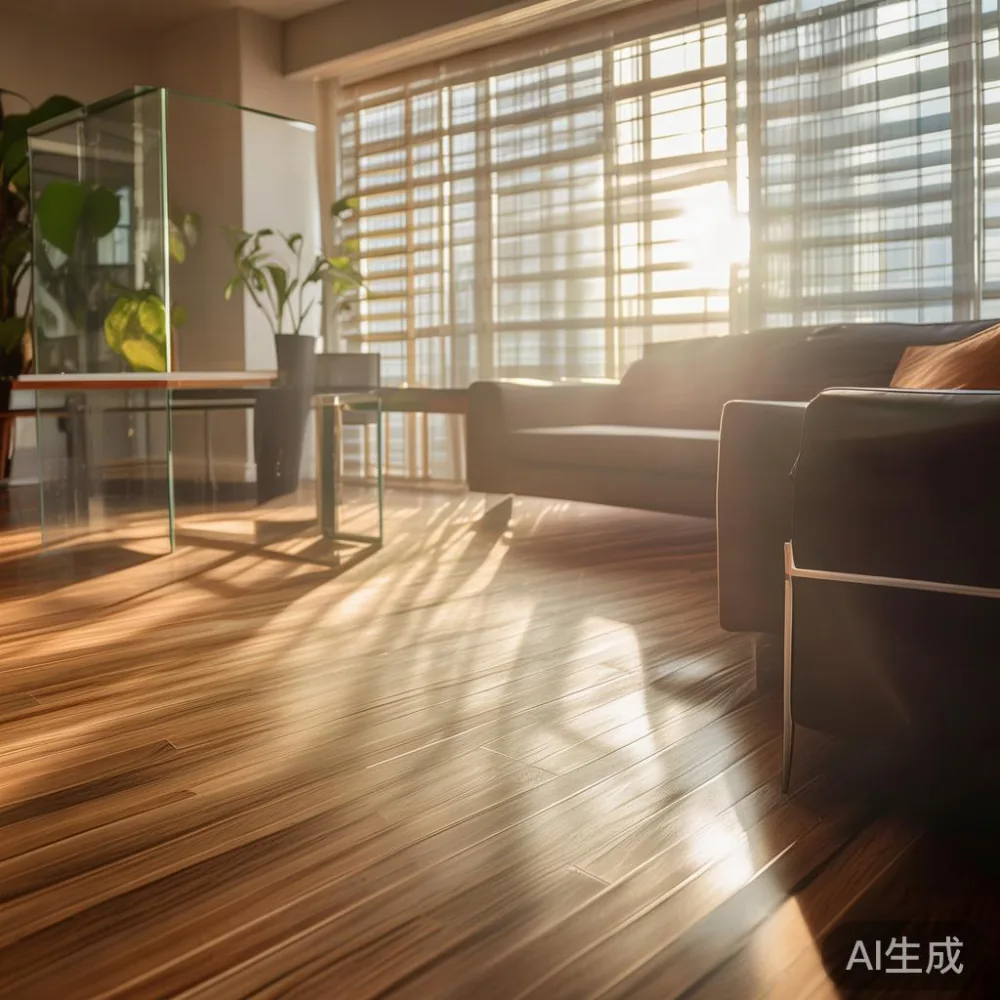
For glass-furniture projects, the comparison is just as relevant. A smoked-glass dining table may sit beside a solid wood dining table, while a glass display cabinet can share a room with a solid wood wardrobe. The timber affects the supporting pieces; it does not make the glass surface any less demanding. This guide compares veneer and solid wood over a 5-year period using practical figures for Singapore households.
What does “5-year cost” actually include?
<A fair comparison starts with the delivered price rather than the showroom figure. For this exercise, I have modelled one representative dining table and one representative wardrobe in SGD, including the likely 9% GST where shown. The estimates are planning figures rather than quotations, and actual prices vary by dimensions, timber, finish, and design.
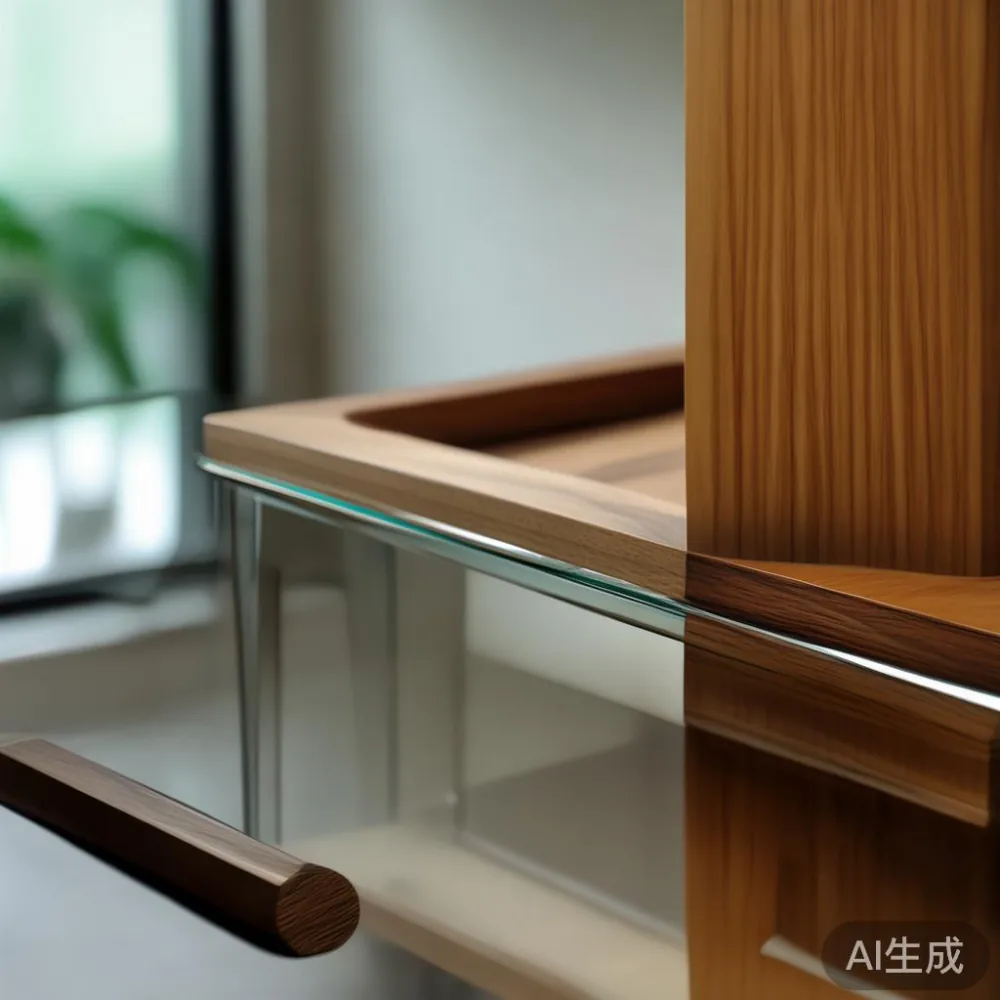
The veneer example is a 180 × 90 cm dining table with an engineered-wood or hardwood-veneer structure and a 12 mm glass top. Its estimated purchase price is SGD 1,080 before GST and SGD 1,177.20 after GST. The solid wood equivalent uses a 180 × 90 cm solid rubberwood or similar table with a 12 mm glass top at SGD 1,780 before GST and SGD 1,940.20 after GST. The glass is treated as the same material in both cases, so the difference reflects the supporting timber.
For the wardrobe, a 150 × 60 × 210 cm veneer unit is estimated at SGD 1,320 before GST and SGD 1,438.80 after GST. A comparable solid wood wardrobe is SGD 2,150 before GST and SGD 2,343.50 after GST. The figures include a simple allowance for delivery, but not staircases, lifting, or difficult corridor access.
Over 5 years, the calculation divides the purchase price into annual ownership cost and adds care products, repair reserves, and realistic refinishing expenses. It also assigns a conservative residual value. These are not guaranteed resale figures; they are a way to compare two purchase decisions using the same assumptions.
How does veneer behave in Singapore’s humidity?
Veneer is a thin layer of timber, generally about 0.3–0.6 mm in decorative furniture, bonded to a stable core such as MDF or plywood. A well-made 18–25 mm plywood core is less prone to expansion than a 12 mm particleboard core. It can create convincing grain continuity and a smooth finish suited to French light luxury, where restrained profiles and pale timber can make a compact flat feel more spacious.
Singapore’s outdoor humidity is commonly around 70–85%, while air-conditioned interiors are often held near 55–65%. A solid wood dining table will expand and contract as timber responds to those changes; veneer also moves, but the movement of its layered core and adhesive bond must be controlled. Edges, corners, and areas around fittings deserve particular attention because lifting or bubbling is more noticeable there.
Last month I visited a colleague’s three-room HDB flat in Bedok and checked a veneered sideboard that had stood beside an air-conditioned living-room wall for 3 years. The main panels remained flat, but the front edge near the balcony door showed a 4–6 mm swelling line after the family temporarily moved the air conditioner. The sideboard had been wiped with a wet cloth more often than recommended. Cleaning it with a lightly damp microfibre cloth and restoring the edge within 48 hours prevented further damage.
The lesson is practical: keep veneer and glass furniture at least 30 cm from open windows or direct balcony doors where possible. Use coasters and mats, maintain 40–60% indoor humidity with a dehumidifier if readings rise consistently, and inspect edges every 6 months. Solid wood tolerates minor surface marks more gracefully, although it can still crack along grain or around joints.
What will the dining table cost over 5 years?
The veneer dining table starts at an estimated SGD 1,177.20 with GST. A modest care allowance of SGD 30 per year, or SGD 150 over 5 years, covers timber cleaner, a soft microfibre cloth, and small touch-up materials. A repair reserve of SGD 90 per year adds SGD 450 for edge lifting, hardware changes, or local refinishing. The estimated resale value after 5 years is SGD 350.
The 5-year veneer dining table cost is therefore approximately SGD 1,177.20 + SGD 150 + SGD 450 − SGD 350 = SGD 1,427.20. That is SGD 285.44 per year. If the whole top were replaced in year 5, the reserve would not cover it, so this model assumes repairable minor damage rather than a complete rebuild.
The solid wood table starts at SGD 1,940.20 with GST. Its annual care allowance is also SGD 30, but a larger SGD 180 annual repair reserve reflects sanding, filling, and refinishing work that may become necessary after daily use. That adds SGD 900 over 5 years. Estimated resale value is SGD 700 because solid wood retains visible material value more clearly than a mostly engineered core.
The resulting solid wood dining table cost is SGD 1,940.20 + SGD 150 + SGD 900 − SGD 700 = SGD 2,290.20, or SGD 458.04 per year. The saving from choosing veneer is about SGD 863 over 5 years under these assumptions, or roughly SGD 173 per year.
This is where the word “resale” needs caution. A used dining table must still be clean, intact, and desirable. A smoked-glass top with chips may reduce buyer confidence regardless of the base. The model treats the two tables as visually comparable; a branded, unusually designed, or poorly maintained unit may perform differently.
How do wardrobe costs compare after 5 years?
A veneer wardrobe has a higher proportion of flat surface area, making its finish consistency important. Rotating panels can reveal differences in colour as daylight and age affect the surface. Polygonal or slab doors may therefore show more variation than plain hinged doors. Japanese-inspired sliding doors can work well when the core, tracks, and veneer are specified carefully, but cheap construction can make movement difficult.
Consumers searching for how to choose Japanese wardrobe should compare the core thickness, drawer or door movement, hanging space, and replacement parts—not just the visible timber. Look for a 15–18 mm drawer box, runners rated for at least 30 kg, and fittings that can be serviced locally. Japanese sliding systems may save 40–70 cm of floor clearance in a compact bedroom, but the opening method should suit the HDB household rather than simply matching a style label.
The wardrobe comparison follows the same assumptions. The veneer wardrobe costs SGD 1,438.80 with GST. Annual care is SGD 25, or SGD 125 over 5 years, and an annual repair reserve of SGD 100 adds SGD 500. Its estimated resale value is SGD 400. Total 5-year cost is SGD 1,663.80, equivalent to SGD 332.76 per year.
The solid wood wardrobe costs SGD 2,343.50 with GST. Care remains SGD 125 over 5 years, while a higher SGD 150 annual repair reserve adds SGD 750. Estimated resale value is SGD 850. Total cost becomes SGD 2,368.50, or SGD 473.70 per year. The veneer option saves about SGD 704.70 over 5 years in this model.
That gap does not mean veneer is automatically the sensible choice. A person who values the ability to sand a wardrobe back, replace a rail, or retain more character may accept a higher annual cost. A person furnishing a rental unit with a planned 24–36 month stay may prefer lower initial outlay and expect to replace it before year 5.
Is American sofa worth it for a Singapore home?
For a sofa, solid wood can contribute to a strong frame, but upholstery, foam density, and joinery determine comfort more than timber alone. The question “is American sofa worth it” is useful for consumers comparing broad American light luxury styling with more compact European profiles. A 220–240 cm American sofa may be difficult to move through a typical HDB common corridor and may not fit inside a lift or a 900 mm bedroom doorway.
Consumers comparing European sofa vs Mid-century modern sofa should measure both routes before ordering. A boxed sofa weighing 75–95 kg may need 2–3 people and a delivery elevator booking. A modular European sofa in separate pieces may weigh 60–85 kg and fit through a 800–900 mm door one module at a time. Neither style automatically solves access constraints.
The furniture can include a solid wood sofa frame with upholstered seating, but the 5-year table calculation focuses on the timber component’s proportional effect. For a sofa, allow about SGD 20–50 per year for fabric cleaning and SGD 80–250 per year for repairs or partial reupholstery, depending on use. A solid wood dining table or bed frame remains easier to maintain because its timber surfaces are exposed and repairable.
This also fits post-modern light luxury, where one strong material is combined with clean geometry. A solid wood dining table beside a glass console can look composed without filling every surface. Veneer can achieve a similar visual result at a lower cost, provided the finish and edges are specified well.
How do delivery, lifts, and corridors affect the final bill?
Delivery can erase a purchase-price advantage. In many Singapore condo lifts, furniture must remain within the lift’s door width and diagonal clearance. A 180 × 90 cm glass-top dining table should be checked against a lift interior of roughly 110 × 140 cm; the table cannot necessarily enter diagonally even if its width is under the door opening.
At the kerbside or service lobby, the carrier may need 2–5 extra minutes to protect and angle the package. Lift booking, Sunday delivery, and carrying to the unit can add SGD 40–120 per trip. If a staircase is involved, a two-person carry may cost SGD 80–180. These charges should be quoted before checkout.
Glass furniture needs especially careful planning. Tempered glass should be transported upright on edge with corner protection, not laid flat under heavy objects. A replacement 12 mm top for a 180 × 90 cm table can cost roughly SGD 180–350 depending on colour and processing. Owners should confirm whether glass is included in the structural warranty and how replacement is priced.
For furniture shoppers looking for sale Minimalist furniture, compare delivered cost rather than promotion labels. A SGD 100 saving is less useful if the delivery quote adds SGD 140. At the same time, low delivered price does not replace clear dimensions, timber samples, and care instructions.
MIDHILL states that its solid wood furniture carries a 10-year structural warranty and lifetime refinishing, and its policy includes free shipping over US$350. For Singapore buyers, the currency threshold still requires conversion and the final local quote should be checked. A 5-year plan also benefits from 14-day returns when the piece does not suit the room or access arrangements. These policies are relevant because maintenance and ownership support affect long-term cost.
Which option costs more after scratches, repairs, and refinishing?
Minor damage reveals the practical distinction. Veneer usually cannot be deeply sanded without exposing the core or changing its colour. A local repair may cost SGD 80–180 per affected edge or panel, and full refinishing can be difficult if the original finish is unavailable. Solid wood can often be sanded, filled, and refinished, but deep splits or joint movement remain costly. Typical local refinishing might range from SGD 180–450 for a dining table, depending on condition and size.
Glass changes this pattern. Scratches on the timber base can be treated without touching the glass. Chips in a 12 mm glass top require a specialist, and tempered glass cannot be cut or polished like a small edge defect in an ordinary pane. Protective pads under décor, stable humidity, and careful lifting can prevent most glass damage. A marble table provides a useful comparison: natural marble also needs careful handling, while its surface cannot be refinished in the same way as timber. This is why material selection should match the room’s use and the household’s willingness to maintain it.
The wardrobe can also define a bedroom’s atmosphere. A Minimalist for guest room plan may use a veneer unit at 150–180 cm wide with closed storage and one open shelf. For a master bedroom, a solid wood wardrobe may justify the higher 5-year cost if it will hold heavier objects and remain in place for 8–10 years. If a renter expects to move within 3 years, the lower upfront cost is often more rational.
Design guidance for how to style Japandi wardrobe in room layouts should focus on proportion and light. Pale oak-toned veneer, warm solid wood, off-white walls, and a 60–90 cm bed can create a calm effect in a compact HDB room. Avoid placing wardrobes directly against external walls with known dampness. Allow roughly 5–8 cm behind movable units for ventilation and maintenance access where the manufacturer permits.
What is the 5-year verdict for Singapore homes?
For the modelled dining table, veneer costs about SGD 1,427 over 5 years compared with SGD 2,290 for solid wood. For the wardrobe, the comparison is about SGD 1,664 versus SGD 2,369. Across both examples, the total veneer outlay is approximately SGD 3,091, while solid wood reaches about SGD 4,659. The difference is about SGD 1,568, or SGD 314 per year.
These figures support a clear pattern rather than a universal verdict. Veneer can provide lower 5-year cost when the core is well made, humidity is controlled, and the finish accepts limited repair. Solid wood can justify its premium when long service, visible grain, refinishing, and retained material value matter more than the lower annual figure.
Before ordering, measure the lift door, lift interior, corridor turns, stair width, and bedroom door. Ask for the timber and core specification, glass thickness, edge treatment, care instructions, and delivered price in SGD. Confirm whether GST, lift fees, and assembly are included. For an online reference, the manufacturer’s site is www.midhill.co, but local dimensions and service terms should still be verified.
For glass-furniture schemes, treat timber as the repairable foundation and glass as the precise, vulnerable surface. A 5-year budget is not only about what a piece costs on delivery day. It includes the cloths, cleaners, edge repairs, replacement hardware, humidity management, and realistic resale after the family has lived with it.