Glass Furniture Warranties: What You Need to Know in Singapore
A furniture warranty is not simply a promise to repair anything that fails. It is a narrow contract defining which defects are covered, who pays for transport, how claims must be documented, and what happens after repeated repairs. That distinction matters in Singapore, where a dining table may need to pass through a lift door measuring only 80 cm, a corridor may include a 90-degree turn, and replacement parts can take 14 to 30 days to arrive from China.
MIDHILL offers a 10-year structural warranty on qualifying solid wood furniture, alongside lifetime refinishing and a 14-day return window. Those terms sound reassuring until you discover that “structural” refers to particular components, while scratches, movement, incorrect assembly and commercial use may sit outside the claim. The practical skill is not asking whether a warranty is long. It is reading how its categories, timelines and procedures work.
This guide applies directly to glass furniture, solid wood sofas, bed frames, dining tables, wardrobes, nightstands, marble tables and other pieces sold for HDB flats, private condos and landed homes in Tampines, Bedok and Punggol. The same questions also matter when comparing wholesale light luxury furniture for a showroom or a larger residential project.

What exactly does a 10-year structural warranty cover?
Begin with the item named in the warranty, not the headline duration. A 10-year structural warranty may cover cracks in certain solid wood components, joint failure under normal residential use, and specified defects in frames or joinery. It may not cover every component in a dining table, bed frame or wardrobe. Upholstery, glass, marble, electrical fittings, moving hardware, drawer runners and finishes can have separate treatment.
Look for the exclusions. Common ones include improper assembly, accidental impact, standing on a solid wood sofa arm, overloading a wardrobe shelf, using a marble table as a work surface, or failure caused by excessive humidity. In a Singapore condo, direct afternoon sun can raise a glass tabletop’s surface temperature by more than 10°C in 30 minutes. Repeated thermal cycles may lead to seal failure that is not treated as a structural defect.

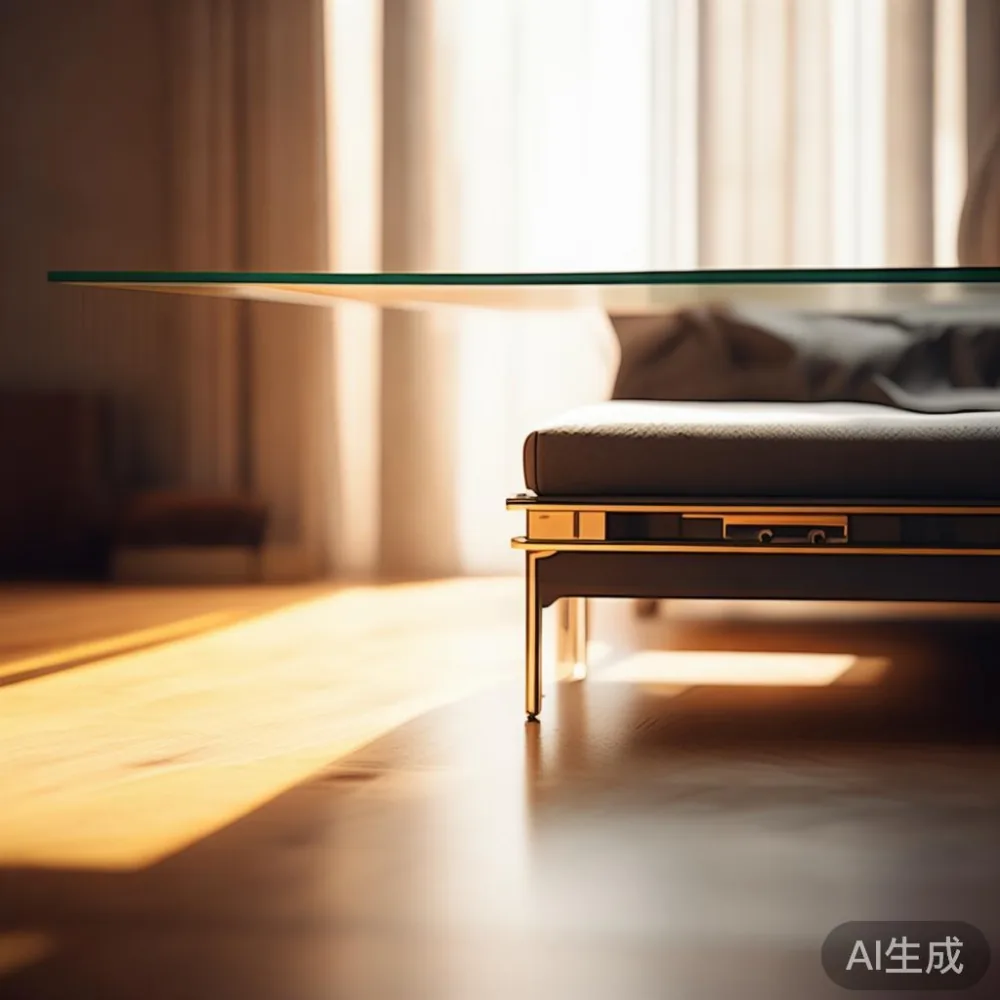
For glass furniture, identify whether “glass” means the pane, the silicone joints, the metal base, or the complete product. A lifetime seal warranty is different from a 10-year frame warranty. If the document merely says “glass furniture defects,” request a written breakdown. A 5-year warranty on a dining table means little if carriage, dismantling and reinstallation are excluded after the first year.
Confirm whether the 10 years run from purchase, delivery or invoice date. They should be traceable to one clear date. Also check whether the warranty transfers with the property. In most HDB and condo sales, the original purchaser receives the claim rights, but a written transfer policy is useful if the home is sold within 3 years.
Which defects are covered, and which are not?
Separate manufacturing defects from care issues. A manufacturing defect might be a warped door panel, a loose mortise-and-tenon joint, an uneven drawer base, or a hairline opening in a wardrobe carcass. Care issues might include a finish marked by a damp cloth, glass scratched by abrasive pads, or movement caused by a floor that is not level.
Check the “normal use” definition. Residential use usually means a table with 4 chairs in a dining room, not 12 guests at a dinner party. A wardrobe with a 40 kg load per shelf may be rated differently from one intended for folded clothing. A marble table used for a laptop, hot pan and homework should not be confused with one used as a display surface. If your actual use differs from the stated use, ask for written confirmation rather than assuming the warranty will absorb the cost.
Watch language such as “minor” and “cosmetic.” A visible defect may be free under the 14-day return period yet not qualify for a structural claim in month 7. That is not contradictory; it reflects the difference between a return and a warranty repair. Under Singapore’s Consumer Protection (Fair Trading) Act, business representations should not mislead, but the precise scope of a voluntary warranty still needs to be understood before purchase.
For a product positioned in French light luxury or American light luxury, the aesthetic finish still needs a technical definition. “Hand-finished oak” should state the veneer or solid wood species, finish type and expected colour variation. “Marble table” should identify marble type, thickness and whether the top is natural stone. A 20 mm engineered marble top and a 20 mm natural marble top do not carry the same risk profile.
Who pays for collection, return shipping and reinstallation?
The most important paragraph is often the logistics paragraph. Ask whether the company sends a technician, provides a replacement part, refunds the repair cost, or replaces the whole item. Then establish who bears the cost of getting the item from your Tampines unit to the workshop and back again.
A claim involving a 180 cm solid wood dining table is more involved than replacing a loose nightstand bracket. The item may need to be dismantled because a lift door is only 85 cm wide. If the service team must remove legs, wrap the glass in a crate and book a van, the labour can take 2 hours even before travel. Some warranties include collection only for defects confirmed within the first year; others include it throughout the 10-year period. Ask for the number directly rather than accepting “we will arrange service.”
For Singapore deliveries, GST is typically shown as a separate 9% line on taxable invoices. Record the item price, GST and delivery charge separately. If a claim produces a replacement, does the company issue a full refund, a replacement invoice with GST, or a credit? A good answer should match Singapore tax records.
The 14-day return policy is a separate layer. Customers should check whether return freight is refundable for a change of mind. Physical damage, special orders and installed wardrobes may be treated differently. If the item must reach the workshop, be unassembled or returned in its original packaging, confirm that condition before accepting delivery.
Will the glass furniture fit through my lift, corridor and doorway?
Ask the supplier for the packaged dimensions, not just the furniture dimensions. A dining table may be 180 × 90 × 75 cm but arrive in two boxes. A glass panel may measure 160 × 80 × 1.2 cm, while its protective carton adds 4 cm on each edge. If the lift opening measures 80 cm, the carton is already too wide unless it can be turned safely and the building permits it.
Measure the route from the service lift lobby to the unit. Record the lift car width and depth, the doorway width, any corridor turns, thresholds and stair width. HDB blocks vary, and newer towers in Punggol do not have the same access as older blocks in Bedok. A common corridor may provide 120 cm of clearance but include a right-angle bend where the diagonal matters.
For a wardrobe, ask whether it arrives flat-packed or assembled. A 220 cm tall assembled wardrobe may not fit through an 82 cm door; a flat-pack system is often more practical. For a marble table, ask whether the top is packed separately and whether the base needs assembly. For a bed frame, check whether the headboard and side rails are separate. These are delivery questions as much as warranty questions because damage during unsuitable delivery may be excluded from claims.
Last month I visited a colleague’s 3-room HDB flat in Tampines with a replacement solid wood coffee table. The lift opening measured 88 cm, and the manufacturer’s carton was 92 × 54 × 48 cm. It could not enter. The unit was usable, but the supplier had to send a technician to dismantle the existing table and another team to install the replacement. That visit showed why “free shipping” and warranty collection should never be assumed to mean “free access to your home.”
How do I document the defect before contacting the company?
Create a claim file before the problem disappears. Photograph the whole item, then take close images of the defect with a ruler or coin for scale. Record the purchase date, invoice number, product name and warranty reference. Keep the original packaging if storage space allows; in an HDB flat, that may mean the corridor or a stack of boxes under the bed.
For glass furniture, photograph the damaged corner, edge, seal and support points. Include an image showing how the glass is fixed to the base. For a dining table, capture the joint from more than 1 angle. For a wardrobe, photograph the top, bottom and hinge fixings so the company can assess whether the carcass or hardware has moved. A short 20-second video showing a drawer repeatedly closing is often clearer than 6 still photographs.
Describe events in sequence. State when you first noticed the issue, whether it began after assembly, whether the piece was moved, and what changes followed. Avoid speculative terms. “The left rear leg became uneven by 6 mm within 4 months of delivery” is useful. “The table is terrible” is not.
Ask for a case number and a written repair estimate if the company needs to inspect first. Confirm the maximum response time, technician appointment window and expected completion time. For glass components, availability may take 14 to 30 days; for a solid wood sofa, upholstery could take 21 to 45 days. These are planning ranges, so obtain the actual estimate for your claim.
What should I check before signing for delivery?
Do not let the delivery rush your inspection. For glass furniture, inspect the pane under light from several angles. Check for chips, clouding, scratches and edge damage. For a dining table, verify the top is level and that the base is square. For a bed frame, test all joints and hardware. For a wardrobe, open every door and drawer, then check the side panels while the unit is closed. For a nightstand, confirm that the drawer travels evenly.
On a marble table, look at all 4 corners, the underside and the area around fixings. Natural stone can contain veins and minor colour differences; ask whether those are classified as natural characteristics rather than defects. For solid wood, look for movement lines, filled knots and finish variations. These are not necessarily damage, but they should match the sample or product description.
Measure the assembled item against your space. Leave at least 90 cm around a dining table for chairs to be pulled out and people to pass. A 200 cm table needs a room with about 380 cm of clear width to remain comfortable. For glass furniture, consider the safety implication of a sharp edge and the visibility of fingerprints. If the piece is for children, ask about edge treatment and load ratings rather than relying on appearance.
Do not compare only with cheap Mid-century modern furniture online. A lower price may exclude delivery, assembly or a long structural term. Instead, compare the total cost in SGD: item price, GST, delivery, installation, stair or lift surcharge, and likely repair responsibility. A SGD 2,490 dining set with a clear 10-year frame warranty can be more manageable than a SGD 1,290 set whose warranty excludes collection after 12 months.
Can I use the furniture differently after buying it?
Read the use restrictions, then compare them with your real plan. A light luxury with storage wardrobe may have adjustable shelves, but the stated load could be only 25 kg per shelf. A European light luxury sideboard may look substantial, yet its glass doors can be sensitive to heat and impact. A solid wood sofa may support a 110 kg person, but that does not mean it is designed for repeated jumping or for a business reception area.
Humidity is another practical issue. Singapore’s relative humidity often ranges from 65% to 85%. Solid wood can expand and contract as moisture changes, so maintain ventilation and avoid placing a dining table directly against an air-conditioning vent. For glass, use coasters and avoid sudden temperature changes, such as moving a chilled drink into direct sun. For marble, use a protective mat and do not place a hot vessel directly on the surface.
If you are considering how to style Japandi wardrobe in bedroom layouts, the warranty should not influence the important clearances. Allow at least 60 cm in front of wardrobe doors where possible, or verify that sliding doors can operate without hitting the bed. The design should remain usable, not merely photograph well on delivery day.
For a dining room, French for dining room styling often mixes pale woods, linen shades and restrained metal details. Those materials still need technical care: an upholstered seat can fade under UV exposure, while metal hardware may pit in a coastal environment. Ask how to clean each surface and whether replacement materials are available.
What happens if a repair fails or takes too long?
Check whether there is a limit on repeated repairs and whether the buyer can request a replacement after a set number of attempts. “We will repair as many times as necessary” sounds generous, but a customer should know how long each attempt may take. A glass dining table replaced in 30 days may be unacceptable if the household has no temporary surface. Ask what happens if the same defect returns within 90 days.
Look for an escalation process. Confirm whether the initial contact is handled by customer service, a technician or an authorised local agent. A claim sent through a marketplace account may take longer than a direct case with MIDHILL. Keep all correspondence in 1 folder, including receipts and technician notes.
Also clarify whether lifetime refinishing is the same as lifetime warranty. It may cover labour for refinishing an eligible worn surface, while structural failure remains governed by the 10-year term. Ask whether the service is available once every 5 years, what the customer pays for transport, and whether altered finishes are accepted. A clear answer prevents a common misunderstanding.
What questions should I ask before I pay?
Ask these 7 questions in writing:
1. Which named components are covered, and for how many years? Confirm whether glass, marble, upholstery, hardware and finishes each have separate terms.
2. Which risks are excluded, including accidental damage, moisture, overloading, movement and incorrect assembly?
3. Who pays for collection, return transport, dismantling, reassembly and any lift surcharge?
4. Does the 10-year period start at purchase, dispatch or delivery?
5. What is the process for approving a claim, and how long should the initial assessment take?
6. Can the item be replaced rather than repaired, and what happens if the repair does not solve the issue?
7. Are the warranty, delivery and 14-day return terms recorded on the invoice or in a separate document?
For MIDHILL, use the product specification to confirm whether an item qualifies for the 10-year structural warranty, then request the applicable terms for the exact model. A product enquiry should also include the intended room, access dimensions and expected load. This makes it easier to recommend a piece that fits a 900 mm lift opening, a 210 cm wardrobe recess and everyday family use.
Finally, save the warranty in a shared household folder and photograph it. Many buyers remember the headline year but forget the claim deadline or exclusions. A 10-year warranty is useful only when the evidence is available. Read it once at purchase, mark the inspection date in a calendar, and review it again in month 12. Clear documentation protects the furniture, the household and the supplier relationship.