Glass Furniture for Warm Minimal Interiors: A Singapore Guide
Warm minimalism works best when a room feels open, calm, and naturally lit, but not empty. Glass furniture gives that structure a light visual presence: a glass dining table can make an HDB dining area feel less compressed, while a slim glass side table can keep a living room from becoming visually heavy. The warmth should come from solid wood, linen, lighting, stone, and a restrained palette rather than from too many decorative objects.
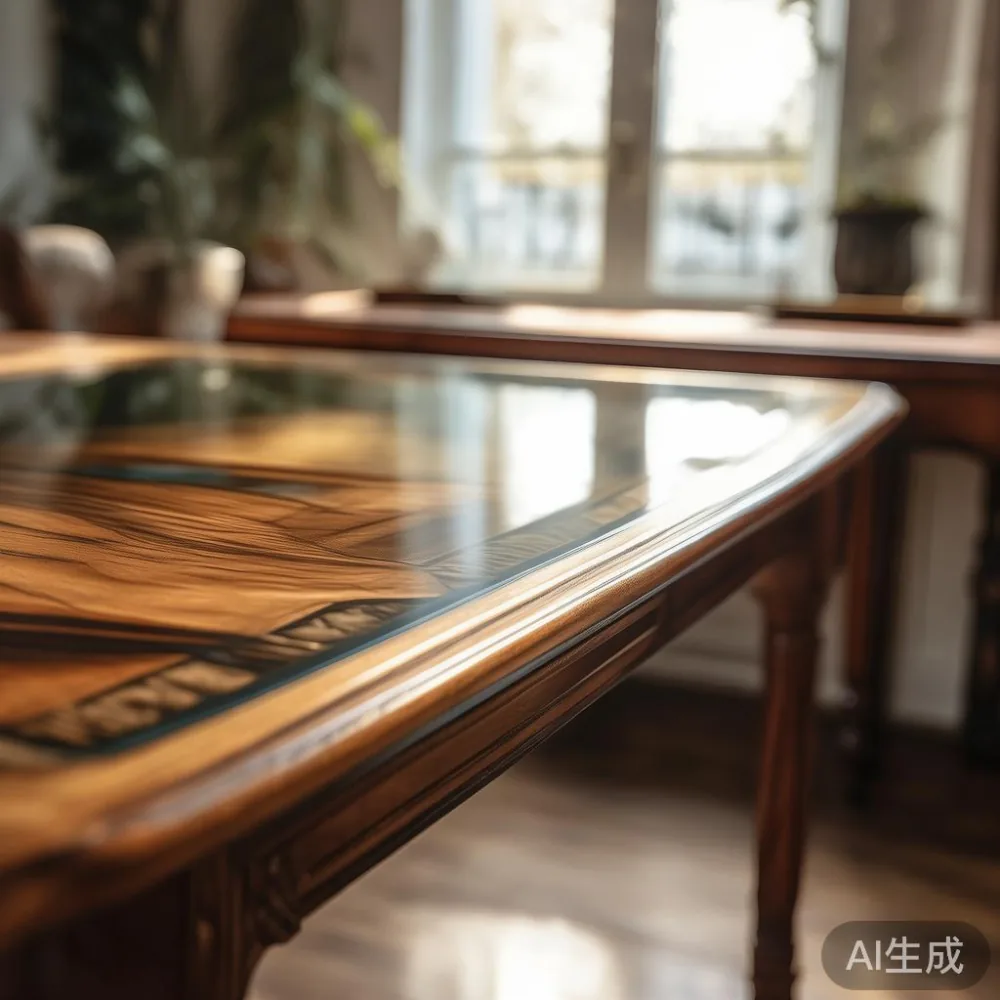
In Singapore, the practical question is equally important. HDB flats in Tampines, Bedok, and Punggol often have compact living rooms, managed corridors, and lifts that make large furniture deliveries a planning exercise. A 160 cm dining table may suit the room, yet a 200 cm carton may not turn easily in a 90 cm corridor. Below, I explain how to combine glass furniture with warm minimal interiors while accounting for dimensions, weight, GST, delivery, and long-term care.
What makes a warm minimal interior feel inviting rather than plain?
A warm minimal interior uses a small number of forms, textures, and colours with enough variation to create depth. Think of a room as three layers: the structural layer, the comfort layer, and the decorative layer. A solid wood bed frame, dining table, wardrobe, or nightstand forms the structural layer. Linen upholstery, wool throws, curtains, and rugs make up the comfort layer. Lamps, ceramics, books, and a few plants provide the decorative layer.
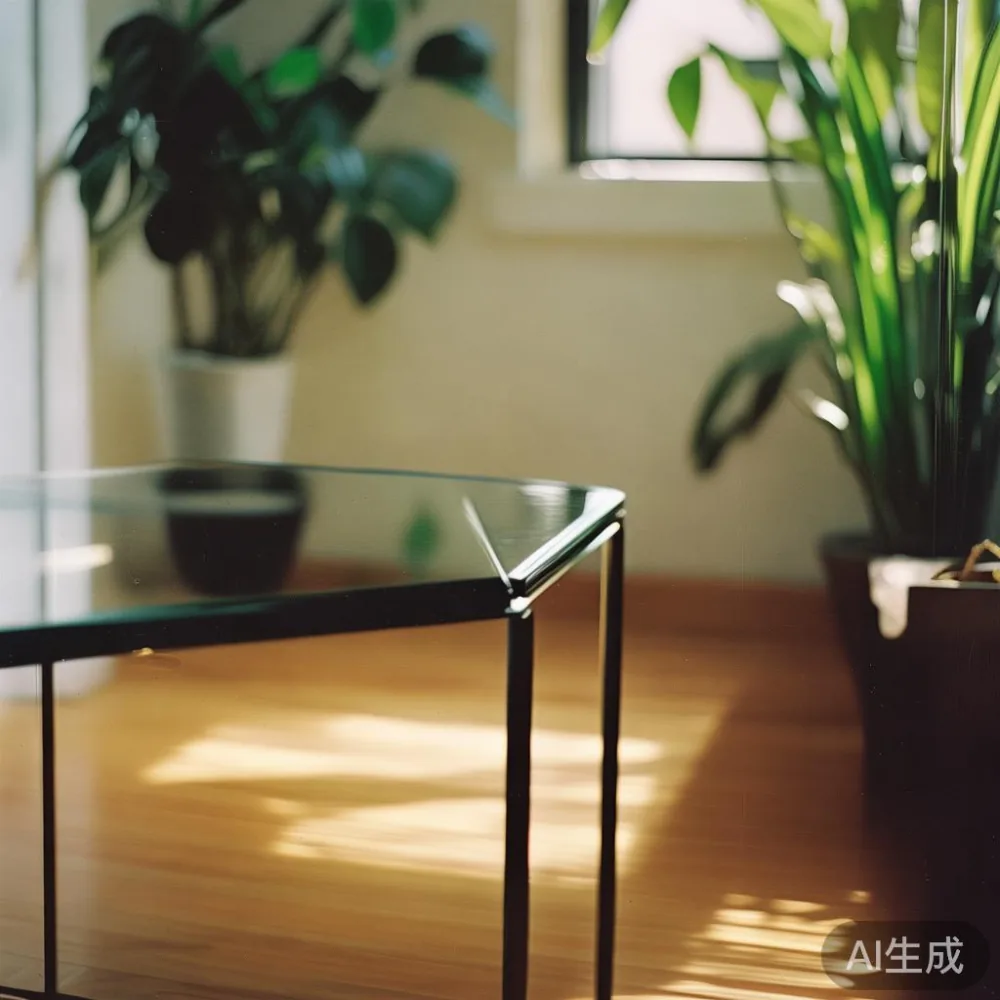
Glass furniture belongs mainly in the structural and display layers. Its transparency preserves sightlines and reflects daylight, which is useful in Singapore where humidity and cloud cover can make rooms feel dim. A smoked-glass coffee table adds definition without visually closing the space. Clear glass is more suitable for small rooms; reeded, fluted, or lightly bronzed glass adds privacy and texture while remaining visually light.
Keep the palette within approximately 3 main colour families: warm oak or walnut, chalky white, and muted clay, taupe, or charcoal. Add one controlled accent, such as olive, rust, or deep blue, through cushions or artwork. Avoid cool grey across every surface, because it can make a warm minimal home feel stark. A 220 cm linen sofa in oatmeal, a 45 cm ceramic lamp, and a 130 cm oak sideboard create warmth without filling the room with furniture.
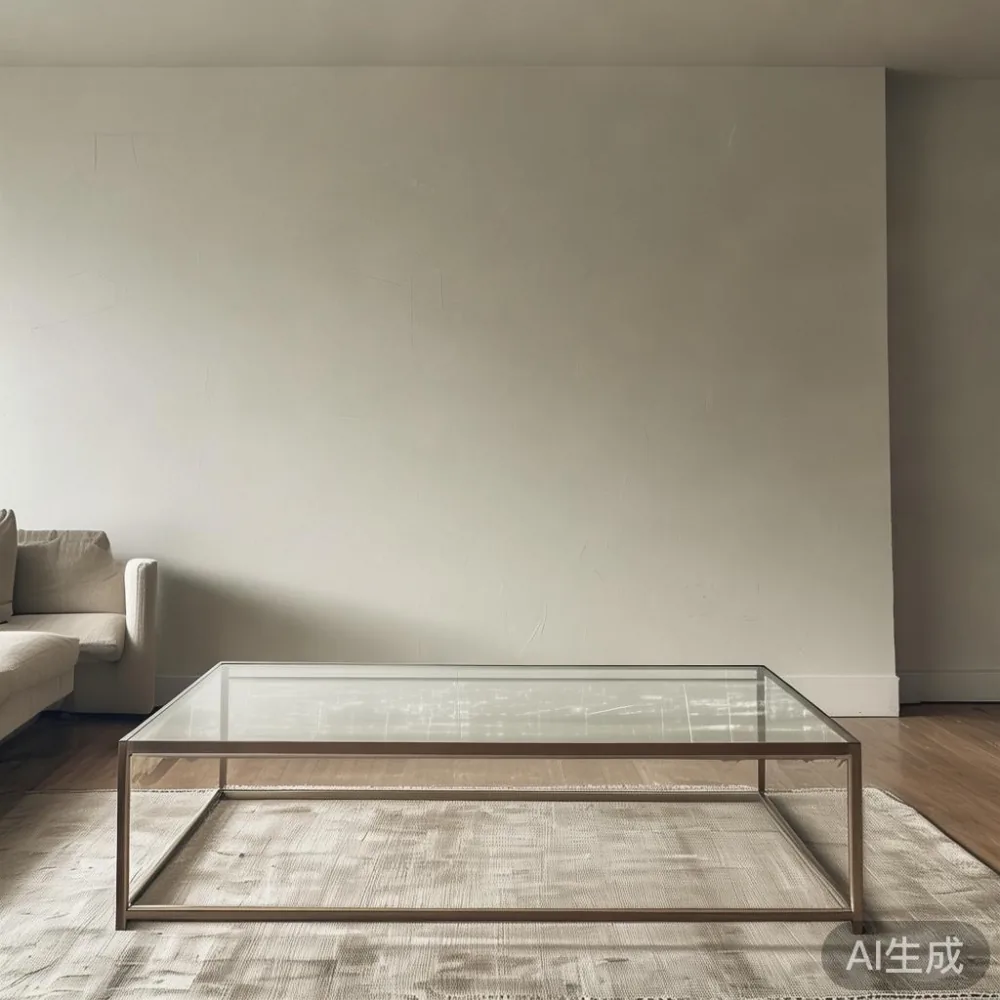
For a light-luxury direction, French light luxury is especially compatible with this approach. It favours pale woods, elegant profiles, restrained ornament, and tactile fabrics. Post-modern light luxury offers another route through clean geometry, mixed materials, and a small sculptural accent. The room should still feel calm, not like a showroom filled with competing statements.
How should I measure a Singapore flat before choosing glass furniture?
Measure the room, the route to the room, and the lift before selecting a piece. For a dining area, allow at least 90 cm behind each chair for movement and approximately 60 cm between the table edge and a wall or sideboard. A 140 cm dining table is comfortable for 4 people; a 160 cm table generally suits 4 to 6 people; a 180 cm table can seat 6 to 8 people if the room has enough circulation space.
Do not rely only on the room dimensions shown in a floor plan. Check the actual ceiling height, skirting, window position, and the location of sockets. A glass dining table looks lighter with a pedestal or compact trestle base rather than a broad slab base. If you are comparing options, a 150 cm round table may fit a narrow dining zone better than a rectangular 170 cm table, although it reduces serving capacity slightly.
Measure the lift door, lift cabin, corridor turns, and entrance separately. A carton that fits the lift door may still fail to turn inside the cabin. Leave at least 10 cm of clearance around a large package when manoeuvring, and ask the delivery team for the carton dimensions, not just the assembled dimensions. Protected corners and removable legs can make a glass table easier to transport, but the glass panels still need proper upright handling.
Weight matters too. A 150 cm glass dining table with a solid wood base may weigh 65 kg, while a 180 cm version may weigh 85 kg. A tempered glass top should never be lifted by its edges alone. For HDB flats, reserve a delivery window when lifts are busy, and avoid blocking fire corridors. For a condo, check building rules, loading bays, and service-lift booking requirements before confirming the delivery day.
Which glass pieces work best with solid wood furniture?
Glass furniture works particularly well when it is paired with solid wood because the two materials balance each other. Wood provides warmth, grain, and a sense of permanence; glass provides reflection, openness, and a lighter visual footprint. A smoked-glass dining table beside a solid wood dining chair or a solid wood sideboard creates contrast without requiring a fully glass room.
For the living room, choose a 100 to 120 cm rectangular glass coffee table for a 180 to 220 cm sofa. The table should sit roughly 40 to 45 cm from the sofa, allowing legroom and a clear walking route. A 90 cm round table can be more flexible in a compact HDB living room. Choose a lower shelf if you need storage, but keep the shelf shallow so the piece does not read like a display cabinet.
In the bedroom, a glass nightstand can work beside a solid wood bed frame if the glass is lightly tinted and the frame has a warm finish. Keep the nightstand within 5 to 10 cm of the mattress edge for convenient reach. A 45 cm-wide glass nightstand is suitable for a compact bedroom; a 55 cm version offers more surface area but needs a wider bedside zone.
A glass dining table is easy to over-specify. A 160 cm table with a slim central base may look more suitable in a 300 cm-wide dining space than a 190 cm table with a heavy pedestal. Check chair pull-out space carefully. You can also use a glass sideboard or a marble table as a display surface, but keep the number of transparent or reflective surfaces to two in a small room. Too much glass can make furniture feel hard, cool, or visually repetitive.
For material contrast, pair clear glass with honey oak, warm walnut, or light ash. If the glass has a green edge, a warm wood tone helps soften it. For a darker room, bronzed glass adds warmth, while ultra-clear glass can look clinical under cool LED lighting. Use lamps with a colour temperature around 2700K to 3000K to bring out wood grain and soften the appearance of the glass.
How can I use Japanese-influenced ideas without copying a restaurant?
Japanese-influenced interiors are often associated with restraint, low visual noise, natural materials, and careful proportions. In a Singapore home, that can be translated through simplicity rather than literal imitation. A search for Japanese for dining room can lead to many narrow tables, built-in benches, and low cabinets, but the useful principle is the relationship between negative space and daily objects.
Start with one low, simple element: a 120 cm solid wood bench, a 150 cm dining table, or a 90 cm sideboard. Avoid crowding the wall with several small pieces. A 180 cm glass dining table can still feel disciplined if the surrounding chairs share one material language and the tabletop is kept clear except for a low ceramic bowl.
For storage, a solid wood wardrobe with sliding or hinged doors can provide the calm visual line associated with Japanese interiors, while an open shelf can display only 3 to 5 daily objects. A useful reference for anyone asking how to style Japanese wardrobe in bedroom is to keep the exterior quiet and place the visual interest inside the room through lighting, baskets, linen, or a single artwork.
The adaptation should suit local conditions. Avoid untreated timber near open windows exposed to heavy rain, and choose moisture-resistant finishes for HDB bedrooms. Use washable cotton or linen rather than delicate fabrics. A 200 cm wardrobe may dominate a 280 cm bedroom wall, whereas a 170 cm unit can leave a 55 cm gap for a nightstand or slim dressing area.
What should I look for in light-luxury furniture for a compact home?
Light luxury is about proportion, finish, material clarity, and service rather than oversized decoration. A well-proportioned solid wood sofa with a 92 cm seat depth may feel more refined in a compact living room than a large sectional. A bed frame with a 4 cm to 6 cm visible rail, subtle mitred corners, and a matte natural-oak finish can provide a tailored appearance without heavy carving.
When researching top 10 French furniture lists, focus on silhouette, joinery, and finish quality. A top 10 French furniture collection may include carved details or curved edges, but those features should be balanced with clean storage and good circulation. A French-style dining table with one shaped apron and rounded corners can work in a modern HDB flat if the chair design is simple. A marble table can provide a luxurious focal point, but its visual weight should be limited to one room or one corner.
Similarly, top 10 Italian light luxury furniture examples often draw attention through refined materials and careful detailing. That does not mean every piece needs marble or metallic trim. A solid wood wardrobe with a smooth closing mechanism, a glass dining table with a stable base, and a nightstand with a soft drawer action can communicate quiet quality more effectively than a crowded arrangement of statement items.
In a condo, consider views. Pale glass can bounce daylight toward a window, while darker glass may compete with city lights at night. Use curtains with a light, opaque lining to control glare without making the room feel boxed in. A 150 cm-wide sofa can leave enough space for a 45 cm side table and a 30 cm floor lamp, creating a balanced composition in a 350 cm-wide living room.
MIDHILL, a Foshan solid wood furniture maker established in 2008, exports to more than 15 countries and offers a 10-year structural warranty with lifetime refinishing. That long-term support is useful when choosing a bed frame, dining table, wardrobe, nightstand, or solid wood sofa, although the warranty does not remove the need to check the item against your access route.
How do I compare European sofa designs with a glass coffee table?
European sofa designs range from tailored, architectural forms to relaxed upholstered shapes. Comparing European sofa vs French provincial sofa is useful because the two styles create different room proportions. A European sofa usually has a straighter back, firmer seat, and cleaner outline; a French provincial sofa often has a softer silhouette, rounded arms, and a more decorative character.
For warm minimalism, choose the cleaner option if the room contains a glass dining table, a marble table, or another reflective surface. The contrast between straight upholstery lines and transparent furniture keeps the composition legible. A European sofa in warm beige linen can sit beside a smoked-glass coffee table without overpowering the room. A French provincial sofa can work when its curves are restrained and its fabric is plain rather than patterned.
Measure the coffee table against the sofa rather than relying on style labels. A 220 cm sofa usually balances a 120 cm rectangular coffee table; a 180 cm sofa may suit a 90 or 100 cm table. Leave 35 to 45 cm between the front seat edge and the table for reach, but leave more space in a high-traffic HDB route. If a side table is needed beside the sofa, choose one around 40 to 45 cm wide and keep its glass edge aligned with the coffee table.
Protect the glass from impact. Use coasters, felt pads beneath decorative objects, and a stable tray rather than placing heavy vases directly on a thin top. Do not use a glass coffee table as a step or place hot cookware on it. For a marble table, use a separate board and check whether the surface is sealed according to the supplier’s care instructions.
How do I plan delivery, GST, and returns for a Singapore home?
Confirm the delivered price, including GST, before payment. For example, a glass dining table priced at SGD 1,800 before GST would be SGD 1,944 at 8% GST. A SGD 240 nightstand would be SGD 259.20 with GST. Ask whether installation, lift reservation, and delivery beyond the doorstep are included. A curbside delivery may save money, but it adds a carrying task, especially for a carton weighing 65 kg.
Allow approximately 7 to 14 delivery days for a made-to-order solid wood piece, while stock pieces may arrive within 3 to 7 business days after dispatch. These are planning ranges rather than promises; building access, production schedules, and payment confirmation can change the timing. Request the dispatch estimate in writing and choose a day when someone can receive the furniture.
For MIDHILL orders, the stated free-shipping threshold is US$350, with delivery arrangements checked against the Singapore destination. MIDHILL also provides a 14-day returns policy, but glass breakage, incorrect sizing, and damage during an unassembled delivery should be documented immediately. Photograph the carton, the lift area, and the furniture before signing where appropriate. Keep the packaging for at least 7 days if assembly or inspection is required.
Singapore’s 14-day returns period is a practical reason to test the piece in your own light and access route. Check that doors open, drawers slide, glass panels are secure, and the furniture sits level. Do not move a heavy glass table alone; ask a delivery team member or a helper to manage the final position.
What lighting, textiles, and accessories complete the room?
Lighting determines whether glass and solid wood feel crisp or welcoming. Use at least 3 lighting levels: ceiling light for general illumination, a 1,500-lumen to 2,000-lumen floor lamp near the sofa, and a warm table lamp on a nightstand. Choose bulbs around 2700K to 3000K, with dimmable switches where possible. A glass dining table becomes more attractive when a pendant is centred about 75 to 85 cm above the surface, depending on the fixture and seated sightline.
Textiles soften hard surfaces. A 160 cm by 230 cm wool or washable-cotton rug can define a seating area, but allow at least 20 cm of visible floor around the front legs of the sofa. Linen curtains hung close to the window frame create a taller appearance and reduce the visual heaviness of a wardrobe. Use 2 or 3 cushion colours drawn from the wood, wall, and rug rather than adding many patterns.
Accessories should have breathing room. On a 150 cm dining table, use one low bowl, 2 napkins, or a small ceramic vessel. On a 90 cm glass side table, place one lamp and one book. A marble table can carry a single sculptural object, while an open wardrobe shelf benefits from 3 baskets or 5 books arranged with consistent spacing.
Last, check maintenance. Dust glass with a microfibre cloth and a neutral cleaner approved by the supplier. Wipe solid wood with a slightly damp cloth, then dry it promptly; do not leave water sitting on an edge during humid weather. Re-oiling or refinishing is part of long-term care, not a reason to neglect daily cleaning. With the right scale, warm materials, and measured circulation, glass furniture can make a Singapore home feel more spacious while the solid wood pieces supply the comfort that minimalist rooms often lack.