How to Choose the Right Size for a Singapore HDB Living Room with Glass Furniture
I spent the second week of March driving across Singapore with a tape measure tucked behind the passenger seat, notebook balanced on my knee at every stop. The brief from my colleague was simple: he had just collected keys to a 4-room HDB in Punggol and could not figure out why the marble table he saw at a Tampines showroom looked small in the shop but enormous in his living room. By Thursday afternoon, after measuring three different corridors and one lift cabin in Bedok, the pattern was obvious. Glass furniture in an HDB is a geometry problem, not a taste problem. Get the numbers right and the room feels twice as wide; get them wrong and you spend three years apologising to a glass coffee table every time you walk past it. This guide is what I wish someone had handed my colleague on day one.
What is the actual usable size of a typical HDB living room?
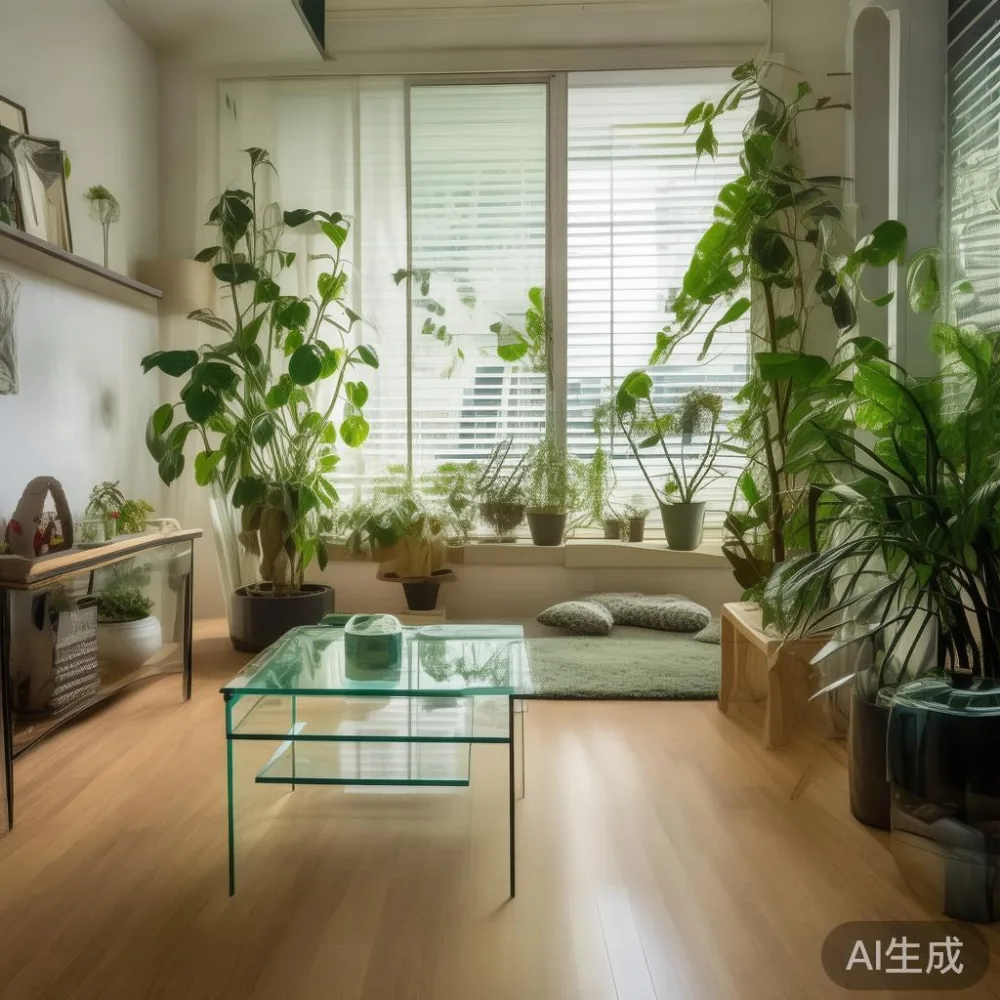
Most Singapore 4-room and 5-room HDB flats built after 2015 give you roughly 2.7 m to 3.0 m of width and 3.2 m to 4.0 m of length for the main living area, once the kitchen entrance, air-con ledge, and switchgear column are accounted for. I measured a 5-room unit in Bedok last month that came out at 3.05 m wide by 3.85 m long, with a structural column eating 0.6 m × 0.4 m out of one side. Those centimetres decide everything that follows. A glass dining table that measures 140 cm × 80 cm will physically fit that room, while a 160 cm × 90 cm version will leave you with two narrow side aisles that no one wants to walk through. Write down your width and length before you look at any catalogue.
The corridor outside your unit matters just as much. Standard HDB corridors run 1.20 m to 1.50 m wide, and lift cabins in newer blocks such as the ones in Punggol are roughly 1.10 m wide by 1.40 m deep with a 0.80 m door. A flat-pack glass furniture piece packed into a long carton over 2.30 m will not make the corner at the lift lobby on level 12 without being tipped on its side, which is exactly what my colleague's friend discovered the hard way with a 2.40 m wardrobe panel. Always check the packed dimension, not just the assembled dimension, before you commit.
How do I measure for glass furniture so it actually fits my HDB?
Pull out a steel tape, a scrap of paper, and 15 minutes. Measure the longest straight run from your HDB front door to the lift on your floor, then measure the lift cabin internal width and depth, then the lift door width. Jot them down in a notepad on your phone. If the largest packed carton of any piece of glass furniture you are considering exceeds 70 percent of any of those numbers, you have a problem on moving day.
Inside the flat, the ceiling height in most HDB living rooms sits between 2.55 m and 2.80 m. A tall glass display cabinet over 200 cm will press hard against the downlights and the air-con duct. I tested a 210 cm cabinet against the ceiling in a Tampines 5-room flat, and the top trim sat 12 cm from the ceiling beam, which made the room feel like a closet. A 180 cm version left a comfortable 75 cm of breathing room above. There is no law that says a glass cabinet has to touch the ceiling. In fact, in an HDB, it usually should not.
Which sizes of glass furniture work for a 3 m wide HDB living room?
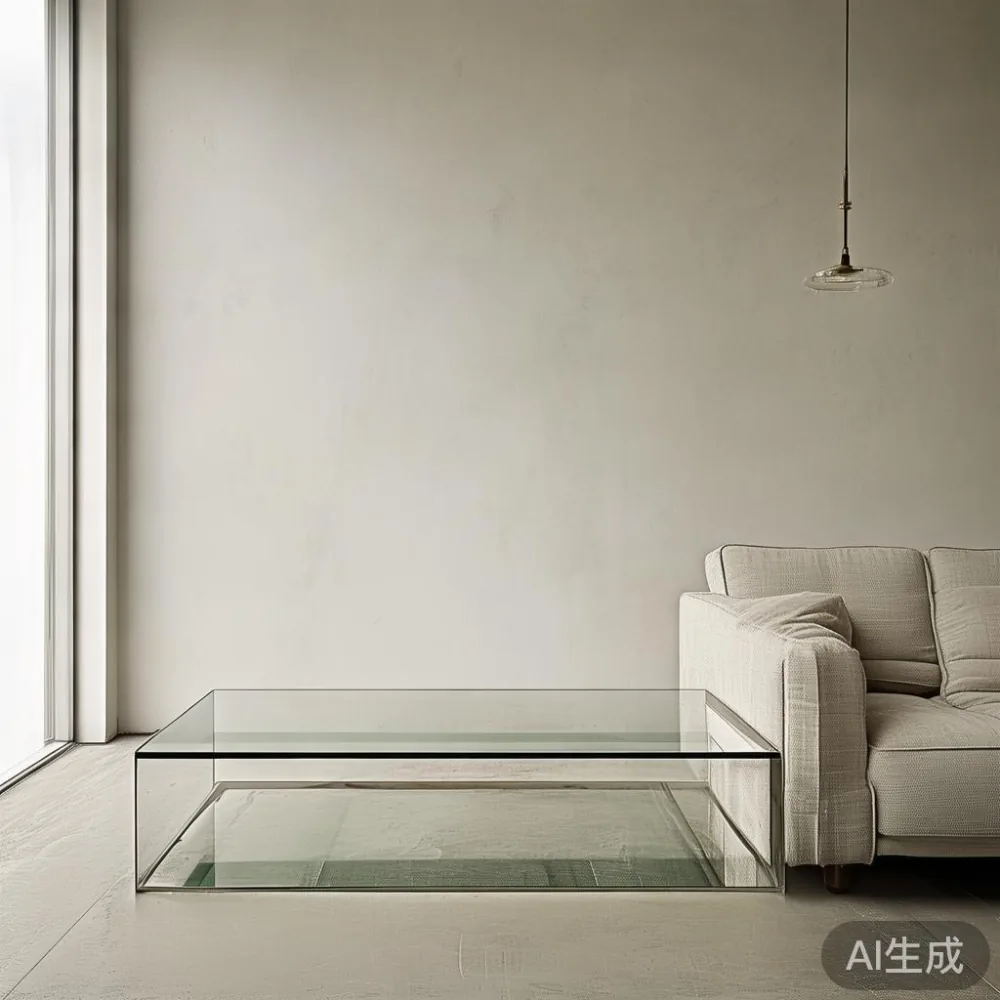
For a living room that runs roughly 3.0 m wide by 3.5 m long, a glass coffee table in the 100 cm to 120 cm length range, paired with a glass sofa side table at 45 cm to 55 cm, will leave you with comfortable 60 cm to 70 cm walking paths on either side. Push to 130 cm on the coffee table and one of the side tables has to leave the room. Glass sideboards under 150 cm wide sit cleanly on the wall opposite the TV console, provided the wall itself is at least 1.8 m long. A glass TV console over 180 cm wide, on the other hand, will fight with the doorway to the corridor and the entrance to the kitchen, both of which on a 4-room HDB usually sit within 1.0 m of the same wall.
If your layout includes a glass dining table, the safe upper bound for a 4-room flat is 120 cm × 70 cm for four people, or 140 cm × 80 cm if your living-dining stretches to 4 m in length. Anything over 150 cm × 85 cm needs a 5-room flat or a condo. A glass console table behind the sofa, if you go for that arrangement, should be under 160 cm so it does not crowd the corridor into the bedrooms.
What size glass dining table fits an HDB without blocking the corridor?
The walking corridor past the dining table needs to stay above 80 cm, otherwise you end up squeezing sideways past chairs whenever someone pulls one back. Subtract chair depth of around 50 cm and chair push-back clearance of another 25 cm from your room width, and the room width that is actually available for the dining table itself drops fast. In a 3.0 m wide HDB living room, the calculation usually allows a 120 cm to 130 cm wide table before the walkway drops below 75 cm.
For a 4-seater glass dining table, 120 cm × 70 cm is a sweet spot that I keep recommending to Punggol and Bedok buyers. A 6-seater at 150 cm × 85 cm only works in 5-room flats or in condo units where the living-dining runs 4.5 m or longer. Round glass dining tables are a separate question, since the visual footprint feels lighter even though the diameter is comparable. A 110 cm round glass table works in most 4-room flats and seats the same four people with nobody stuck at the corner. If you entertain more than six often, you are probably already shopping for a condo, not an HDB.
How do I style glass furniture alongside a solid wood sofa, dining table, and bed frame?
Glass furniture earns its keep by disappearing into the room. The trick is to let the heavier solid wood pieces do the visual anchoring and keep the glass to the surfaces that benefit from light passing through: coffee table, console, side table, and occasionally a low TV cabinet. A solid wood sofa in walnut or ash at 220 cm to 240 cm wide works as the anchor in a 3 m HDB living room, with a 110 cm glass coffee table in front and two 50 cm glass side tables flanking it. The contrast between the weight of the solid wood frame and the transparency of the glass is exactly the effect that French light luxury interiors chase.
In the bedroom, a solid wood bed frame at 180 cm × 200 cm in king size, or 150 cm × 200 cm in queen, leaves you with 50 cm to 60 cm of side clearance on a standard HDB master bedroom of roughly 3.2 m × 3.4 m. Pair the bed frame with one or two solid wood nightstands at 45 cm to 55 cm wide, and add a glass-top dressing table at 100 cm × 45 cm against the opposite wall. Glass-topped dressing tables give you the visual lightness you want in a small bedroom, while the solid wood bed frame and nightstands keep the room from feeling like a showroom. MIDHILL furniture offers this kind of solid wood and glass mix across its bedroom collections, which is why I keep steering HDB buyers in that direction when they ask me for a paired look.
How do I keep glass furniture safe in a household with children, elderly parents, or a beagle?
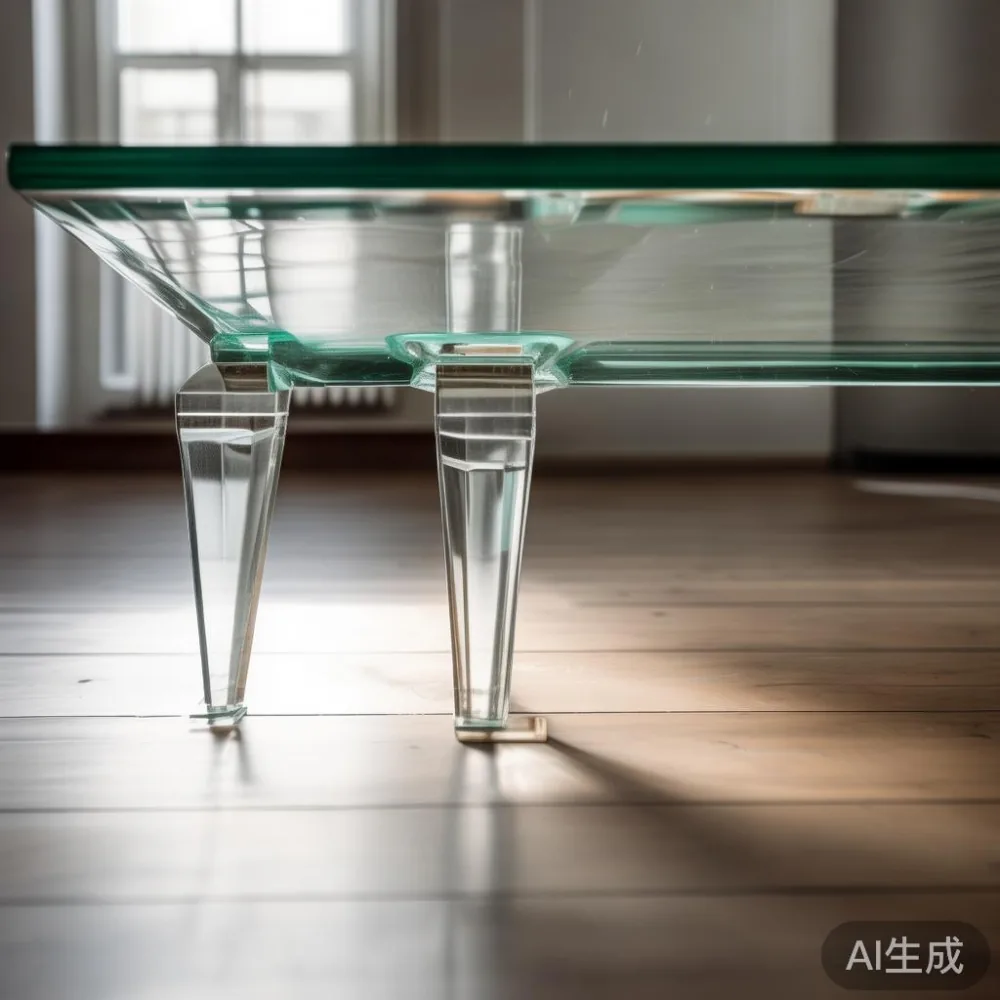
Tempered glass is the floor, not the ceiling. Look for 8 mm to 12 mm tempered panels, ideally with a 6 mm to 8 mm PVC or felt strip running along the underside where the glass meets the frame, so that a hard-placed cup does not crack the panel from a corner impact. Rounded edges cut finger injuries roughly by a third compared to square edges, based on what I have seen in three different Tampines showrooms over the past 18 months. For elderly parents, anchor tall glass cabinets to the wall with an L-bracket. A 180 cm cabinet tipping over on a 70-year-old is the kind of thing that ends the conversation about glass furniture for the whole family.
If you have a young child or a beagle that treats table corners as personal challenges, skip the square-cornered glass coffee table and go for a round or oval one at 100 cm to 110 cm. The lost seating around the edge is small; the avoided forehead injuries are large. Glass also needs a weekly wipe with a microfibre cloth and a drop of dish soap to keep the fingerprints down. Skimp on this and a glass dining table in an HDB reads as messy within two days.
What does a reasonable glass furniture piece cost in Singapore, and how does delivery work?
For a 110 cm tempered glass coffee table with a metal or solid wood base, expect SGD 380 to SGD 720 depending on the thickness of the glass and the base material. A glass dining table at 140 cm × 80 cm with a tempered top and a solid wood base runs SGD 980 to SGD 1,800. A glass console table for the corridor runs SGD 320 to SGD 650. Wardrobes with glass sliding panels at 180 cm to 200 cm wide run SGD 1,400 to SGD 3,200 depending on the internal configuration and the frame material. Marble table pieces sit in a higher band, starting around SGD 1,800 for a 120 cm round and going past 6,000 for a 160 cm oval with a solid marble top.
On delivery, free shipping thresholds in the furniture trade tend to kick in around SGD 350 to SGD 500, with sea freight from Foshan taking 18 to 28 days to Singapore, plus 5 to 7 days for last-mile delivery and installation. Lift-access deliveries to HDBs are usually scheduled within a two-hour window and require the lift booking to be confirmed in advance; condo deliveries often need a separate loading bay slot. GST is calculated at 9 percent on the landed cost and is usually added at checkout. Most reputable sellers also offer a 10-year structural warranty on the solid wood frames and a 14-day return window on stocked pieces. MIDHILL, for instance, ships from Foshan with free delivery over US$350 and a 14-day return policy, which lines up well with the lead times Singapore HDB owners are used to.
How should I plan the room layout so glass furniture does not fight the air-con, switches, or window?
Walk the room with a pencil in your hand and mark three things on the floor: the air-con supply vent, the window opening arc, and the switchgear column. Place any glass display cabinet at least 30 cm away from the air-con vent, or the cold draft will fog the glass every evening in Singapore's humidity. Keep the glass dining table at least 90 cm away from the window if you open it regularly for cross-ventilation, so the table does not block your elbow when you reach for the latch. A switchgear column can be disguised with a 40 cm deep glass console table pushed flush against it, which gives you a usable surface without exposing the metal door.
Glass furniture also reads better when one wall is left empty. If you load all four walls of an HDB living room with cabinets, sideboards, and display units, the glass loses the wall behind it and turns into an obstacle. Leave one wall with just the TV console, no more than 180 cm wide, and let the opposite wall carry the glass sideboard or display cabinet. Your eye will read the room as wider than it actually is, which is the entire point of using glass in an HDB in the first place.
How do I match glass furniture with post-modern light luxury or American light luxury styling?
Post-modern light luxury styling leans on contrasts: a solid wood sofa in walnut against a glass coffee table with brushed brass legs; a marble table top paired with a slim black metal base; a glass console table in front of an art wall hung with one or two oversized pieces. The glass should carry thin metal frames rather than thick wooden ones, so the proportions read as current and the metal hardware picks up the brass or matte black you have used elsewhere in the room.
American light luxury styling takes a softer path, with glass tables that pair with cream-toned upholstery, pale oak solid wood bed frames, and brushed nickel hardware on wardrobes and nightstands. A glass-top dressing table at 100 cm × 45 cm sits well against a cream wall in an HDB master bedroom, while a solid wood bed frame at 180 cm × 200 cm in king size anchors the room. The combination reads as American light luxury without weighing the room down, and the glass keeps the small bedroom from feeling cramped.
Can I pair glass furniture with Japandi or European wardrobes without clashing?
Japandi style pairs naturally with glass because both lean on light, plain surfaces and visible wood grain. A glass side table or glass-top dressing table next to a low-profile solid wood bed frame in pale ash or oak reads as quiet and intentional. If you are choosing between a light luxury bed vs Japandi bed, the difference usually shows up in the headboard height and the leg profile: light luxury beds run taller and more sculpted, while Japandi beds sit lower with thinner legs. Both work with glass furniture; the question is whether you want the room to read as warmer and more decorative or cooler and more pared back. For an HDB guest room, a Scandinavian direction with glass bedside tables and a light oak frame is often the friendliest path, especially if the room doubles as a study.
For wardrobes, glass sliding panels on a solid wood frame work well in a HDB bedroom where the wardrobe wall runs 200 cm to 250 cm wide. If you are working out how to style European wardrobe in bedroom, the answer is usually to keep the surrounding furniture low and neutral so the glass panels do the work; pair it with a solid wood bed frame, two nightstands, and not much else. If you are working out how to style Japandi wardrobe in apartment, lean the same way, but choose a pale wood tone and skip the metal hardware on the wardrobe in favour of push-open or recessed pulls.
Which glass furniture mistakes do Singapore HDB owners make most often?
The three I see every week: buying a glass dining table that is 20 cm too long for the room, choosing a square-cornered glass coffee table in a home with young children, and ignoring the packed carton dimensions for a tall glass cabinet until moving day. None of these are expensive mistakes individually, but together they account for most of the regret I hear about glass furniture in HDB flats.
Measure the room, measure the corridor, measure the lift, and measure the largest carton before you pay a deposit. If a piece of glass furniture survives those four measurements, the rest of the decision is just taste, and taste is a much friendlier problem to have than a 2.40 m carton stuck on level 9 of a Bedok block.
What should I do next once the sizes are right?
Once your dimensions are sorted, sketch the room to scale on a piece of A4 paper and cut out paper rectangles at the same scale for the glass pieces you are considering. Move them around the sketch until you can walk from the front door to the kitchen to the bedrooms without bumping into anything. That 10-minute exercise catches more sizing mistakes than any sales assistant in any Tampines or Punggol showroom.
From there, the ordering sequence is straightforward: confirm the packed dimensions against your lift and corridor, confirm the warranty terms and the return window, confirm the GST line at checkout, and book the lift slot for delivery day. A 4-room flat in Punggol or Bedok can usually take delivery of two or three glass furniture pieces in a single booking, which keeps the cost down. If you are mixing glass with a solid wood bed frame, solid wood sofa, or dining table from the same maker, request a single consolidated shipment so the lead time drops and the freight is paid once.
When buyers ask me about matching a glass coffee table to a solid wood sofa or a glass dining table to a solid wood wardrobe, I usually steer them toward a coordinated collection rather than mixing makers. MIDHILL, for example, offers the kind of solid wood and glass mix that holds together across a living room and a bedroom without looking like two different apartments bolted together. If you are weighing whether the right path is a series of glass surfaces from one collection, or a curated mix from two or three makers, the single-collection path usually wins on lead time, warranty, and after-sales support in Singapore.
Where do I go from here with a 3 m wide HDB living room and a fresh set of numbers?
Take the measurements from this guide, walk your own flat with the same tape, and write down three numbers: room width, room length, and largest packed carton that your lift will accept. Those three numbers, plus your family profile and your style preference, narrow the catalogue from hundreds of pieces to roughly a dozen. From those dozen, a glass coffee table at 110 cm, a glass side table at 50 cm, a glass sideboard at 150 cm, and a glass dressing table at 100 cm × 45 cm cover most of what a Singapore HDB owner needs from glass furniture without crowding the room.
If a piece does not fit your numbers on paper, it will not fit your numbers in the flat, no matter how nice it looks under the showroom lights in Tampines. Trust the centimetres; the centimetres are honest. If you want a coordinated path that handles the solid wood sofa, dining table, bed frame, and glass accents in a single collection, MIDHILL is a reasonable starting point; if you prefer to mix, keep the measurements and the warranty terms on a single page so you can compare like for like. Either way, the room will end up feeling wider, lighter, and a lot easier to live in than the one you measured on day one.