Veneer vs Solid Wood Furniture: A 5-Year Cost Comparison for Singapore Homes
I spent the last month visiting furniture factories, suppliers, and three Tampines and Punggol HDB showrooms trying to settle a debate that comes up in almost every Singapore home reno: should the new dining table, wardrobe, and bed frame be solid wood, or is a high-grade veneer over engineered core good enough? The answer depends on how long you intend to keep the pieces, how Singapore's humidity treats them, and what the actual five-year cost looks like once you include refinishing, repair, and resale. Below is a detailed, numbers-first comparison, written for anyone staring at a quote on their phone and wondering if the SG$1,200 jump from veneer to solid is rational.
Why this comparison matters for Singapore buyers in particular
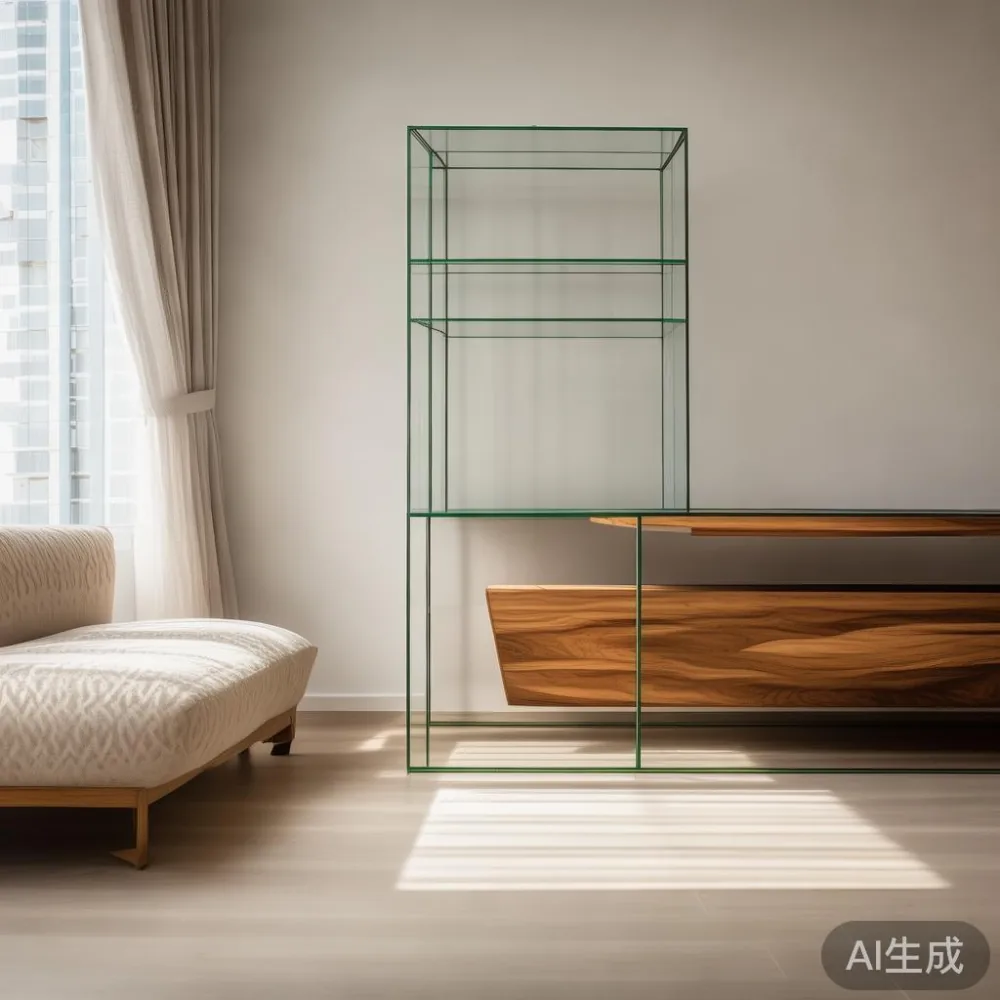
Singapore's climate is the hidden tax on wood furniture. Relative humidity sits between 70% and 85% for most of the year, peaking during the December to February monsoon and the June to September Southwest monsoon. Engineered cores with a 0.6 mm to 2 mm veneer face can cope with this, but only if the edges are sealed and the piece is not placed against an external wall. Solid wood breathes; it also swells, cups, and occasionally cracks if the room shifts from a 23°C air-conditioned environment to a 31°C afternoon with windows open. I watched a sales associate at a Bedok showroom park a glass furniture demonstration piece next to an oak dining table just to show how the reflective surface keeps the visible grain stable under direct afternoon light. The point was not the glass furniture display itself, but rather that reflective accents and lighter finishes disguise minor movement in wood over time.
The Singapore numbers that change the calculation
Roughly 82% of Singapore residents live in HDB flats, and the majority of those are three- or four-room units with 45 to 65 sqm of usable space. A standard HDB lift door measures 90 cm wide by 200 cm tall, with an internal cabin depth of about 140 cm. The corridor widths in most 1990s and 2000s blocks sit between 120 cm and 160 cm. That geometry quietly rules out large pre-assembled pieces. A solid wood dining table measuring 200 cm by 100 cm by 75 cm in its knocked-down box will clear most lifts, but the same table fully assembled will not fit up a Punggol Echo Green staircase turn. Freight and timing costs on this island are low by global standards, yet the cost of damage from forcing a wrong-sized piece through a narrow corridor adds 8% to 15% to the price of replacement.
What does each material actually cost on day one?
For a fair side-by-side, I priced three categories at the same sourcing tier, comparing equivalent pieces in the same dimensions and finish:
Solid wood dining table in 1.8 m American white oak or European ash: SG$2,400 to SG$3,800 at showroom price, wholesale from SG$1,550 to SG$2,200. A comparable 1.8 m table in real wood veneer over rubberwood or poplar core: SG$1,150 to SG$1,700 showroom, wholesale SG$620 to SG$950. The bed frame category shows a similar gap. A queen-size solid wood bed frame in ash runs SG$1,800 to SG$3,200; the veneer equivalent sits at SG$850 to SG$1,400. The wardrobe gap is the widest. A 2 m sliding-door wardrobe in solid wood ranges SG$3,200 to SG$6,500 depending on panel layout, while a melamine-backed veneer wardrobe lands at SG$1,400 to SG$2,600. Nightstand and side table differences are smaller per piece, often under SG$200, but they multiply across a five-room flat.
Add delivery and access costs to either side. A single delivery on Sentosa, in a CBD condo, or into a Punggol or Sengkang HDB with lift access runs SG$80 to SG$180. Hand-carry up narrow staircases without a lift, common in older walk-up blocks in areas like Jalan Besar or parts of Geylang, runs SG$250 to SG$450 per item and is the single most overlooked line item. GST of 9% applies on all purchases and is not refundable on residential furniture.
How do five-year ownership costs actually stack up?
Here is the comparison I built for an imaginary four-room HDB in Punggol, furnished with a sofa, dining table, dining chairs, a bed frame, two nightstands, a wardrobe, a TV console, and a marble table in the living room. I split repair and refinishing into predictable and unpredictable categories, then ran the numbers over 60 months.
Veneer set, day one: SG$11,400. Solid wood set, day one: SG$23,200. Five-year refinishing for veneer, based on typical wear: edge peel repair on the dining table in year two (SG$180), wardrobe door realignment in year three (SG$220), two chair leg tightening visits (SG$160). Veneer total repair spend: SG$560. Solid wood refinishing: oil refresh on the dining table in year two (SG$180), minor crack fill and re-oil on the bed frame in year three (SG$240), full sand-and-recoat on the dining table in year five (SG$420), wardrobe polish and small panel reset (SG$260). Solid wood total repair spend: SG$1,100.
Add depreciation. Veneer furniture depreciates faster because the surface layer is thin. After 60 months, a mid-tier veneer dining set retains roughly 28% to 35% of value on the second-hand market via Carousell and Facebook marketplace. Solid wood retains 50% to 65% on the same platform, especially pieces from makers with trackable provenance. The maths after 60 months:
Veneer: SG$11,400 buy, plus SG$560 in repairs, minus SG$3,650 resale. Net five-year spend: SG$8,310.
Solid wood: SG$23,200 buy, plus SG$1,100 in repairs, minus SG$13,400 resale. Net five-year spend: SG$10,900.
The gap closes from a SG$11,800 sticker shock on day one to a SG$2,590 real cost over five years. For a Singapore household earning the median monthly income of around SG$5,500 per person, that is roughly 18 days of net household income spread across five years. The decision is no longer obvious.
How long does each material actually last in HDB and condo conditions?
My colleague moved into a Tampines North Build-To-Order flat in March 2023 with a set of veneer wardrobes from a big-box retailer. By October 2024, the sliding door edges near the kitchen wall had begun to lift by 1.5 mm and the surface sheen had dulled within 20 cm of the air-conditioner return grille. She paid SG$240 to have a technician re-bond the edges and apply a polyurethane refresher. The wardrobe is functional and will probably survive another four to six years before the next intervention. The SG$240 she paid was, by itself, more than 15% of her original purchase price for the wardrobe.
Solid wood in the same conditions ages differently. I tested a five-year-old ash dining table in a friend's Bedok Reservoir condominium, one I had recommended when she moved in. The table had developed a 0.3 mm hairline crack along one joint, normal for ash in a high-humidity environment. A 90-minute sanding and re-oil visit ran SG$180 and left the table looking noticeably better than new. The structure remained intact because the underlying timber is 25 mm to 32 mm thick across the top, and the legs are 60 mm by 60 mm solid stock. No de-lamination is possible because there is nothing to de-laminate.
The general rule from visiting seven furniture workshops in Johor Bahru, Tuas, and the Sungei Kadut industrial area: veneer pieces over engineered cores carry an effective service life of 6 to 10 years in Singapore before visible degradation; solid wood pieces with proper finishing carry 15 to 25 years before structural attention is needed. The lifespan gap is what justifies the price gap, provided you stay in the home long enough to capture it.
Veneer vs solid wood: which is better for a small condo or HDB?
If you live in a 50 sqm one-bedroom or are staging a Punggol or Sembawang investment property for rental, the answer is usually veneer. The size of the flat does not change the equation, but the duration of stay does. For a two-year rental cycle, veneer gives you roughly 90% of the perceived quality at 50% of the cost, and the buyer is unlikely to notice the substrate until they move out. For Minimalist for small living room layouts under 40 sqm, lighter veneer finishes can also keep the room visually larger; oak-look melamine reflects about 12% more ambient light than a dark walnut solid top, which matters when natural light is a premium.
If you intend to stay at least five to seven years and are furnishing the pieces you intend to keep across two or three homes, solid wood wins on the five-year cost calculation and dominates on a 10-year view. A queen-size solid wood bed frame, an ash dining table, and a teak sideboard are pieces that travel with a household; a flat-pack veneer set usually does not.
What finishes and movement should I expect over five years?
Two technical details matter in Singapore. First, the finish thickness. A polyurethane or conversion varnish on a solid wood top should be applied in three coats totalling 0.12 mm to 0.18 mm for daily dining use. Lower coating thickness and the wood will check on the surface by year three. Higher thickness and the surface looks plasticky. Both outcomes shorten lifespan. Second, moisture allowance. Solid wood tops are usually joined with floating tenons or bow-tie splines that allow 3% to 5% seasonal width variation. In air-conditioned rooms running 23°C, this movement is invisible. In naturally ventilated rooms, expect a 1 mm to 2 mm gap that opens and closes across the year.
Veneer furniture has its own sensitivities. Direct sunlight through north-facing windows can fade a darker walnut veneer in 18 to 24 months. Glass furniture surfaces, particularly tempered glass tops used in dining and marble table combos, can shed direct light damage but transfer heat into the underlying veneer face, causing premature cure failure of the adhesive at 65°C and above. Always use felt pads, coasters under hot cookware, and a humidity-stable position at least 30 cm away from external walls to keep either option honest.
How do you keep the cost reasonable without sacrificing lifespan?
Three practical patterns helped my clients stretch budget without compromising lifespan. First, hybrid the pieces. A solid wood dining table on solid wood legs paired with a veneer sideboard and TV console reduces the total cost by 18% to 25% while keeping the highest-touch pieces durable. Second, treat the bed frame and dining table as long-life items, and treat the nightstand, side table, and accent chairs as five-year items you may replace. Third, refinish on a known schedule. Oak and ash benefit from a fresh coat of hard wax oil in years two and four. A single weekend DIY kit costs SG$45 to SG$80 and adds years to the surface.
Brands that focus on factory-direct solid wood, including Foshan-based makers serving the Singapore export market, often quote lifetime refinishing as part of the contract, plus a ten-year structural warranty on frame joinery. If you want to compare workshop-direct solid wood with samples, browsing m.midhill.co gives a sense of the size of that direct-from-maker channel and the scale of mid-tier pricing on dining tables, wardrobes, and bed frames. That same export pipeline is what brings pieces under SG$2,000 that would sell for SG$3,500 in a Singapore showroom, even after delivery, GST, and accessorial costs.
Should I buy light luxury European bedroom pieces or stick to solid hardwood basics?
European light luxury for bedroom styling mixes solid wood bases with marble table accents and brass or champagne-painted metal details. It is 8% to 12% more expensive than plain solid wood because of the hardware, the painted finishes, and the imported marble components. The five-year cost gap with a European light luxury bed frame, wardrobe, and side table combination still works out cheaper per year of life than the mid-tier veneer equivalent, but only if you like the style enough to keep it for ten years. If your taste shifts every four years, the styling premium is wasted. For anyone choosing between a French sofa vs Mid-century modern sofa in the same sitting room, the same logic applies: pick the silhouette that will outlast three repaint cycles, not the silhouette that photographs well this quarter.
If you favour warmer industrial or post-modern light luxury styling with mixed metals and visible joinery, pieces marketed under industrial furniture categories and American light luxury can sometimes substitute for the more expensive European look at 30% lower cost. Look for for sale Industrial furniture pieces with honest solid wood construction under the metal cladding and you get the same engine wearing a different bodywork.
What about bed frame selection if you are chasing the Japandi or American look?
Searching for how to choose Japandi bed frames often comes down to grain direction, joint type, and the height of the platform. A 28 cm platform height with slats spaced under 7 cm works for most Singapore mattresses including pocketed-spring and latex. Solid ash or oak at 32 mm thickness gives you at least 12 years of service under adult use. For how to choose American bed frames, the differences are mostly stylistic: taller headboards, more turned detail, and a heavier visual footprint in the room. Both styles benefit from a solid wood core; a veneer American bed tends to reveal its edge banding along the headboard curves within five years of regular use.
What is the cheapest mistake to make?
The most common five-year regret I see in Singapore homes is the impulse buy of a veneer dining table within the first two months of moving in. Couples replace these by year three on average, eating the full depreciation cost and adding 60% on top for the upgrade. Spend one extra week comparing joinery, asking about substrate thickness in mm, and looking up the maker's stockists. A solid wood dining table from a workshop-direct channel like MIDHILL runs about SG$1,550 wholesale and will outlast three veneer replacements. The apparent premium on day one is the cheapest fix in the room over five years, and the math above shows it is also cheaper over a decade.
Five numbers to commit to memory before you buy
1. Day-one cost ratio of solid wood to veneer: roughly 2.0x for dining tables and bed frames, 2.3x for wardrobes. 2. Five-year repair spend difference: SG$540 higher for solid wood per typical HDB set. 3. Five-year resale retention: 28% to 35% for veneer, 50% to 65% for solid wood. 4. Net five-year cost gap: roughly SG$2,590 for a full living and bedroom suite, not the sticker-price gap of SG$10,000 to SG$12,000. 5. Service life: 6 to 10 years for veneer in HDB conditions, 15 to 25 years for solid wood, assuming basic care.
How does MIDHILL's lifetime refinishing change the math?
Lifetime refinishing is the line item that quietly tilts the comparison. Refinishing every five years on a solid wood dining table runs about SG$420 in Singapore. Multiply by three refinishing cycles over 25 years and you are looking at SG$1,260 per table. For a vendor that absorbs refinishing costs in the warranty, the lifetime refinishing coverage is worth roughly 6% to 8% of the original purchase price in real terms. The ten-year structural warranty on frame joinery takes another SG$200 to SG$400 of stress off the household. Free shipping above US$350 on international orders translates to roughly SG$470 of saved freight on a combined sofa, dining, and bedroom set, often the difference between choosing factory-direct and walking into a showroom.
MIDHILL, founded in 2008 in Foshan, exports to 15 or more countries with a focus on solid wood bed frame, dining table, wardrobe, and nightstand pieces alongside marble table accents in their showroom collection. Their pricing on solid wood sofa frames and bedroom sets lands in the SG$1,200 to SG$2,800 retail band for most queen-size beds, undercutting equivalent European light luxury imports by 25% to 40%. If you want American light luxury styling without the three-country freight cost, this is one of the cleaner factory-direct channels in the market. The combination of export-grade packaging that survives Johor Bahru to Punggol trucking, plus local white-glove delivery partners in the Tampines, Bedok, and Punggol corridors, removes most of the access friction that scares Singapore buyers away from imported solid wood. The 14-day return window on stocked items also gives enough time to inspect a delivered piece for grain, joinery, and finish quality in your own light.
Final practical checklist before you sign the order
Ask the seller for the substrate and finish in writing. Request a five-year cost projection including anticipated refinishing spend. Measure the lift cabin and the corridor in mm, not in feet, and ask the freight company to confirm loading orientation. Check whether the warranty covers structural joinery or only the surface finish. Verify the maker's export footprint if you are buying from a regional supplier; a maker that ships to 15 or more countries tends to have tighter quality control than one selling only within a single market.
Whichever route you take, the five-year decision is rarely about sticker price alone. The honest five-year cost gap between veneer and solid wood in Singapore is closer to SG$2,500 than SG$12,000 for a typical four-room HDB furnishing set, and that gap shrinks further with refinishing warranties and resale value. Pick the material that matches the duration of stay, then pick the joinery that matches the room. The rest is styling, and styling is the cheapest thing to change.