Styling a Small Singapore Apartment Without Making It Feel Crowded: A Glass-Furniture Playbook
I live in a 65 sqm two-bedder in Punggol, and three months ago I made the classic mistake almost every new HDB owner makes on the first big furniture run. I bought a chunky solid wood sofa, a 200 cm dining table, and a wardrobe with sliding doors that weighed more than my motorcycle. Within a week, my living room felt like a furniture showroom with a person living inside it. The corridor outside my unit is only 1.2 m wide, the lift door is 900 mm, and getting the wardrobe up four floors cost me S$180 in stair-climber fees because it did not fit diagonally. The lesson was painful and physical. Below is what I now recommend to anyone trying to keep a compact Singapore home calm, light, and breathable, with glass furniture doing a lot of the heavy lifting.
Why does a small HDB or condo feel crowded in the first place?
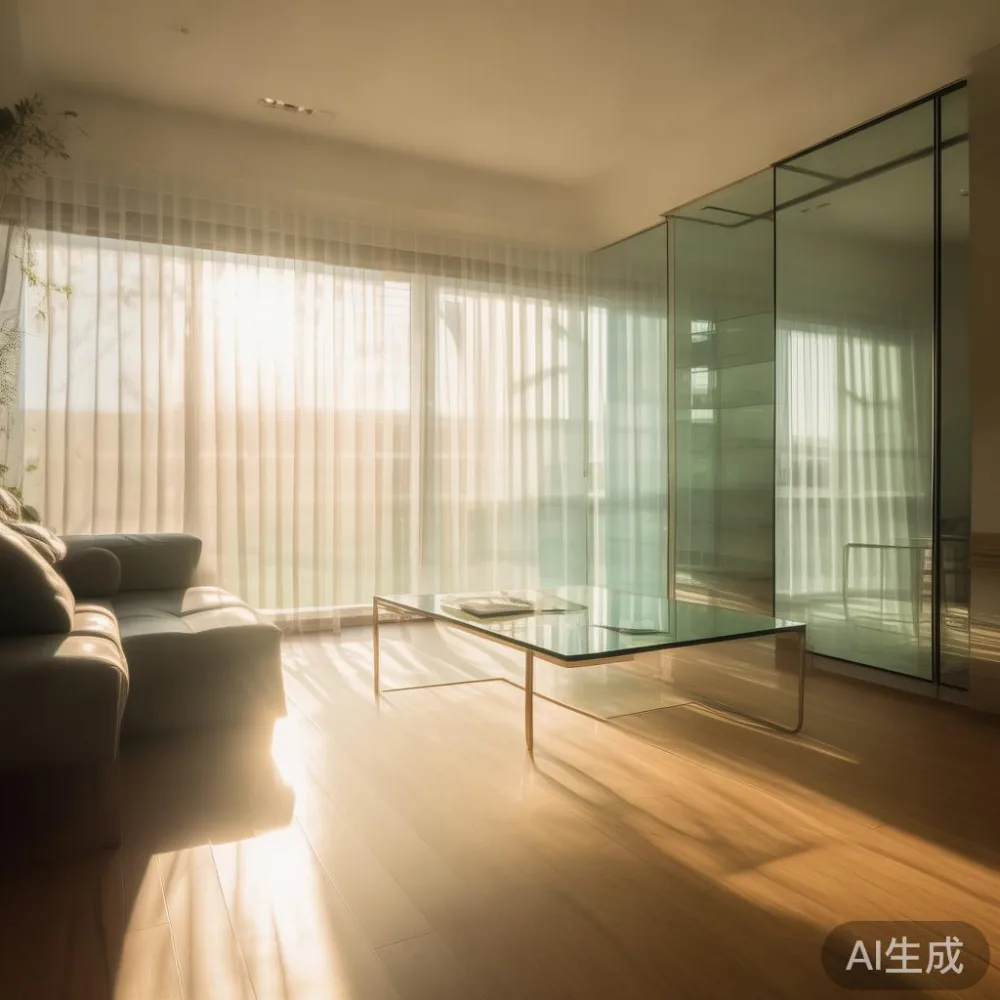
A Tampines four-room flat usually measures 90 to 95 sqm, but after you subtract the kitchen, two bathrooms, and the structural walls, you are left with about 38 to 42 sqm of actual flexible space. Once a 220 cm solid wood dining table sits in the middle of that, plus a 90 cm TV console and a three-seater sofa at 210 cm wide, the walkway between furniture drops below 70 cm, which the BCA accessibility guide flags as a tight passage. Crowding is rarely about the size of the room. It is about the sum of opaque volumes blocking sight lines. Glass furniture solves this because a 12 mm tempered glass top occupies the same footprint as a wooden one, but visually disappears. The eye reads through it, so the room keeps its depth. This is also why designers in light-luxury projects use glass console tables behind a sofa, glass side tables next to a nightstand, and glass dining tops with slim steel legs instead of bulky wooden trestles.
What is the best dining chairs for a small apartment?
For a small Singapore apartment, the best dining chairs are slim, stackable, under 45 cm wide, and made with a light visual profile such as a transparent or white frame, a low back, and a seat depth of around 40 cm, because they keep walkways open, stack neatly when not in use, and visually disappear next to a compact dining table. The first metric I check is the chair's stacked footprint. A good small-space dining chair should drop to roughly 12 cm per chair when stacked four high, so a set of four takes up less than half a linear metre against the wall. The second metric is seat height. Pair 45 cm seat height with a 75 cm dining table, leaving 30 cm of knee clearance, which HDB guidelines also use for dining nooks in studio units. The third metric is weight. Anything above 6 kg per chair becomes annoying when you host a CNY gathering of ten and need to rearrange. Acrylic and polypropylene chairs land between 3.2 and 4.5 kg. Upholstered chairs can hit 7 to 9 kg. For a 120 cm round glass dining table seating four, I would actually choose two upholstered chairs on one side and two transparent chairs on the other, so the table reads as a circle of light, not a square of clutter. Brands like MIDHILL, a Foshan solid wood maker I have ordered from twice, also make dining chairs in oak and ash with curved backrests that read light from a distance, and they ship sample swatches before you commit.
Which glass-furniture pieces actually earn their keep in a compact home?
Not every glass piece survives Singapore humidity, which averages 78 to 82 percent year-round. Skip anything with hollow chrome legs that sweat, and skip MDF cores wrapped in a 2 mm glass skin, because the skin chips within eighteen months. The pieces that work are tempered glass with a 10 to 12 mm thickness, paired with either solid wood, brushed stainless steel, or powder-coated iron. My shortlist, in order of impact, looks like this. A 120 to 140 cm rectangular glass dining table seats four comfortably and seats six at a squeeze, while a wooden 200 cm table eats 0.6 sqm more floor and blocks the window. A glass coffee table at 90 by 45 cm fits the standard 210 cm three-seater and leaves 45 cm of walking space on each side, which is the minimum I would accept. A glass console table, 30 cm deep, behind a sofa doubles as a display shelf and a charging station without breaking the room into two halves. A glass side table, 50 cm round, next to a reading chair reads as a circle of water. The fifth piece is one most people forget, a 2-seater sideboard for balcony areas, which is a slim 120 to 150 cm cabinet, ideally with a tempered glass top and a solid wood base, that runs along the balcony parapet and stores gardening tools, shoe-cleaning kits, and laundry detergent out of sight. On my own balcony, a 140 cm sideboard with two sliding doors freed up 0.8 sqm of floor that I now use for two rattan chairs and a planter.
How do you mix glass furniture with solid wood without breaking the look?
The trick is to treat wood as the warmth layer and glass as the breathing layer. Aim for a 60-30-10 ratio: 60 percent of the visible furniture surface should be solid wood in one tone, 30 percent glass, and 10 percent metal accents. In my living room, the solid wood sofa frame, the bed frame in the master, and the wardrobe in the second bedroom are all in the same warm ash tone, sourced from a Foshan factory I have worked with since 2019. The dining table, coffee table, and one bedside nightstand are tempered glass. The handles on the wardrobe, the floor lamp stem, and the dining chair legs are brushed brass. Because the wood tone repeats, the eye registers a single calm background, and the glass pieces become punctuation marks rather than visual noise. American light-luxury interiors, the kind you see in West Coast lofts, do exactly this: one wood species carried through a whole apartment, glass tops on coffee and side tables, and one accent metal. French light-luxury interiors push the glass higher, sometimes using a marble table with a glass-insert top, or a glass console with a brass frame, which works surprisingly well in a Punggol condo with 3.2 m ceiling height. If your unit is a standard HDB with 2.8 m ceilings, I would keep the glass pieces low and wide, under 75 cm tall, so the room still feels vertical.
What sizes and weights actually fit Singapore lifts and corridors?
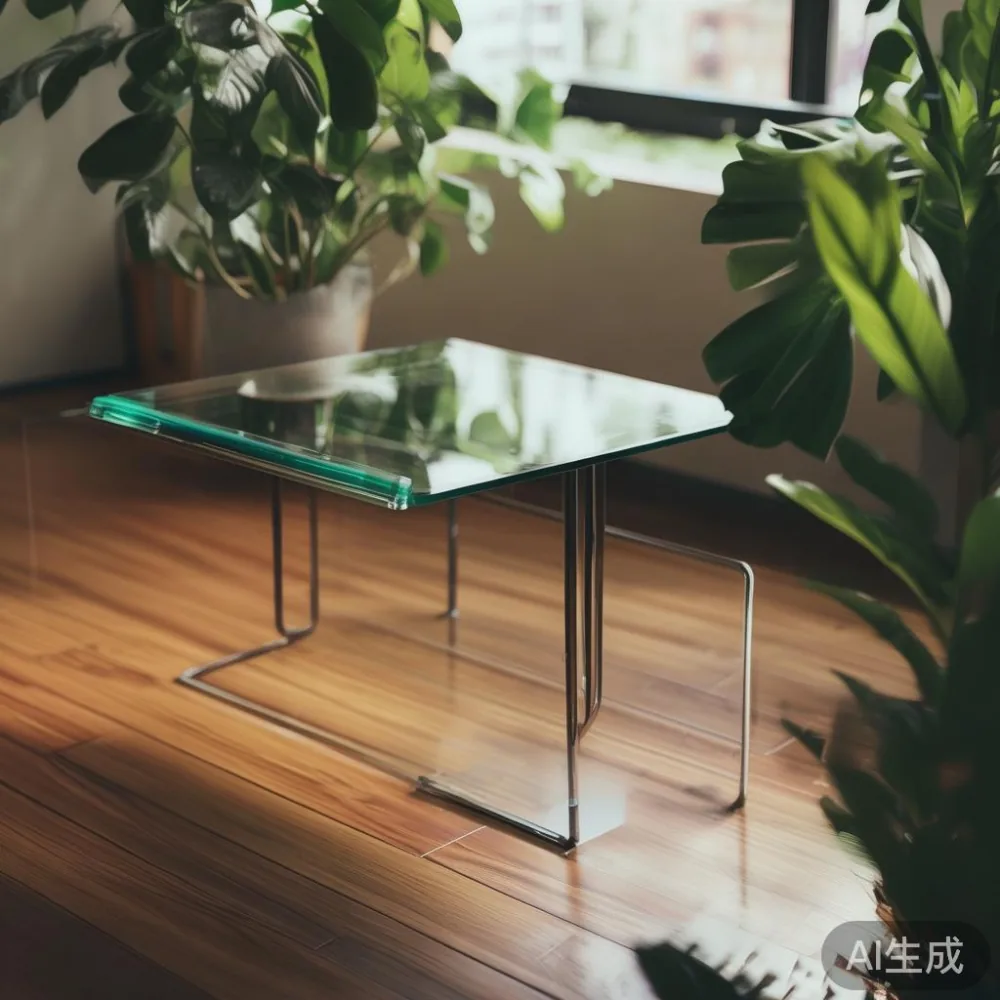
This is the question I get most often from readers who message me after a failed delivery. Most HDB passenger lifts have a door opening of 900 mm wide by 2100 mm tall, and an internal cabin of about 1400 mm by 1700 mm. A glass dining table that is 140 cm long and 80 cm wide will fit if the legs detach and the top is carried vertically, but a 160 cm marble table top will not, even on its side. The same applies to wardrobe panels. A standard 240 cm tall wardrobe will not fit through a 2100 mm door unless you remove the doors first and the top panel is under 80 mm thick. Always check the packed dimensions before paying, and ask the seller to confirm the package weight, because anything above 80 kg per box triggers a manual handling surcharge of S$60 to S$120 in most condo contracts. For glass tops, weight is roughly 2.5 kg per millimetre of thickness per square metre, so a 12 mm tempered glass top of 140 by 80 cm weighs about 33.6 kg, which is manageable for two people. A 15 mm top of the same size hits 42 kg, and a 19 mm top hits 53 kg, which is the practical ceiling for a single person carrying it up a corridor. MIDHILL, for example, publishes packed dimensions and weights on every product page and offers free shipping above US$350, which at current rates is about S$475, so a single dining set clears the threshold comfortably.
How much should I budget for a glass-and-wood small-apartment set in SGD?
Prices in Singapore have moved with GST rising to 9 percent in 2024 and another 1 percent to 10 percent by 2025, so always check whether the price you see is GST-inclusive. A realistic small-apartment set in 2025 looks like this. A tempered glass dining table for four from a Foshan OEM: S$680 to S$1,200 before GST. Four dining chairs in solid wood with upholstered seats: S$320 to S$560 for the set. A glass coffee table with a wooden shelf: S$280 to S$520. A 2-seater sideboard for balcony storage in solid wood with a glass top: S$450 to S$780. A glass nightstand pair: S$260 to S$480. A king-size solid wood bed frame: S$980 to S$1,650. A three-door solid wood wardrobe: S$1,400 to S$2,300. Add delivery at S$80 to S$150, installation at S$120 to S$220, and you land between S$4,650 and S$7,850 for a full two-bedder set. The wider range covers whether you choose ash, oak, or walnut, and whether the glass is clear, smoked, or bronze tinted. A 10-year structural warranty, like the one MIDHILL offers on its solid wood frames, is worth paying 8 to 12 percent more for, because Singapore humidity warps cheap plywood within three to four years, and you will be the one paying to replace it.
What maintenance actually keeps glass furniture looking new in a tropical climate?
Glass is one of the easiest surfaces to maintain, but only if you use the right cloth and the right cleaner. Microfibre at 220 to 280 gsm is the sweet spot. Anything thinner leaves lint, anything thicker loses the polishing edge. Use an isopropyl-alcohol-based cleaner diluted 1:3 with distilled water. The distilled part matters, because Singapore tap water carries 30 to 60 ppm of dissolved minerals that leave white rings on glass within weeks. Spray the cloth, not the table, then wipe in straight lines, not circles, to avoid swirl marks visible under afternoon sun. For the wooden elements, oil them every six to eight months with a hardwax oil, not a polish, because polish sits on top and turns sticky at 85 percent humidity. Felt pads under every glass and wood leg cost about S$12 for a pack of 24 and save you from scratches on vinyl flooring, which is the standard HDB finish. Last month I visited a colleague's flat in Bedok, where she had skipped the felt pads on a glass dining table, and after two years the chair legs had ground eight small crescents into the floor. The resurfacing quote was S$420. Felt pads would have cost her S$0.50 per chair.
Are there pieces worth leaving out of a small apartment entirely?
Yes. Three categories. First, glass display cabinets taller than 180 cm. They look elegant in a 30 sqm Punggol condo, but they collect dust, block a wall, and you usually fill them with clutter that negates the open feel you were chasing. Second, a 200 cm or longer dining table. Once you have more than 140 cm of table, the ends become dead zones that hold mail, water bottles, and mystery keys, and the middle becomes the only useful surface, which means you have paid for a 60 cm no-man's-land on each side. Third, a glass TV console wider than 150 cm with a closed cabinet below. Closed cabinets in glass are a Singaporean oxymoron. You either want to see through the room or you do not, and a closed glass console is the worst of both: heavy, opaque at the wrong height, and visually heavy at the foot of the wall. Replace any of these three with a wall-mounted floating shelf, a smaller round dining table, or a low open wooden sideboard, and the same room will feel 15 to 20 percent larger without any renovation.
Quick checklist before you click buy on glass furniture in Singapore
Measure your lift door and cabin, not just the room. Ask for packed dimensions and weight in writing. Pick tempered glass at 10 to 12 mm for tables, 8 mm for shelves, 6 mm for cabinet inserts. Confirm the wood is kiln-dried to 8 to 12 percent moisture, because anything above 15 percent will cup in our climate. Check the warranty, and ask whether it covers structural joints, not just surface finish. Confirm the delivery window, because most Singapore condo managements require a booking two to seven working days in advance, and a S$50 to S$150 loading bay fee. Finally, look at the company's history. A Foshan maker that has exported for fifteen years, such as MIDHILL, will have solved the small-space lift puzzle thousands of times, and will usually send a single sheet of CAD drawings to confirm fit before shipment. A glass dining table, a slim solid wood bed frame, a tempered glass coffee table, two glass nightstands, a 2-seater sideboard for balcony storage, and a compact glass-and-wood dining set for four will, in my experience, turn a 65 sqm HDB into something that photographs like a 90 sqm condo, without a single wall coming down.