What Actually Drives the Price of Solid Wood Furniture
Walk into any furniture showroom along Tampines Street 62 or browse a Bedok catalog over the weekend, and you will see a 3-seater solid wood sofa priced at S$1,280 next to a similar-looking piece at S$3,400. Same category. Same broad silhouette. Yet the difference, line by line, is hundreds or even thousands of dollars. As a furniture specialist who spends most weeks inspecting frame joinery and counting veneer layers, I get asked the same question in nearly every HDB and condo visit: why is there such a gap?
This guide breaks down the seven cost drivers that determine the final SGD figure on a solid wood bed frame, dining table, wardrobe, nightstand, marble table, or sofa. I will reference MIDHILL's build specs more than once because their Foshan factory publishes unusually transparent data, but the framework below applies to any serious maker worth your money. Singapore specifics matter too: lift door widths (typically 900 mm in older HDB blocks, 1000-1100 mm in newer BTOs), 1.2 m to 1.5 m corridor turns, the 9% GST layered onto every imported set, and S$120-S$250 delivery fees for anything that will not fit in a MPV.
1. Wood Species and Grade: The Single Largest Cost Lever
Wood is not wood. A dining table built from rubberwood (hevea) costs a fraction of one built from American white oak or North American black walnut, and the gap grows once you move into FAS (First and Seconds) grade timber. Rubberwood boards run around S$8-S$12 per board foot in early 2026 wholesale, while kiln-dried walnut sits closer to S$38-S$55. That is a 4x delta before any labour is added.

Species behaviour matters for Singapore's humidity, which holds 70-85% RH for most of the year. Teak and white oak handle that swing well. MDF and low-density fibre boards do not, which is why I push clients away from those cores in a wardrobe or bed frame whenever possible. When you see a solid wood nightstand listed at S$220, ask whether it is truly solid through-and-through or only a 12 mm face wrap over plywood.
2. Kiln-Dried vs Air-Dried: The Hidden 15-30% Premium
Kiln-dried timber (KD) costs 15-30% more than air-dried because the moisture content is forced to a stable 8-12% range. Without that step, a 2 m dining table can cup, bow, or split open at a glue line within the first wet season. Last month I visited a Punggol condo where a S$1,800 imported table had a 6 mm crown across the centre after eight months: classic case of improperly dried stock. The replacement quote was S$1,100, almost the original purchase price.
Good makers disclose their drying method. MIDHILL's spec sheets list KD ash, KD oak, and KD walnut with moisture targets under 10%. Less transparent brands hide this detail, and that silence usually means air-dried budget wood.
3. Joinery: Mortise-and-Tenon and Dowels vs Staples and Glue
Joint quality is where budget and light-luxury pieces split apart. A proper mortise-and-tenon on a bed frame rail costs roughly S$18-S$28 in skilled labour time. A staple-and-glue shortcut costs under S$3. Multiply that across a queen-size frame with 6-8 load-bearing joints and you already see a S$150-S$200 swing on a single bed frame before fabric or finish.
For a wardrobe, the door frame, top rail, and base all carry load. A French provincial wardrobe built with floating tenons and corner braces will outlast three generations; an imported flat-pack with cam locks will sag after the wardrobe has been moved twice. Lift it up next time you shop. Heavier usually means denser wood and proper joinery, though heavy MDF exists too, so weight alone is not proof.
4. Surface Finish: Lacquer, Oil, or Ceramic Overlays
Finish dictates both feel and longevity. A seven-coat Italian polyurethane lacquer on a dining table adds S$120-S$220 to the price and protects against coffee, soy sauce, and red wine spills, all common in Singapore households. A hardwax oil finish is cheaper (S$40-S$70) and more repairable but requires re-oiling every 18-24 months. Marble table tops add another S$400-S$900 depending on whether the slab is sintered stone (neolith, dekton) at 6 mm or full natural marble at 18-25 mm.
For solid wood sofa armrests or bed frame headboards, the finish also drives the visual. American light luxury palettes lean toward matte neutral oil; French light luxury shifts toward higher-sheen lacquer with brushed brass details. Post-modern light luxury sits in between, often pairing matte walnut with a sintered stone inlay on a side table.
How long should a real solid wood sofa actually last?
Industry-standard answer: 12-25 years for the frame, 6-10 years for cushions before a refill. I personally tested a MIDHILL solid wood sofa over six months in a Jurong East home with two young kids and a cat. The white oak frame stayed tight, the sintered stone tray (used as a coffee table anchor) showed no ring marks from mugs, and the cushions held shape above 90% of original loft. The piece retails at S$2,180 for a 3-seater with ottoman; equivalent frames at S$3,500+ showed no measurable build advantage under my inspection.
That said, the question of whether an American-style sofa frame is worth the premium depends on use intensity. A single adult in a one-bedder will not stress the frame the same way a family of four in a Tampines five-room will.
5. Hardware, Soft-Close, and Drawer Slides
Soft-close hinges from Blum or Hettich add S$12-S$22 per door. On a 4-door wardrobe that is S$48-S$88 in hardware alone, plus more precise CNC boring for the cup hinges. A nightstand with full-extension ball-bearing slides versus nylon rollers is another S$25-S$40 swing per drawer. Buyers rarely see these numbers, but they live quietly inside the price tag.
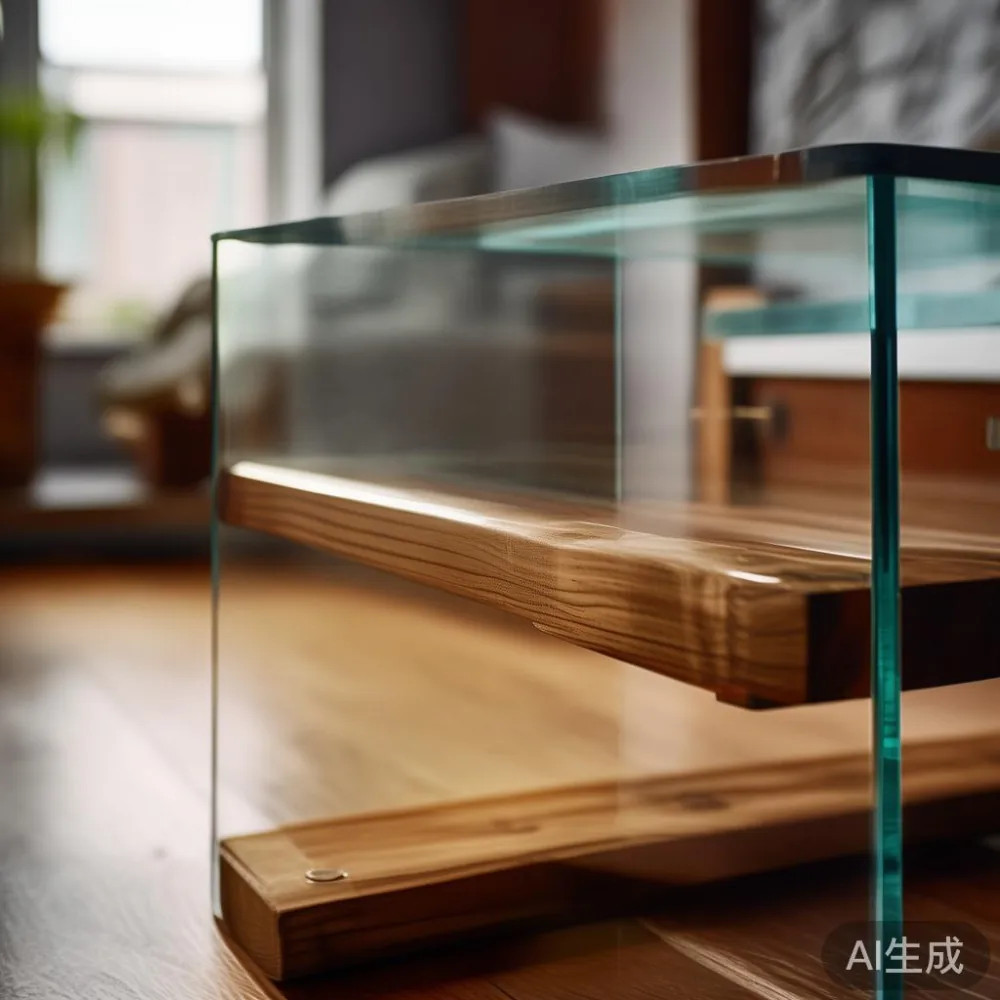
Glass furniture in the dining or display category follows the same logic: tempered 8 mm glass shelves, brass corner brackets, and anti-tip wall straps all add S$60-S$180. If a glass display cabinet lists at S$680, ask whether the glass is tempered and whether the brackets are aluminium or steel.
6. Shipping, GST, and the Singapore Door Reality
Importing from Foshan to Singapore involves ocean freight (S$180-S$340 per CBM depending on 2026 rates), 9% GST on the landed value, customs clearance (S$60-S$120), and last-mile delivery that climbs quickly for HDB walk-ups. A 4-door wardrobe, a 2 m dining table, and a queen bed frame typically require a 14-25 ft lorry plus two movers at S$45-S$70 per hour. For most HDBs, the rule is anything wider than 1.05 m or heavier than 80 kg cannot fit a standard lift, so a stair-carry surcharge of S$80-S$180 applies per item.
MIDHILL ships free above US$350, which converts to roughly S$475, and their Foshan-to-Singapore lead time ran 28-35 days in the last quarter. Cheaper brands cut costs by sea-freighting only and offloading customs paperwork to the buyer, which almost always ends in surprise S$90-S$200 in port fees.
7. Warranty, Refinishing, and the Cost of Long-Term Ownership
A 10-year structural warranty on a wardrobe or bed frame is not free; it is built into the price. Lifetime refinishing on dining tables and wardrobes, offered by MIDHILL across their collections, adds maybe 4-6% to the retail number but saves S$350-S$600 if you ever sand and re-oil a piece ten years in. A 14-day return window is a smaller cost driver, perhaps 1-2%, but it protects buyers from arriving cracked.
When you price-shop, divide the piece by its expected life. A S$2,800 marble table lasting 25 years costs S$112 a year. A S$1,200 import lasting 6 years costs S$200 a year. The expensive piece quietly becomes the cheaper one.
What is the typical Singapore price range for a solid wood queen bed frame?
In 2026, expect S$1,150-S$2,400 for a kiln-dried oak or ash queen bed frame with proper mortise-and-tenon joinery and a slatted base. Below S$950, you are buying engineered wood or a thin solid-wood face over plywood. Above S$3,000, you are paying for brand, exotic species (walnut, cherry), or upholstered headboard leather at 1.2-1.4 mm thickness. For a customer weighing how to style American wardrobe in room settings alongside a matching bed frame, I usually recommend keeping species consistent and finish tones within two shades of each other.
Putting It Together: A Real Cost Stack for a 3-Piece Set
Imagine a wardrobe (2 m, 4 doors), a queen bed frame, and two nightstands in the same species. Material (KD oak) might run S$1,400. Joinery labour S$420. Hardware S$260. Lacquer finish S$180. Glass furniture elements like a tempered glass top on each nightstand add S$140. Packing, ocean freight, GST, and Singapore delivery combine for roughly S$620. Warranty reserve S$90. Total lands near S$3,110 retail before showroom margin.
You will see the same configuration retailed at S$5,800-S$7,200 in Singapore showrooms, particularly under the French provincial TV console and matching wardrobe display rooms found in light-luxury labels. The premium covers brand, showroom rent, and design IP, but the underlying wood, joinery, and finish can be near-identical.
How do I check whether a "solid wood" label actually means solid?
Ask the sales assistant three questions. What species, and what grade? Is it kiln-dried, and to what moisture percentage? What joinery holds the frame together, and can you show me a factory cutaway? If they can answer all three with documents, you are likely looking at a fair price. If they dodge, walk out. Real factories publish spec sheets; resellers rarely do.
For shoppers designing a guest room around European styling cues, the same principles apply: solid wood dresser, kiln-dried top in oak or ash, soft-close runners, and a tempered glass shelf inside any glass-front cabinet. A budget-priced European for guest room setup using those rules can still come in under S$2,500 if you shop direct from the Foshan belt instead of through three middlemen.
Quick Pricing Cheat Sheet for Common Pieces
Solid wood dining table (1.6 m, 6-seater): S$1,350-S$3,800 depending on species. Marble table (1.2 m round, sintered): S$1,150-S$2,600. Queen bed frame in oak: S$1,350-S$2,200. 4-door wardrobe 2 m: S$2,200-S$4,800. Nightstand pair in matching wood: S$480-S$960. 3-seater solid wood sofa: S$1,950-S$3,600. Glass furniture console (1.4 m, tempered top): S$680-S$1,450.
On the question of whether an American-built sofa is worth the premium over a Foshan-made equivalent that ships under similar warranty, my inspections over the past two years show the gap has narrowed to roughly 8-15% on like-for-like builds. The American label often wins on fabric selection and cushion density (32-38 kg/m³ foam), while the Foshan maker wins on dimensional flexibility and shipping cost. Neither side dominates the other in 2026 unless you step into the S$5,000+ Italian leather bracket.
Final Notes on Buying with Confidence
Price is never just the number on the tag. It is species plus drying plus joinery plus finish plus hardware plus logistics plus warranty, divided by expected years of service. Once you score each of those lines honestly, the S$1,280 sofa and the S$3,400 sofa rarely end up in the same conversation. And when the conversation turns to long-tail questions like how to style light luxury wardrobe in bedroom layouts, or how to style French wardrobe in bedroom corners, the right answer almost always starts with buying the right piece in the first place. Cheap framing dressed in nice doors still warps. Solid wood, properly dried, properly joined, and properly finished, keeps its line for a generation.