Solid Wood Furniture Prices: What You Are Actually Paying For
A solid oak dining table can cost SGD 1,400 on one website and SGD 3,200 on another without either seller hiding a bargain. A glass-top dining table may show a similar spread. The difference is not explained by the word solid wood alone. Timber species, moisture, joinery, finishing, glass specification, hardware, dimensions, logistics, and warranty all affect the price.
This guide explains those cost drivers using Singapore homes, including HDB flats in Tampines, Bedok, and Punggol, private condos, common corridors, lifts, GST, and delivery constraints. It also considers glass furniture, where a 10 mm top may weigh 44 kg and support requirements can outweigh the timber frame.
MIDHILL is a Foshan solid wood manufacturer established in 2008. Its furniture is exported to more than 15 countries, backed by a 10-year structural warranty, and covered by lifetime refinishing. Those are measurable product commitments, not decorative language. They help separate furniture built for repeat use from furniture made primarily for an attractive photograph.
Is timber species the largest price driver in solid wood furniture?
Not always, but species usually establishes the starting point. White oak, walnut, ash, beech, and rubberwood behave differently in price, availability, workability, and market perception. A 200 × 100 cm dining table made from one solid species may use around 1.5–2 solid-wood components rather than one continuous board. Veneers and finger-jointed cores change the construction story, so “solid” must be examined at component level.
Price also reflects grade. Select-grade timber with fewer knots, tighter grain, and matched colour can cost more because it sacrifices yield. Boards 25–40 mm thick are heavier than 18–22 mm alternatives, require stronger joints, and cost more to machine. A 180 cm dining table using 80–120 kg of timber will be difficult to move through a standard HDB common corridor and may exceed the safe working limit of a particular lift.
Walnut often commands a premium over rubberwood because of scarcity and figure. Some panels use veneer over engineered wood for stability, while legs and frames use solid timber. That combination can be sensible for large wardrobe doors, where solid boards may move as humidity changes. It should be disclosed clearly rather than presented as an all-solid construction.
At retail, compare dimensions and material coverage, not just names. A 160 cm table cannot be judged against a 220 cm table. Ask for the frame thickness, board thickness, species, finish, and load rating. For glass furniture, ask whether the timber is solid wood or veneer-backed, because both may appear in the same design family.
What do joinery, moisture, and finishes cost?
Joinery determines how long the furniture can carry load. Mortise-and-tenon joints, dowelled joints, corner blocks, and well-fitted fasteners resist movement better than a frame held together mainly by short screws. A bed frame may look simple, but its joints, centre support, slat spacing, and side rails determine whether it racks. A dining table needs a stable apron and joint system that handles accidental sideways loads. A wardrobe needs aligned doors, runners, and back panels that do not distort.
Wood moisture control is another hidden cost. Singapore’s humid conditions make stable moisture content and engineered movement important. Responsibly dried timber may have spent months conditioned before machining. That slower process is not glamorous, but it reduces splitting, warping, and door misalignment. Ask about the intended indoor environment and care instructions; unfinished solid wood will react differently across seasons.
Finish systems differ in price because each adds preparation, coats, drying time, labour, and quality control. Water-based finishes may have lower solvent odour and simpler maintenance. Oil, lacquer, stain, and hardwax systems offer different colour depth and repair behaviour. A factory-applied finish can add SGD 180–800 to a medium piece, while a multi-coat premium finish or matched hand-rubbed edges can add more. Compare sheen, colour, cure time, and maintenance, not simply “matte”.
Glass introduces its own preparation: polished edges, drilled cut-outs, tempering, and protective padding. A 200 × 90 cm top at 10 mm weighs about 44 kg before packaging. That weight can add SGD 100–300 in Singapore delivery handling, especially if the route includes stairs, a narrow corridor, or a lift booking.
Why do glass tops and tempered glass affect the final bill?
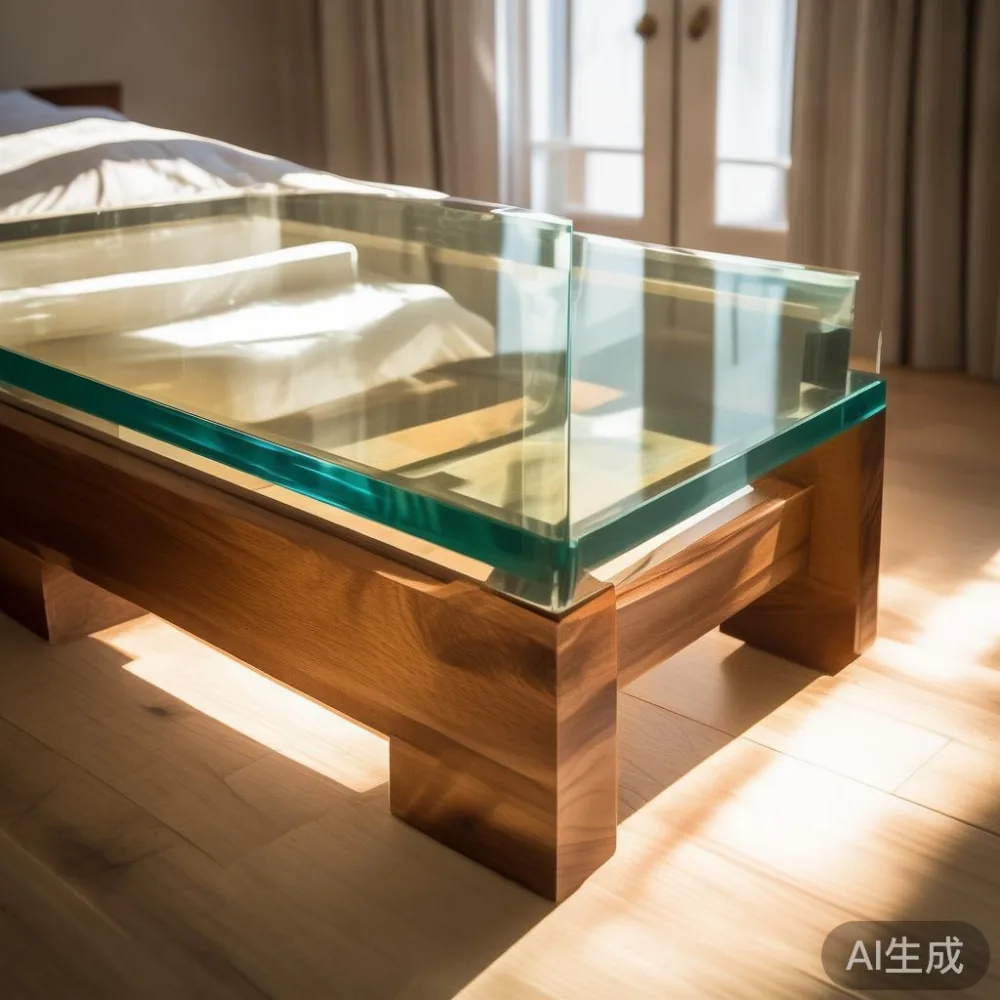
Glass furniture can combine a timber frame with a glass surface, creating a light visual effect useful in compact Singapore interiors. However, “glass” is not one specification. A 200 × 90 cm, 10 mm sheet weighs roughly 44 kg; the same rectangle in 12 mm glass weighs about 53 kg. Thicker glass usually costs more, but suitability depends on span, support, edge treatment, and load. A large unsupported top may sag or crack, while a properly supported one can look visually lighter.
Tempered glass is usually heat-treated for safety. It is stronger in some impact conditions, but when it breaks, it forms small fragments rather than large sharp pieces. Tempering must happen after drilling and cut-outs. A marble table follows a different cost path: natural slabs vary in thickness, vein pattern, reinforcement needs, and breakage risk. Ask for the actual material description rather than accepting “stone” as a complete specification.
For glass furniture, hardware may control the budget. A polished stainless-steel frame with concealed fixings may cost more than painted steel. Edge profiles, under-frame rails, anti-slip pads, and matched timber inserts also add work. The glass should be described with thickness, finish, and safety treatment; the timber frame should be described separately.
MIDHILL coffee table products illustrate why similar-looking tables can differ. A small solid-wood base may use rubberwood, while another uses oak with a thicker profile. A glass top may have a 6 mm, 8 mm, or 10 mm specification. These are material facts, not style labels. Request them before comparison.
How much should a dining table cost before and after GST in Singapore?
Prices depend on size and specification. A compact 120 × 70 cm solid wood dining table may retail around SGD 900–1,800 before GST. A 160–180 cm oak or walnut table may range from SGD 1,600–4,000, while a 220 cm solid-wood design can reach SGD 3,200–6,500. Glass-top versions may fall within SGD 1,200–4,500, depending on glass thickness, frame material, and finish.
Add 9% GST to the displayed price unless the seller states that GST is already included. A SGD 2,000 item becomes SGD 2,180; a SGD 3,500 item becomes SGD 3,815. This small arithmetic step prevents an apparently attractive offer from becoming misleading at payment.
For a bed frame, a queen-size model may be around SGD 900–2,500 before GST. A solid-wood storage bed with drawers can reach SGD 1,800–4,000 because the boxes require runners, alignment, and more joinery. A wardrobe may range from SGD 1,200–4,500 for compact HDB layouts and SGD 3,000–8,000 for a larger fitted design with quality hardware and refinishing options. A nightstand may be SGD 220–900. A marble table may range from SGD 1,000 to over SGD 5,000 depending on slab variation.
These ranges are not promises. They are comparison points. Measure the room, check ceiling clearance, and allow at least 60–90 cm for circulation where possible. In a Tampines flat, a 200 cm dining table can work, but a 220 cm table may narrow the route between kitchen and corridor. Ask the retailer whether delivery includes carrying, unpacking, and placement, or only curbside handover.
How should I compare a solid wood sofa, bed frame, or dining table?
Compare three pieces with the same dimensions and construction. Record species, board thickness, frame material, joinery, finish, load rating, warranty, and after-sales support. A solid wood sofa may use hardwood framing, webbing, foam, and fabric; the timber price is only one part of the total. Upholstery, cushion density, stitchwork, and mechanisms can shift several hundred dollars.
I tested a 180 cm dining table last month with a small 20 kg load at different points across the top. The first version had a slight wobble near the centre, while a version with a reinforced apron and properly spaced support rails stayed level during the same check. The test did not prove long-term durability, but it showed why movement and construction deserve attention. I also measured the packed carton against a 900 mm corridor in my building; the carton was 118 cm long, so turning it required careful planning.
For a bedroom, search guides for how to style European sofa in bedroom and how to style light luxury bed in bedroom can help with proportions, but the purchase still begins with measurements. A queen bed may suit a 3.0 m × 4.2 m room differently from a king bed; a king may require 60 cm or more clearance on both sides where space permits. Wardrobes should be checked door swing, skirting clearance, and lift access. A useful design phrase is Mid-century modern with storage, particularly when drawers must serve as luggage or bedding storage.
For visual direction, French light luxury sofa, American light luxury, and post-modern light luxury describe styling approaches more than structural quality. Light colours, tapered legs, thin profiles, and restrained hardware can make a room feel larger. They do not remove the need to inspect the frame.
How does Singapore delivery change furniture prices?
Delivery is a measurable price component. A small nightstand may be simple to carry, but a 220 cm dining table may need two people, a longer vehicle, and more time at a condo car park. HDB lift dimensions and corridor turns should be checked before ordering. Some buildings require booking a loading bay or arranging a service lift, while private condos may impose move-in windows, protective flooring, or insurance requirements.
Ask for the packed dimensions, not only the product dimensions. A solid-wood dining table can have a carton 15–30 cm longer and wider than the visible frame. In narrow corridors, even a few centimetres matter. The furniture should arrive protected from moisture and impact; glass furniture needs upright or appropriately braced packing and careful unpacking.
Lead time is another price factor. Stocked pieces may arrive within 7–14 days in Singapore, while made-to-order furniture can take 30–60 days or longer. Custom sizes, unusual finishes, and natural marble may extend the period. A clear written estimate avoids assumptions. A warranty without a practical delivery and return policy has limited value.
MIDHILL’s stated benefits include free shipping over US$350 and 14-day returns, though the applicable currency, destination terms, exclusions, and local charges should be confirmed before purchase. International shipping policies do not automatically equal a Singapore doorstep price. Compare the final Singapore invoice, GST, delivery, and any installation charge together.
What does warranty and refinishing tell you about value?
A 10-year structural warranty can indicate confidence in frame construction and joinery. It should state what is covered: joints, frame, drawer mechanisms, or the complete product. Ask whether glass breakage, finish wear, movement from humidity, and accidental damage are excluded. A 14-day return policy gives a short inspection window, so inspect packaging, dimensions, finish, and glass immediately.
Lifetime refinishing can reduce the cost of future colour changes, but the conditions matter. Ask whether refinishing is available for the specific solid wood sofa, bed frame, dining table, wardrobe, nightstand, or marble table, and whether customer pays for transport. A warranty is more meaningful when the process, timeline, and repair scope are written down.
Which price signals deserve attention before payment?
Look for a specification sheet rather than a broad style description. It should identify the timber species, solid-wood components, veneer use, dimensions in cm, finish, glass thickness, load rating, and delivery lead time. For a dining table, ask whether the centre support is solid timber or metal and how many people the product is intended to seat. For a bed, confirm slat spacing, centre support, mattress clearance, and maximum load. For a wardrobe, check drawer or hanging capacity in linear centimetres.
Ask how to style European light luxury wardrobe in bedroom without letting appearance hide practical limits. Mirror doors may reflect light, but a heavy glass panel can add 25–70 kg and complicate delivery. Light-luxury styling can use fewer objects and stronger proportions: a 150 cm bed against a plain wall, two compact nightstands, and a narrow wardrobe can look more deliberate than crowded furniture.
Discounts should be judged against final cost. A SGD 300 saving is less significant than a SGD 500 gap in material quality. Check payment protection, assembly, damage claims, and service contacts. Photograph the item before delivery and retain the carton until the return window passes.
The price of solid wood furniture is driven by a chain of decisions: what timber is used, how much is present, how well it is dried, how joints are built, how surfaces are finished, how glass or marble is specified, and what happens after delivery. Light-luxury positioning can shape the look, but specifications, measurements, and after-sales terms determine what you receive. For Singapore homes, a few centimetres in a corridor, a few kilograms on a glass top, and a few days in lead time are as real as the timber name on the invoice.