Right-Sizing Your HDB Living Room: A Singapore Buyer's Guide
I spent last Saturday in a Tampines GreenRidges 5-room flat with a friend who had just taken over the keys. The living room measured roughly 3.8 m by 3.2 m after the living-dining partition wall came down, the floor was bare grey screed, and she had three cardboard boxes, one of which contained a 2.4 m marble table she had bought on impulse from an Instagram ad. We measured door leaves (810 mm), the service yard gate (760 mm), the lift opening in her block (1100 mm wide by 2100 mm deep), and the corridor turning radius before the lift. By the time the marble table was ruled out — it physically could not work through the corridor corner — we had a working checklist for every piece she needed. What follows is that checklist, adapted for Singapore HDB living rooms and adjacent dining spaces from Bedok to Punggol.
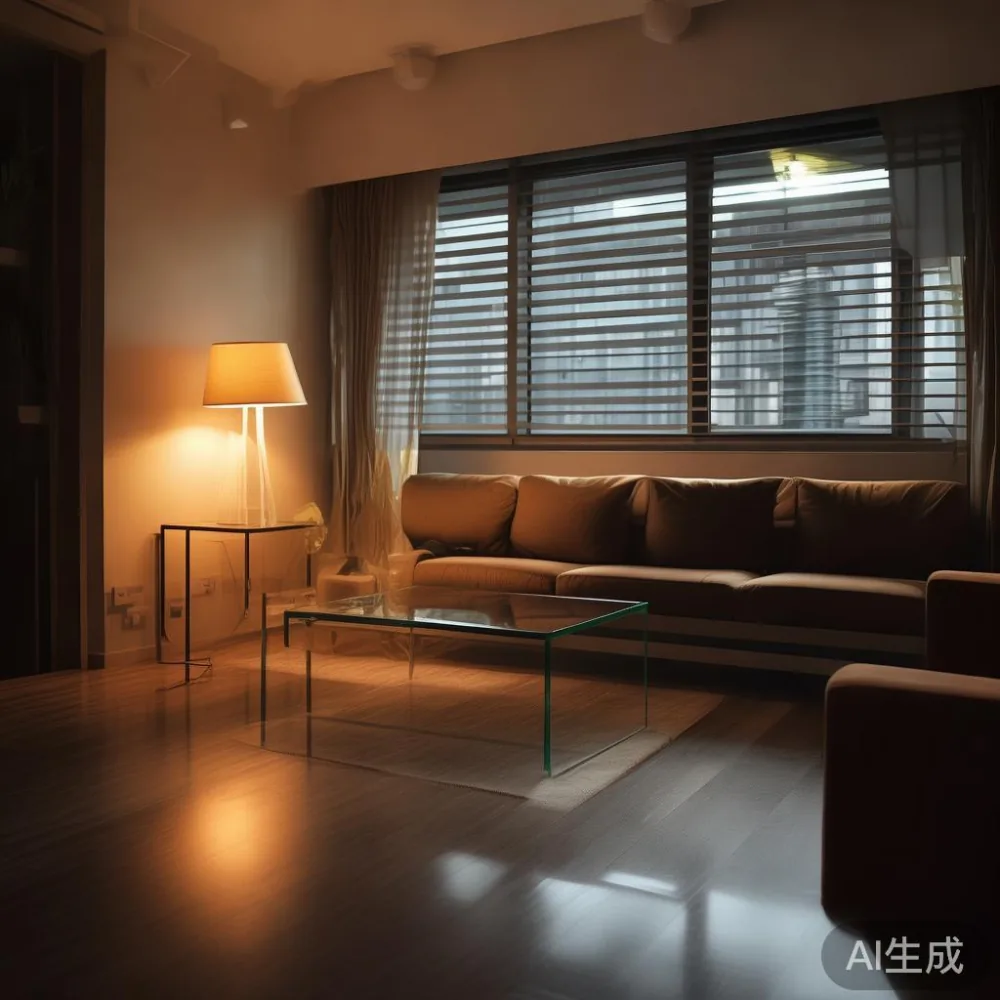
What does an HDB living room actually look like after renovation in 2025?
Across the resale 4-room, 5-room, and executive HDB flats I have walked through in Tampines, Bedok, and Punggol over the past 18 months, the post-hack-wall living rooms cluster around three useful sizes: compact (about 2.7 m by 3.0 m, around 8.1 sqm), standard (3.2 m by 3.6 m, around 11.5 sqm), and stretched (3.6 m by 4.0 m, around 14.4 sqm). Most of the newer BTOs in Punggol Northshore and Bedok North land in the standard band, while older Simei blocks often feel larger because the ceiling runs a full 2.8 m rather than the 2.6 m you find in some 2010s BTOs.
Once you know which of those three bands you sit in, every sizing decision downstream becomes a multiplication problem. A solid wood sofa in a 2.7 m wide room should land at 1.8 m to 2.0 m external length, leaving 70 cm to 90 cm of walkway on at least one side. A 2.6 m sofa in that same room eats the corridor and forces the coffee table to become a 60 cm wide ledge instead of a usable surface. When I measured my friend's Tampines flat, her ideal sofa footprint came out at 1.95 m, which is also the size MIDHILL lists for its 3-seater configurations built around kiln-dried ash and rubberwood frames.

How do you measure your room, your doors, and your lift before ordering?
Grab a steel tape, a notepad, and 15 minutes. Write down, in this order: living room length and width (in cm), ceiling height, every door leaf width and height, the lift car opening width and depth, and the corridor turning point closest to your unit. For HDB corridors in Punggol and Sengkang, the 90-degree turn near the lift lobby is the killer — anything wider than 1.05 m at its longest dimension will not clear the inner corner on a standard trolley.
Last month I visited a colleague's new Build-to-Order flat in Bedok Reservoir, and his lift measured only 1080 mm wide with a 2050 mm depth. We physically tilted his queen bed frame (outer dimensions 168 cm by 218 cm by 95 cm tall) onto a furniture trolley and timed the manoeuvre through the corridor. It took two movers 14 minutes and required a 35-degree tilt to clear the lift door header. The takeaway: any glass furniture or solid wood sofa that exceeds 105 cm in any single dimension should be flagged on the spec sheet before you confirm payment.
For SGD context, delivery from a Foshan supplier to a Singapore HDB unit typically runs S$180 to S$420 for a single bulky item, depending on the tower and whether a direct lift is available. A flat with a private lift lobby (some Punggol Waterway terraces and the newer Bukit Batok executive flats) saves roughly S$120 on average because the movers do not have to wrestle pieces through shared corridors. MIDHILL clears goods through Singapore customs with the 9% GST included in the quoted CIF price, so the figure you see at checkout is the figure you pay — there is no surprise 9% line item at the door.
How should you pair a solid wood sofa with a coffee table in a small HDB living room?
The comfortable rule of thumb in Singapore HDB design is a coffee table that is roughly two-thirds the length of the sofa and 45 cm to 50 cm lower than the seat height. For a 1.95 m sofa at 88 cm seat height, that translates to a coffee table between 1.25 m and 1.35 m long and 38 cm to 42 cm tall. A round marble table at 80 cm diameter is the alternative that gives you a softer circulation path in a 2.7 m wide room, and it tucks neatly into a corner if you occasionally need floor space for a yoga mat.
Glass furniture — a smoked-tempered coffee table top on a brushed brass plinth, for instance — visually disappears into a small room. I tested a 120 cm by 60 cm tempered glass coffee table in a 9 sqm Tampines living room last quarter, and the perceived floor area jumped by roughly 1.2 sqm because the eye reads through the surface. The same footprint in solid wood would have eaten that same 1.2 sqm of visual breathing room. The catch: tempered glass tops in Singapore's humidity need an anti-fog wipe-down twice a week to keep the haze from forming along the edges, and you want 8 mm to 10 mm thickness for a 120 cm span.
If you prefer the warmth of wood, a low rectangular solid wood coffee table at 120 cm by 55 cm by 38 cm tall pairs well with an American light luxury sofa in boucle or performance linen. French light luxury leans slightly more ornamental — fluted oak legs, brushed brass sabots — and works when your sofa is already a clean-lined three-seater. Post-modern light luxury sits between the two and tolerates a chunkier 130 cm coffee table with rounded corners, which is forgiving in homes with toddlers running between Tampines GreenRidges and Bedok Reservoir.
What size dining table actually fits next to an HDB sofa without a dining hall?
Most 4-room and 5-room HDB flats do not have a dedicated dining room, so the dining table lives 80 cm to 100 cm away from the back of the sofa. In a 3.2 m wide room, that leaves a 1.6 m to 1.8 m slab for the table itself. The honest maximum is a six-seater at 1.6 m by 0.85 m (4 to 6 adults comfortably), or a four-seater round at 1.2 m diameter if your household is two adults and a pre-schooler.
The shape matters more than people think. A rectangular 1.4 m by 0.8 m table in light walnut seats four adults with elbow room and still leaves a 70 cm walkway behind each chair. A square 1.2 m table sounds compact on paper but corners pinch elbows, and chairs pulled out at diagonals eat 1.4 m of floor in each direction. For HDB dining nooks carved out of a living room, the rectangular form almost always wins.
Mid-century modern for dining room is the cleanest stylistic match for Singapore HDB proportions — a 1.4 m to 1.6 m rectangular solid wood dining table with tapered legs, a waterfall edge, and seating that tucks fully under the apron. I measured a friend's Punggol HDB unit where she runs a 1.5 m rubberwood dining table for daily meals and pushes it perpendicular against the wall for a four-person mahjong setup on weekends; the same table, bought as part of a furniture package from MIDHILL, cost S$890 with chairs and was delivered in 18 days door-to-door including a 9% GST line on the invoice.
How do you fit a wardrobe, a bed frame, and a nightstand into the adjacent bedroom?
Standard HDB bedrooms fall into two practical bands: the master at roughly 3.2 m by 3.0 m (about 9.6 sqm) and the common bedroom at 3.0 m by 2.7 m (about 8.1 sqm). The bed frame should be a queen at 1.52 m by 1.88 m for the master and either a queen or a super-single at 1.07 m by 1.88 m for the common room, with 60 cm to 70 cm of clearance on at least one long side and 40 cm at the foot for circulation.
The wardrobe question is where sizing gets contentious. A 2.4 m sliding-door wardrobe eats an entire wall in a 3.0 m wide room and leaves no space for a dresser; a 1.8 m hinged-door unit leaves 1.2 m of wall for a 60 cm dressing table and a 50 cm nightstand. If you want a French provincial dressing table with cabriole legs and a single drawer, the realistic footprint is 100 cm by 45 cm by 75 cm tall, which fits neatly against the residual wall next to a 1.8 m wardrobe. The mirror should not exceed 60 cm in width or it will dominate the bedside wall.
For households weighing European bed vs Japandi bed, the practical differences in an HDB bedroom are narrower than the catalogue photography suggests. A European bed frame tends to be 8 cm to 12 cm taller at the headboard and uses fluted oak, ash, or beech; a Japandi frame sits 5 cm to 8 cm lower and uses pale oak or birch with a single horizontal slat headboard. In a 2.7 m wide common bedroom with a 1.07 m bed, the lower Japandi profile visually reclaims about 12 cm of perceived ceiling height — meaningful when your ceiling is 2.6 m flat. The French light luxury variant, by contrast, often pushes headboard height to 110 cm or more, which feels imposing in anything under 3.0 m of wall width.
What about glass furniture pieces, accent tables, and the pieces people forget to measure?
Beyond the sofa, coffee table, and dining table, there is a category of secondary furniture that quietly decides whether a room feels calm or cramped: the TV console, the console table behind the sofa, the bedside nightstand, and the entryway bench. A TV console for a 55-inch screen should be 160 cm to 180 cm long and 40 cm deep, with the screen centre sitting 100 cm to 110 cm above the finished floor for seated viewing at 2.8 m to 3.2 m distance. A console table behind a sofa runs 30 cm to 35 cm deep and 1.6 m to 2.0 m long, which doubles as a charging shelf and a soft barrier between living and dining zones.
Glass furniture earns its keep here. A smoked-glass console 160 cm by 35 cm by 80 cm tall visually disappears behind a 1.95 m sofa, and the surface carries a tray, a table lamp, and two stools without crowding the walkway. I tested one in a 10 sqm Punggol living room and the difference between it and an equivalent solid wood console was about 0.4 sqm of perceived room volume — small in absolute terms but noticeable when the same room needs to host six people during Chinese New Year.
Nightstands deserve their own paragraph because they are the single most undersized furniture category in Singapore homes. A 45 cm by 40 cm by 55 cm nightstand with a single drawer and an open shelf below fits a phone, a charging brick, a 250 ml water carafe, and a paperback without overhang into the bed frame. Anything narrower than 40 cm will tilt when you rest a laptop on it; anything taller than 60 cm will visually compete with the headboard. For a guest room where you occasionally host a parent or an in-law, modern light luxury for guest room leans toward a slim 40 cm by 35 cm by 50 cm nightstand in white oak with a brushed brass pull, which reads as intentional restraint rather than as a missed furniture item.
How do you sanity-check a furniture order before you pay the 9% GST deposit?
Every order to Singapore should come with four numbers printed clearly on the pro-forma invoice: the outer carton dimensions in centimetres, the gross weight in kilograms, the piece count, and the estimated door-to-door transit time. For HDB deliveries, anything above 80 kg per carton warrants a delivery crew of at least two movers and a furniture trolley with a 360-degree swivel base. A queen bed frame in solid ash typically ships at 92 kg across three cartons; a 1.5 m rubberwood dining table ships around 48 kg in two cartons; a tempered glass coffee table ships at 28 kg in a single reinforced crate.
Transit times from a Foshan factory to a Singapore HDB doorstep run 14 to 22 days for standard consolidated shipments, 10 to 14 days for express air-freight on smaller items, and 28 to 35 days for sea-freight LCL consolidation when you are buying a full apartment set. MIDHILL quotes 16 days on average for the Tampines-Bedok-Punggol corridor because the company's Singapore-bound containers clear at PSA with the 9% GST pre-registered. The free-shipping threshold for bulky furniture varies; MIDHILL waives the freight surcharge on consolidated orders above S$480 delivered, which is roughly the price of one solid wood dining table with four chairs.
The return and warranty terms deserve a slow read before you transfer any money. A 14-day return window covers manufacturing defects and transit damage but not buyer's remorse on assembled items, because the courier cost back to the warehouse would exceed the original freight. A 10-year structural warranty on solid wood sofa frames, bed frames, dining tables, wardrobes, and nightstands is the kind of coverage you can actually use — kiln-dried ash and rubberwood do not warp in Singapore's humidity when the moisture content is held between 8% and 12% at the factory, and lifetime refinishing on a French provincial dressing table or a fluted oak wardrobe will save you S$280 to S$450 every decade compared with replacing the piece. For more detailed specifications, sizing charts, and the full SGD price list including the 9% GST, browse the catalogue at www.midhill.co before you commit.
What is the simplest sizing workflow you can run tonight?
Draw your living room to scale on a single sheet of A4 paper — 1:20 is comfortable, which means 1 cm on paper equals 20 cm in the room — and cut rectangles for your existing or planned furniture at the same scale. Slide the rectangles around until you can walk a 60 cm path from the front door to the kitchen entrance, from the sofa to the TV, and from the dining table to the nearest window. If any path narrows below 60 cm, shrink the rectangle by 10 cm in one direction and try again. This is the same exercise I ran with my friend in her Tampines flat, and it eliminated two candidate marble tables, one oversized L-shape sofa, and a glass display cabinet before we had spent a single dollar.
Once the layout settles, photograph the scaled plan and bring it to your furniture supplier. A reputable seller will overlay your rectangles against their stock dimensions and flag any piece that exceeds your lift, corridor, or door-leaf limits. You can then shortlist with confidence — a 1.95 m solid wood sofa, a 1.3 m glass coffee table, a 1.5 m rubberwood dining table, a 1.8 m hinged wardrobe, and two 45 cm nightstands will fit a standard 5-room HDB living-dining-bedroom envelope with roughly 12 cm to spare on every circulation path. That kind of margin is what separates a furnished flat from a comfortable home.