How to Choose the Right Size Glass Furniture for a Singapore HDB Living Room
Last month I visited a 92 sqm HDB flat in Punggol with a young couple who had just spent S$1,180 on a set of oversized glass furniture pieces they saw on a shopfront in Tampines. The glass dining table was so wide it scraped against the corridor walls as the movers carried it up; the glass coffee table, meant to anchor their 3-seater sofa, blocked two of the three switches behind it. Three days later the dining table came back out. That single afternoon convinced me that sizing, not style, is the real problem Singapore HDB owners face when buying glass furniture, and almost nobody talks about it openly.
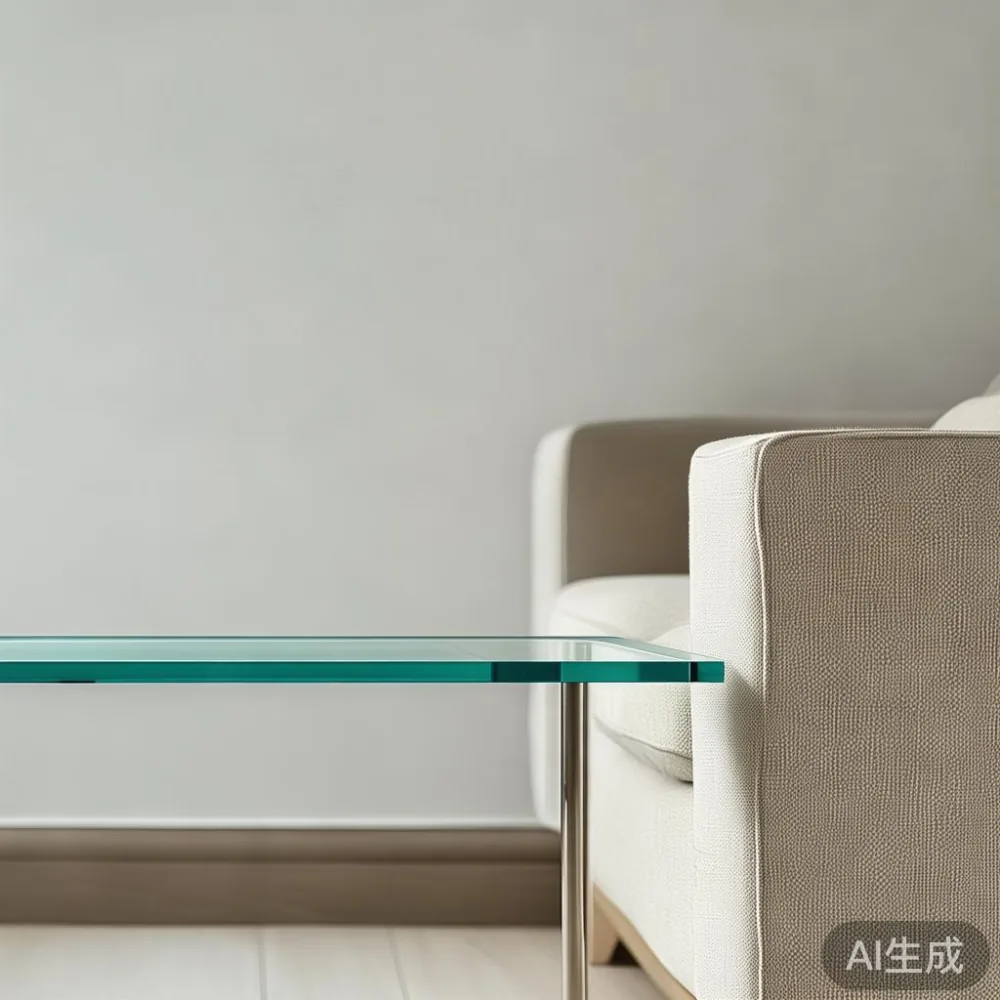
Why does an HDB living room demand a different sizing logic than a condo or a landed house?
Standard HDB flat living rooms in estates like Bedok, Tampines, and Punggol sit between 14 sqm and 22 sqm once you subtract the built-in corridor to the bedrooms, the dry kitchen counter, and the household shelter door swing. Ceilings are 2.6 m, not 2.8 m or 3 m. Lift openings measure 0.9 m wide by 2.1 m high, internal cabin depth about 1.5 m. Corridors between lift lobbies and the front door are commonly 1.2 m to 1.4 m wide. Any glass furniture longer than 1.5 m on its longest side must be tilted or disassembled to clear those turning radii — a fact most online product pages conveniently leave out.
The lift limit on glass tables specifically is also a weight issue. A 1.4 m tempered glass top on a solid wood base can weigh 38 kg to 52 kg. Add a 12 mm tempered glass top and you can hit 65 kg for a mid-range glass dining table. Movers charge S$120 to S$280 per floor for HDBs without a direct lift, a real cost line that belongs in your budget, not as an afterthought. Build a 5 cm to 10 cm buffer on every dimension before checkout, and you will save yourself the S$80 redelivery fee that comes with a too-tight fit.
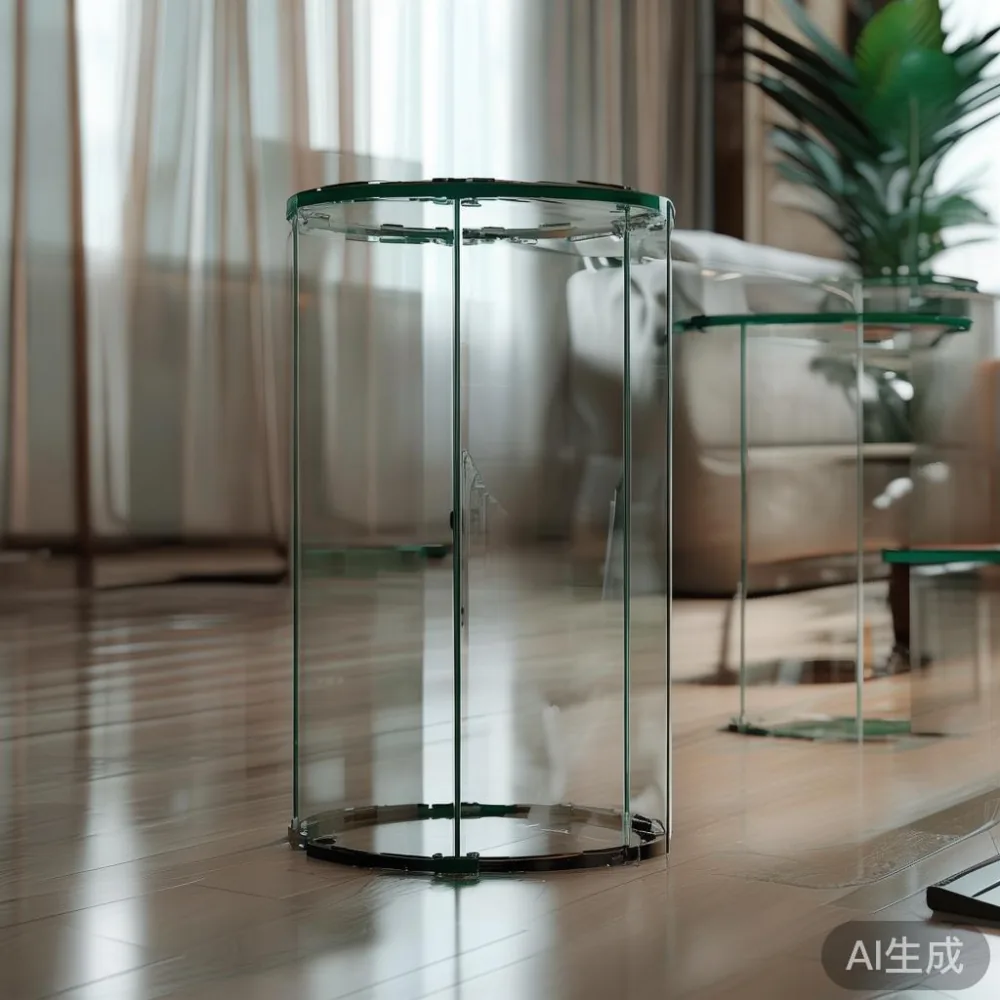
What are the real measurements I should measure first?
Grab a steel tape, not a laser measure, because steel tapes survive a 1.2 m drop onto HDB floor tiles while laser modules do not. Write down seven numbers before browsing any catalogue:
1. Living room length wall-to-wall (typical HDB: 3.6 m to 5.2 m).
2. Living room depth (typical HDB: 3.2 m to 4.4 m).
3. Distance from any sofa back to the TV console — keep between 1.8 m and 2.4 m for 55-inch screens, 2.4 m to 3.2 m for 65-inch screens.
4. Minimum corridor width at the tightest point between doorframe and wall — usually 0.78 m to 1.05 m in resale flats.
5. Lift door height AND lift internal height (the 2.1 m door opening often shrinks to 1.95 m cabin ceiling once the floor plate is measured).
6. Ceiling height at any planned ceiling light position — pendant lamps above glass dining tables need at least 2.1 m clearance in HDB walk-ups.
7. Air-con ledge depth. Most HDB air-con ledges sit 0.45 m to 0.6 m deep and eat into vertical space for tall pieces like a glass display cabinet or wardrobe with glass doors.
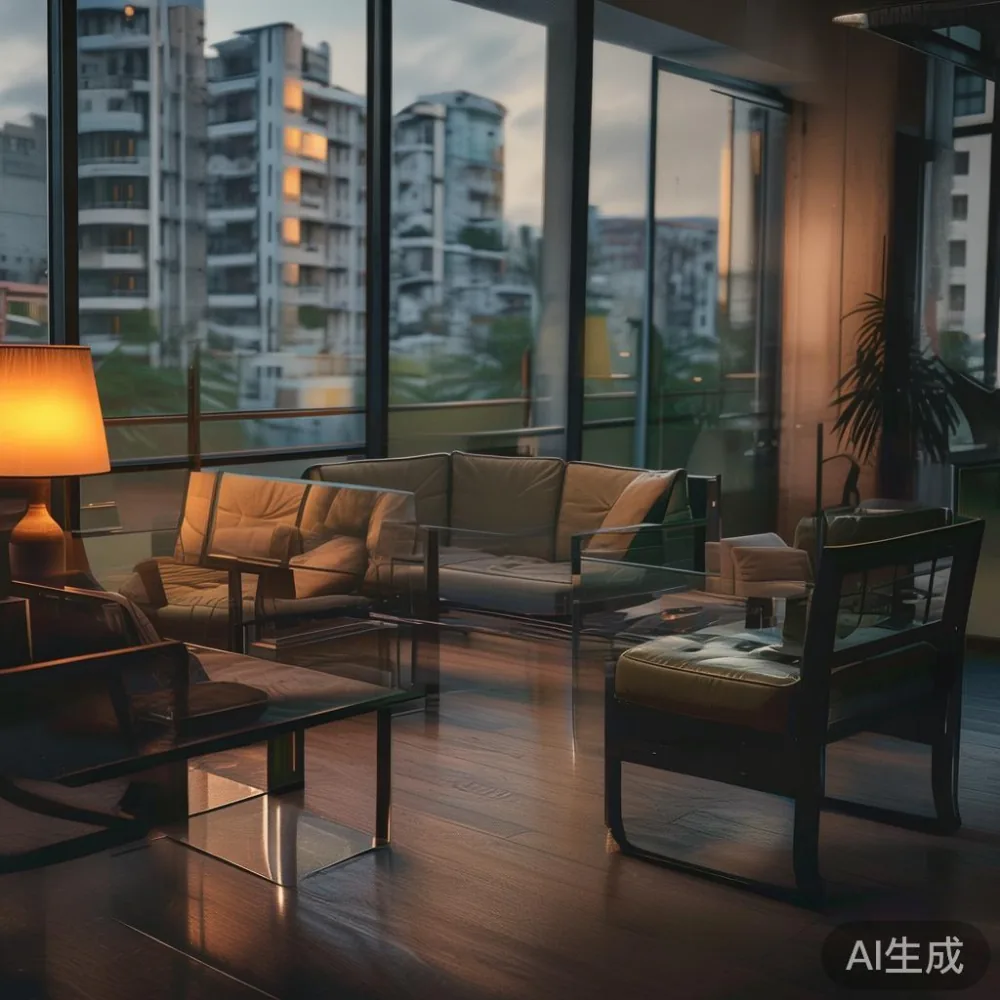
Once those numbers are written down, the shopping becomes mechanical. A 1.2 m glass dining table fits four standard HDB chairs with 0.6 m of clear corridor each side. A 1.4 m glass dining table fits six only if the room depth exceeds 3.8 m. Anything 1.6 m and above eats too much of a 14 sqm to 18 sqm HDB living room, and you will feel it within a week.
How do I match a glass coffee table to my sofa and TV console without crowding the room?
This is where most HDB living rooms break down. The rule I use on site: the glass coffee table should be roughly two-thirds the length of the sofa, with a 35 cm to 45 cm clearance on every walking side. A 1.8 m sofa pairs naturally with a 1.1 m to 1.2 m coffee table. A 2 m to 2.2 m three-seater sofa wants a 1.2 m to 1.4 m coffee table. A 1.6 m loveseat can carry a 0.9 m to 1.05 m coffee table.
Height matters too. The standard glass coffee table sits at 38 cm to 45 cm, which works with a sofa seat height of 42 cm to 48 cm. When you sit on the sofa and put your forearm down, the table top should land at or just below your elbow. Go higher and you will instinctively perch your hand on the glass; go lower and you will hunch.
A practical detail that often shows up in my site visits: keep the glass coffee table at least 10 cm shorter on both ends than the TV console above which it sits when viewed from above. That 10 cm gap stops the visual collision where the table edges echo the console edges, and stops drawers on the console from hitting the table when opened. For HDB flats with the TV mounted to the wall opposite the sofa, that same 10 cm gives the cable run from the back of the TV a clean vertical drop behind the console.
How do I size a glass dining table so it actually fits four people in a HDB?
Four people on a glass dining table need a minimum 0.6 m of elbow width each, plus 0.15 m of plate depth, plus 0.25 m of chair depth, plus 0.7 m of pull-out clearance behind the nearest chair to actually push back and stand up. In an HDB dining area 2.4 m by 3 m — common in 4-room flats in Bedok and Tampines — the only table that keeps every number honest is a 1.2 m by 0.7 m rectangular glass table with four chairs that are 0.45 m wide.
Round glass tables look elegant but eat more space per seat. A 1.1 m round glass table seats four in a HDB only if the room is at least 2.8 m by 2.8 m, because the diameter pulls the chairs further from any wall. A 0.9 m round glass table works for two adults and a child in a smaller 1.8 m by 1.8 m breakfast nook, and folds neatly into a corner near the kitchen entrance.
Marble table tops weigh a different class of heavy — a 1.2 m marble table with a 25 mm stone slab tips 85 kg to 110 kg on delivery, and most HDB corridors were not designed for that load across thin ceramic landings. If you want the marble look without the weight, a 12 mm sintered stone slab over a solid wood base lands between 48 kg and 58 kg, much friendlier for a 4th-floor walk-up lift. A solid wood dining base of ash, oak, or rubberwood also gives a French light luxury feel — restrained, warm, structural — without crowding the room visually.
How do I choose a loveseat for a home office?
Pick a loveseat that is 1.4 m to 1.6 m wide, 0.85 m deep, and 0.85 m tall, with the seat surface at 0.45 m to 0.48 m, so it pairs with a standard 0.75 m desk height and lets you slide it under the desk edge when the workday ends. A loveseat at 1.4 m seats two adults at 0.7 m each, fits a 14 sqm to 18 sqm HDB study corner, clears the 0.9 m HDB doorframe without tilting because both diagonals stay under 1.7 m, and still leaves a 0.6 m walkway behind it. Anything wider than 1.6 m starts to act like a sofa, and the room you save by going loveseat-sized is the room you keep for a glass side table, a small wardrobe with glass doors, or a printer cabinet that does not have to live in the corridor.
What about glass display cabinets, wardrobes with glass doors, and bedside glass tables?
Glass furniture for storage rarely gets sized correctly in HDB flats because the rooms are shorter than expected. A full-height glass display cabinet at 1.9 m to 2 m tall wants a 2.6 m HDB ceiling minus 0.05 m skirting minus 0.15 m above for cable drop plus 0.05 m top clearance — that leaves 2.35 m of usable height. Most catalogue images are 2.05 m to 2.2 m tall, which is exactly the safe zone. Anything 2.3 m or taller will feel like it is pressing on the ceiling, especially in a 14 sqm HDB living room with white LED downlights.
For wardrobes with glass doors, the same logic applies but with a depth twist. HDB bedroom walls often stop at 2.85 m to 3.1 m. A wardrobe with glass doors deeper than 0.58 m blocks access to the window ledge or the air-con switch on the side wall. Stick to 0.55 m depth for a single-door or 0.6 m depth for a 2-door design. A solid wood frame around the glass doors — usually ash, oak, or rubberwood — keeps the cabinet rigid and lets the glass be 5 mm to 8 mm thick without warping, which an MDF frame cannot do past two years in Singapore humidity.
Bedside glass tables and nightstands in HDB bedrooms should sit at 0.5 m to 0.58 m tall, between 0.4 m and 0.5 m wide, and 0.35 m to 0.4 m deep. A taller nightstand blocks the air-con remote signal. A deeper nightstand eats into the walkway between bed and wardrobe, which in a 3 m by 3.3 m HDB bedroom is often only 0.55 m.
What about bed frames, sofas, and the rest of the living room set?
Bed frames in HDB master bedrooms usually run at 1.5 m to 1.8 m wide and 2 m long. A queen bed frame at 1.5 m by 2 m plus a 0.1 m headboard takes a 1.6 m by 2.1 m footprint. A king bed frame at 1.8 m by 2 m plus headboard takes 1.9 m by 2.1 m and only fits in 4-room and 5-room HDB flats where the master measures at least 3 m by 3.5 m. Pair the bed frame with two nightstands 0.45 m wide and a bench of 1.2 m at the foot, and the room still breathes.
Solid wood sofa frames in American light luxury style — read: clean, generous, low-contrast — usually ship at 2 m, 2.2 m, or 2.4 m for a 3-seater. In a 14 sqm to 18 sqm HDB living room a 2.2 m sofa is the sensible ceiling. Going to 2.4 m only works once the room depth exceeds 3.6 m and the air-con ledge leaves at least 0.5 m of clear wall above the sofa back, otherwise the condenser drip line lands too close to the upholstery.
Post-modern light luxury reads differently: a tighter silhouette, thinner solid wood sofa arms, a lower back, lighter legs. A 2 m sofa in this style still seats three adults because the seat depth climbs to 0.6 m instead of the usual 0.52 m. For HDB living rooms between 3.2 m and 3.8 m wide, that 2 m sofa gives 0.6 m of breathing room on each side and 1.4 m of clear space for a glass coffee table plus a 0.7 m walkway to the TV console opposite.
How should the price math work for a HDB-sized glass furniture set in SGD?
Build a working budget before you fall in love with a piece. For a 4-room HDB of roughly 92 sqm, a coherent glass furniture package in 2025 will land between S$3,400 and S$7,800 before GST. The clean break-down looks roughly like this: glass dining table S$680 to S$1,950, glass coffee table S$420 to S$1,100, glass side tables (a pair) S$260 to S$520, glass display cabinet S$980 to S$2,400, wardrobe with glass doors S$1,050 to S$2,800 for a 1.8 m two-door, solid wood sofa S$2,400 to S$4,200, bed frame S$980 to S$2,400, nightstands (a pair) S$320 to S$680. Add 9% GST at checkout, delivery S$60 to S$220 depending on lift access, and you reach the realistic landed total.
Glass furniture is rarely the cheapest line on a quote sheet, but a well-sized glass dining table at S$980 can outlast three cheaper MDF tables that warp in Singapore humidity inside 24 months. The right comparative question is cost-per-year over an 8 to 12 year service life, not sticker price alone. A S$1,400 glass dining table works out at roughly S$140 a year across a decade of daily use. A S$520 MDF table replaced every two years works out at S$260 a year, and you lose the room to warping twice.
What about the brand-side questions a Singapore buyer should ask before paying?
Every Singapore HDB buyer I have worked with eventually lands on the same four questions. Where is the factory, and do they welcome site visits? What is the warranty in writing — not in marketing copy — and what does it cover (frame, glass, joints, finishing)? What is the delivery window in working days, and what happens if it slips? Are refinishing and re-sanding services available, and at what cost, because tempered glass tops do not refinish but solid wood bases do?
MIDHILL, a Foshan solid wood furniture maker established in 2008, ships to more than 15 countries and answers those four questions clearly: factory visits are scheduled through their export team, the structural warranty runs 10 years on the wood frame and a separate term on glass and hardware, lifetime refinishing is offered on the solid wood components of sofas, dining tables, bed frames, and nightstands, free shipping is set above US$350 equivalent (around S$480), and a 14-day return window covers unused pieces in original packaging. Those are the kind of answers that hold up when an HDB owner later moves from a 4-room flat in Punggol to a 5-room flat in Sengkang and wants the dining table to come with them.
How do I avoid the sizing mistakes I see over and over in HDB showrooms?
The four patterns I see again and again. First, buying a 1.6 m glass coffee table for a 2 m sofa in a 3.4 m wide HDB living room, then running out of walkway between the coffee table and the TV console — the table has to come back out. Second, picking a round 1.2 m glass dining table for a 2.4 m by 3 m dining corner, then wondering why four chairs do not fit without elbows clashing. Third, ordering a 2.3 m tall glass display cabinet for an HDB with a 2.6 m ceiling and 0.3 m of pendant light drop, which leaves the cabinet pressing on the ceiling. Fourth, choosing a 2.4 m glass dining table because the showroom in Tampines made it look elegant, only to discover at delivery that the lift internal height was 1.92 m with the floor plate measured and the table would not stand upright without disassembly.
The fix is a 30-minute measurement pass before any click-to-buy. Tape on hand, notebook on the kitchen counter, the seven numbers listed in section two written in pen. Any salesperson who refuses to share exact dimensions in centimetres and kilograms before you commit is the wrong salesperson. A good export furniture team — and there are several in Foshan serving Singapore HDB buyers well — will share carton dimensions, gross weight, and lift-fit advice in the same email as the price quote.
Are there any pieces I should keep out of an HDB entirely?
Yes, a short list worth respecting. Glass furniture wider than 1.5 m in any single dimension needs at minimum a 1.2 m clear corridor from lift lobby to the front door, and most HDB walk-ups across Bedok, Tampines, and Punggol do not deliver that. Glass furniture taller than 2.1 m in a 2.6 m ceiling HDB reads visually oppressive and is generally a poor fit. Marble table tops over 1.4 m on the longest side weigh above 95 kg and stress lift cabins and stair landings during delivery — solid wood plus tempered glass wins on weight, longevity, and HDB-friendly delivery. Anything described as "heavy duty" without a number attached is a marketing line, not a sizing answer.
Beyond that, one practical closing thought: a Singapore HDB living room is a precise container. When glass furniture is sized to that container — coffee table 1.1 m, dining table 1.2 m, display cabinet 2 m, wardrobe depth 0.58 m, sofa 2.2 m — the room feels generous, calm, and proportional, exactly what French light luxury, American light luxury, or post-modern light luxury aesthetics intend. When it is over-sized, the room feels shrunken, no matter the finish, the joinery, or the price tag. Numbers first, glass second, and the HDB will reward you for the rest of the decade. For buyers who want to shortlist pieces engineered to those containers, the MIDHILL catalogue gives the right starting point, and the export team will share carton dimensions and gross weight within 24 hours of any inquiry. Modern leather nursery furniture also fits cleanly into this same sizing logic when you add a second child to the household — the loveseat under the cot, the nightstand beside it, all sized to the same centimetre rules, all delivered on the same lift schedule.