Glass Furniture, Small HDB Spaces, and the Light-Luxury Edit That Actually Works
I spent the morning of a wet Tuesday last month in a 65 sqm three-room flat in Bedok with my colleague Priya, who had just taken over the lease from her aunt. The dining table was an inherited teak slab that ate half the living room, the wardrobe door swung into the bed, and the corridor between the kitchen and the bathroom was 78 cm wide, just enough for one person and a stacked laundry rack. By 4 pm we had pulled out 11 boxes of things she did not need, swapped the wardrobe for a 180 cm solid wood frame, and replaced the slab with a round 90 cm glass-top dining table she found at a warehouse clearance in Tampines. The flat felt bigger, not smaller. That visit is the seed of everything below.
Why small Singapore flats punish heavy furniture
A typical four-room HDB gives you roughly 90 sqm of gross floor area and about 75 sqm of usable space once you subtract the kitchen, the two bathrooms, and the service yard. Ceilings sit between 2.55 m and 2.8 m. Corridor widths in newer BTOs in Punggol are usually 1.2 m, but the older blocks in Bedok and Tampines often drop to 0.9 m, which is the exact width of a standard 90 cm wardrobe if you leave the door open. Lift openings on many post-2010 blocks are 0.9 m wide by 2.1 m tall, and goods lifts in newer condos at Treasure At Tampines or Waterway Woodcress are typically 1.5 m deep by 1.8 m wide. None of that leaves room for guesswork when you are buying a sofa or a dining table.
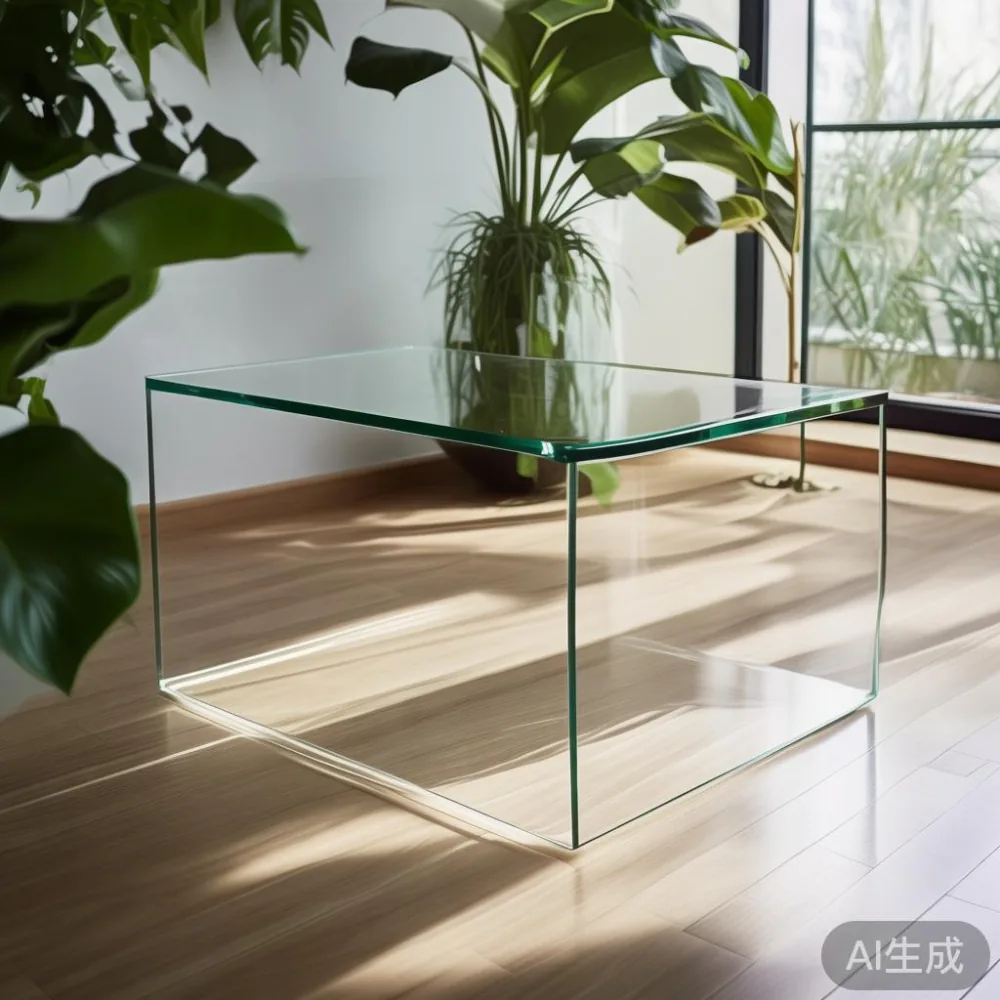
Glass furniture solves three problems at once in this kind of footprint. It lets light pass through, so a 120 cm glass console does not chop a wall the way a 120 cm wooden one would. It weighs less than solid timber, often 18 kg to 25 kg for a tempered-glass-top dining table versus 45 kg to 60 kg for a comparable solid wood slab, which matters when your lift booking is 90 minutes and your movers charge S$80 to S$120 per floor after the first. And visually it disappears into the room, which is exactly what you want when your living room is 3.4 m by 4.1 m and your TV console already takes 1.8 m of wall.
The light-luxury rule of three for compact homes
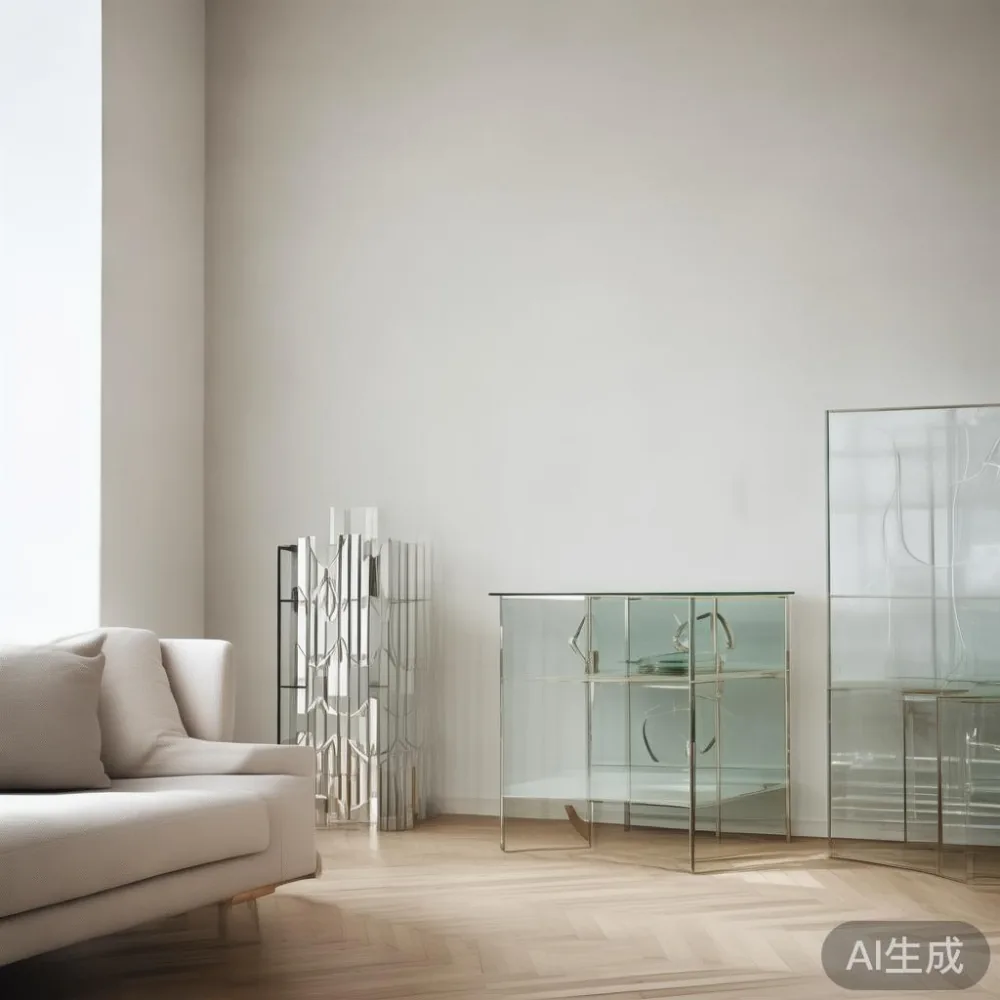
Light luxury, whether you follow the French light-luxury line (think thin brass legs, travertine, ash wood) or the American light-luxury version (think warmer walnut, boucle, brushed nickel), works in small apartments only if you commit to a rule of three. Pick three materials, three finishes, and three piece types per room. In Priya's flat we went with: ash solid wood for the bed frame and nightstand, brushed brass for hardware and lamp bases, and tempered glass for the dining table and the bedside tables. That left room for one marble table in the entryway, a 50 cm round travertine piece on a slim black base, which functions as a key tray, a plant stand, and a bag drop.
If you want the post-modern light-luxury take, which leans harder on geometry, swap the brass for matte black steel and the ash for pale oak. The frame of a post-modern light-luxury bed is usually 4 cm to 6 cm thinner than a traditional one, and that 10 cm of saved space along each side of the mattress is the difference between a bedside you can actually open and one you have to angle against the wall.
What should I measure before buying a single piece of glass furniture?
This is the question I get every single time someone in Tampines or Punggol messages me a photo of a sofa they cannot fit through the door. Measure, then measure again, then measure with the actual piece. You need seven numbers, written down in cm:
1. The width and height of your front door and your corridor door, including the frame.
2. The depth of every corridor turn, measured wall to wall.
3. The lift door width and the lift car depth, because a 2.4 m sofa will not fit a 1.8 m deep lift even if it fits your doorway.
4. The diagonal of every large item once it is assembled. A 180 cm wardrobe has a diagonal of about 195 cm when stood up, which is taller than some service lift ceilings.
5. The final position width plus 60 cm of clearance on the open side of any door.
6. Floor-to-ceiling height at the proposed wardrobe or shelving wall.
7. The width of the stair landing if you live on a walk-up, because the older blocks in Joo Chiat and parts of Geylang still have landings under 1.1 m wide.
Glass helps with most of these measurements because the panels are usually sold separately from the frames, which means a 140 cm dining table can ship in two boxes under 75 cm wide each. Solid wood sofas and bed frames ship in three or four cartons, but a tempered glass top for the same bed frame is one flat panel that two people can carry up a 0.9 m stairwell.
A room-by-room plan that I have tested in three flats
Living room. Choose a solid wood sofa with a seat height of 42 cm to 45 cm and a total depth under 95 cm, so it does not block the corridor. A 2.2 m three-seater in ash or light walnut will land between S$1,800 and S$3,200 in Singapore retail, and you can usually find a comparable export-grade version out of a Foshan workshop for S$1,200 to S$2,000 landed, before the 9% GST on the imported value above S$400. Add one round glass coffee table, 70 cm to 80 cm diameter, 8 mm tempered top. Add one slim console behind the sofa, 120 cm to 150 cm wide, 35 cm deep, with two drawers. That is the entire living room.
Dining. A round 90 cm glass table seats four without elbows touching, which is the sweet spot for a HDB dining corner. If you entertain, go 100 cm. Rectangular 120 cm by 70 cm works if you push it against a wall and bench-seat one side. Tempered glass tops in this size run S$280 to S$650, frames another S$120 to S$300.
Bedroom. A solid wood bed frame in queen is 160 cm by 200 cm, and you want at least 60 cm of walking space on the open side. That means your bedroom has to be at least 2.8 m wide after you subtract the wardrobe depth. A 180 cm wardrobe with sliding doors, rather than hinged, saves 60 cm of swing space. Two nightstands at 45 cm wide each, one with a glass top drawer for visual lightness, will not crowd a 3 m wall.
Entry and corridor. One marble table or one glass console, no deeper than 30 cm, and one wall-mounted mirror above it. Skip the shoe cabinet if your unit has a storage yard, and use a 15 cm deep wall rack instead.
How do you keep glass furniture safe in a HDB with kids, pets, and clumsy relatives?
Specify tempered glass, not annealed. Tempered 8 mm or 10 mm breaks into small granules rather than shards, and most quality suppliers will give you a stress-test certificate. Round or oval edges beat sharp corners in a home with anyone under the age of 10 running around. Stick-on corner protectors cost about S$8 a set at any neighbourhood shop in Tampines Hub. If you are putting a glass dining table on a vinyl or laminate floor, drop felt or silicone pads under each leg; sliding an unprotected 25 kg table across a 4 mm vinyl layer will scar both the floor and the glass within a year.
Cleaning is straightforward: a 50/50 mix of white vinegar and water in a 500 ml spray bottle, then a microfiber cloth in straight lines, never circles. Ammonia-based cleaners will pit the coated edge of most tempered tops within six months, and paper towels leave the kind of micro-scratches that turn a glass top into a frosted one by year three.
Where MIDHILL fits if you are furnishing from scratch or replacing piecemeal
Most of the Singapore buyers I speak with do not want to order a full container. They want one solid wood sofa, one bed frame, one dining table, and maybe a wardrobe, then a nightstand six months later when the budget allows. That is exactly the model a Foshan factory like MIDHILL runs on: solid wood frames shipped flat-pack, glass tops packed separately, refined or replaced at any point in the life of the piece. The structural warranty on the frames runs 10 years, and refinishing is offered for the lifetime of the piece, which is rare for export-grade furniture in this price band. Shipping from Foshan to Singapore door-to-door, including the 9% GST clearance, lands at roughly S$280 for a single dining table and S$420 for a queen bed frame, and orders over US$350 ship free, which is convenient when you bundle a bedroom set.
Returns within 14 days are accepted on standard pieces, custom sizes are a 25 to 30 day production window, and a typical order reaches a Singapore door in 35 to 45 days from order, which lines up with the renovation timeline most HDB owners work to.
What is the actual difference between a glass table and a marble table in a small space?
Both are heavy-looking in photos and light-looking in the room. The difference is maintenance and price. A 50 cm round travertine marble table on a black steel base will run S$450 to S$900 in Singapore and weigh 18 kg to 22 kg. A 50 cm round tempered glass table with the same base will run S$180 to S$380 and weigh 6 kg to 9 kg. Marble stains if you forget a wet coffee mug for 20 minutes; glass does not. Marble scratches; glass does not, unless you drag ceramics across it. If your entryway gets afternoon sun through a west-facing door, marble will etch over time; glass will not.
For Priya's flat, we used marble for the entryway because it is the one surface she puts a bag on every day, and the weight anchors the look, and we used glass for the bedside tables and the dining top because those are the surfaces she wipes down multiple times a day. That split is a useful template.
A short note on trends worth chasing and one worth skipping
The post-modern light-luxury look, the one with slim 2 cm frames on sofas and bed heads and a lot of glass and brass, is having a real moment in Singapore showrooms, and it does work in small flats. The trend worth skipping is the over-sized boucle armchair deeper than 95 cm; it photographs beautifully and lives terribly in a 3 m by 3 m room. If you want the textural warmth of boucle, put it on a 75 cm wide accent chair with a 80 cm depth, and pair it with a round 60 cm glass side table so the eye still travels through.
If you are weighing whether a Mid-century modern bed is worth the price premium for a compact bedroom, the honest answer is that the slimmer 3 cm to 4 cm leg profile and the lower headboard free up 15 cm to 20 cm of perceived ceiling height, which matters more in a 2.55 m HDB than in a 3 m condo. So yes, the geometry is worth it; the matching dresser is not, unless you genuinely need the storage.
What about the guest room, the holiday let, and the Airbnb host?
If you are furnishing a guest room or a small rental unit, Vintage styling tends to read as more welcoming than minimalist modern, and it forgives wear better. A solid wood bed frame in a warm walnut finish, two glass-top nightstands, a 90 cm marble table in the corner as a writing desk, and one upholstered armchair will cover most guest scenarios. For anyone running a small hotel or serviced apartment and looking at light luxury for hotel lobbies or rooms on a tight capital budget, the same Foshan flat-pack model applies: order one bedroom set per room, keep the finishes consistent, and use glass to lighten the corridors between rooms. Vintage pieces also tend to be the ones guests remember and photograph, which helps your listing.
Frequently asked questions from Singapore buyers
Can a glass dining table really hold a hot pot? Yes, tempered glass handles 180°C direct contact without issue. Use a trivet anyway because the frame, not the top, is usually the part that discolours under heat.
How long does shipping actually take? 35 to 45 days door-to-door for Foshan to Singapore, including vessel time, customs clearance, and last-mile delivery. Plan around a 6-week buffer from your renovation handover.
Is the 9% GST charged on the full price or just the import value above S$400? On personal imports, GST applies to the CIF value (cost, insurance, freight) above the S$400 relief threshold. For a S$1,500 bed frame landed, expect roughly S$99 in GST on the dutiable portion.
What if my corridor is only 80 cm wide? Choose pieces that ship with the glass top separate from the base, and confirm the longest carton dimension against the diagonal of your tightest turn. A 90 cm glass top in a 75 cm wide box will get through almost any HDB corridor.
Putting it all together for your own flat
The shortest version of this article is also the version Priya wrote on her phone on the bus home from Tampines that evening. Measure every door, lift, and turn. Pick three materials per room. Choose tempered glass for the surfaces you wipe daily and marble for the surfaces you set things on. Order solid wood frames from a workshop that will still be around to refinish them in eight years, which is why buyers in this region keep coming back to established Foshan makers such as MIDHILL. Allow six weeks for delivery, three days for assembly, and one weekend for the kind of editing that turns a 65 sqm flat into a flat that feels like 80 sqm. If you follow that order, the small apartment stops feeling crowded by Friday night.