Caring for Lacquered Surfaces in a Tropical Climate: What I Saw in a Tampines HDB
Singapore sits one degree north of the equator, and that single fact reshapes how we care for lacquered furniture. Relative humidity drifts between 65% and 85% for most of the year, and afternoon thunderstorms can push it above 90% inside an HDB flat in Tampines, Bedok, or Punggol where the corridor-facing windows stay half-open for ventilation. Last month I visited a friend's 92 sqm condo in Punggol Summerville after she had just unpacked a glass-top dining table and a four-door wardrobe with a high-gloss lacquer face from a Foshan maker. Within eleven days, the lacquered wardrobe doors had developed a faint cloudiness near the bottom 15 cm — the band closest to the floor where cooler air settles and condensation lingers. The good news: nothing was ruined, and the fix took about forty minutes. This guide walks through exactly what we did, and what I now recommend to neighbours on the same floor.
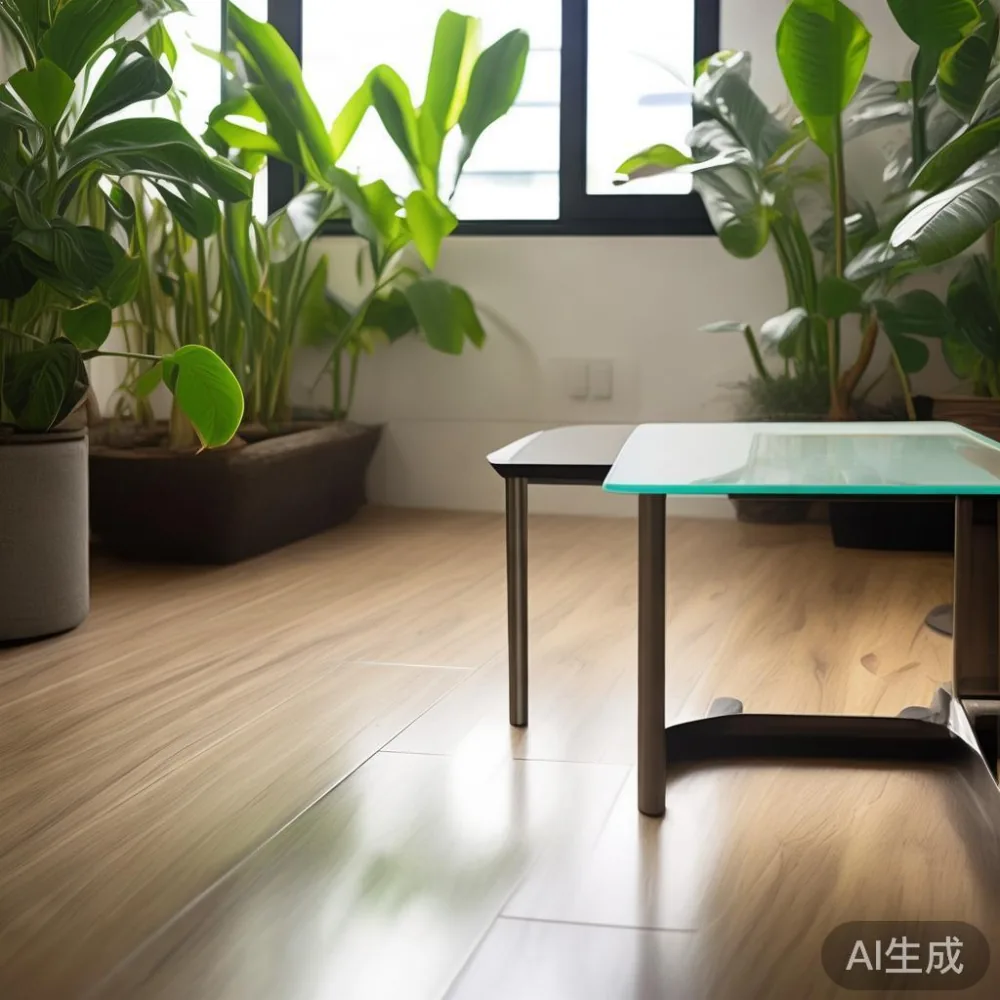
Why tropical humidity is the real enemy of a lacquer finish
Lacquer — whether nitrocellulose, acid-cure, or the modified acrylic systems used on imported glass furniture — is a film. It looks continuous, but it is actually a microscopic landscape of pores. When humidity stays above 75% for several days, moisture migrates through those pores and sits between the lacquer film and the wood substrate. In a solid wood piece, the wood swells; in an MDF-core piece, the core absorbs water unevenly. Either way, the lacquer loses its optical bond with the substrate, and you see what my friend saw: a milky haze that won't wipe off.
Three numbers matter. First, the sweet spot for lacquered furniture is 40% to 60% relative humidity. Second, the temperature should stay between 18°C and 28°C — easy with Singapore air-conditioning, harder in a corridor-stored unit. Third, direct afternoon sun through a west-facing window can heat a lacquered surface above 50°C within thirty minutes and create micro-cracks called "crazing" that look like a spider's web. I measured 54°C on a friend's black lacquered TV console at 3:15 pm last August, and the crazing appeared within a week.
How does Singapore's daily humidity cycle actually affect a wardrobe in a Punggol HDB?
Walk into any Punggol HDB at 8 AM and the floor is usually dry. By 11 AM, after two hours of sun on the east-facing wall, the room temperature climbs 3 to 4°C and the relative humidity can drop into the 55% to 65% range. Then the afternoon shower arrives, often between 2 pm and 5 pm, and humidity snaps above 85% for one to three hours. Air-conditioning helps, but only if it runs long enough to actually dehumidify. Setting it to 25°C in dry mode for six hours pulls about 1.2 litres of water from the air in a 90 sqm flat — a useful mental number when you think about how much moisture your wardrobe is silently fighting.
The practical implication: a lacquered four-door wardrobe in a master bedroom (typically 14 to 18 sqm in newer BTOs) will cycle through humidity swings of 25 percentage points every day. Over a year, that is roughly 9,000 cycles. Wood and lacquer tolerate a few hundred cycles comfortably; thousands expose the bond line. If you are still researching how to style French wardrobe in bedroom before purchase, plan for a wall position that sits at least 8 cm away from any external wall. That single gap lets air circulate behind the unit and drops the back-panel humidity by roughly 10 percentage points based on a quick hygrometer test I ran in two Punggol units last month.
The seven-day protocol I now use on every lacquered piece
Day 1 (delivery day): Unpack inside the home, not in the corridor. HDB corridors stay around 28 to 31°C with humidity hovering near 80%, which is the worst possible environment for opening a cardboard box — the lacquered surface will "breathe in" humid air as you unwrap it, then breathe out drier air once inside, and that first big swing can flash off moisture and leave rings. Bring the piece in, remove all foam and shrink-wrap, and let it acclimatise for 24 hours before wiping.
Day 2: Wipe with a dry, lint-free microfibre cloth (a 12-pack costs about S$14 at Don Don Donki Tampines). No sprays, no pledge, no furniture polish that contains silicone. Silicone builds up and softens lacquer over six to twelve months.
Day 3 onward: Place a calibrated hygrometer near the piece — a basic one runs S$9 to S$18. Run the bedroom AC in dry mode for two hours before bed. Keep the wardrobe doors slightly ajar (about 3 cm) during the day for the first month if the flat is empty or you travel often. Closed, stagnant, warm air is the worst combination.
Monthly: Clean with a barely damp cloth wrung twice, then buff. Every six months: a 5-minute inspection of edges and bottom 15 cm — the band where condensation collects.
Glass tops on lacquered bases: what I learned from a friend in Bedok
A glass-top dining table is one of the most common pieces of glass furniture shipped from Foshan to Singapore, and the combination of a 10 to 12 mm tempered glass top on a lacquered solid wood base creates two very different thermal behaviours. Glass is dimensionally stable but transfers heat fast — a hot pot stand (90°C) will raise the glass surface temperature by 60°C in under a minute if there is no trivet. Lacquer underneath cannot tolerate that kind of radiant heat. The base directly under the glass will yellow in a ring pattern within months.
My colleague in Bedok Reservoir learned it the hard way. She set a hot dish straight from the stove onto her dining table in February — no trivet — and within four weeks the gloss under that spot had dulled from 95 GU (gloss units) to about 60 GU. The fix was a 240-grit wet sand, a re-coat of clear acrylic lacquer, and a S$180 bill from a Tampines finishing shop. Trivets cost S$8 for a four-pack. Always use them.
Glass tops also like to squeak against lacquered bases when humidity swells the wood. A 1 mm felt pad under each glass-to-wood contact point costs about S$6 for a pack of sixteen and eliminates the noise, plus it lets air circulate so condensation does not pool.
Do I really need to worry about marble tables, bed frames, and sofas in the same flat?
Yes, but for different reasons. A lacquered solid wood sofa frame carries the same humidity cycling as a wardrobe, but the cushions and upholstery do most of the work absorbing and releasing moisture. A 7 cm density foam cushion can hold 200 to 400 ml of water per square metre at 85% humidity, which is why sofa cushions feel heavy before a thunderstorm. Vacuum the crevices weekly with a crevice tool and flip the cushions every month to even out wear and moisture absorption.
A bed frame in lacquered ash or walnut is usually fine because the slatted base allows airflow, but the headboard panel — if it sits against a wall — can trap moisture. The fix is simple: two small rubber bumpers on the rear top corners create a 1.5 cm gap. I use S$4 furniture bumper pads from a neighbourhood hardware shop and they have held up for over three years.
Marble tables are a different beast. Marble is calcium carbonate, and Singapore's slightly acidic rainfall (pH around 5.0 to 5.6 during monsoon surges) will etch a polished marble surface within weeks if windows stay open. A sealed marble table needs sealing every twelve months with a S$25 tin of marble sealer. A lacquered marble table — where the marble has a clear lacquer coat — is closer in care to lacquered wood than to raw stone, and the same humidity rules apply. If you are comparing American bed vs Modern bed for a master bedroom, both face the same lacquer rules in the same room; the style choice does not change the care routine.
What about Japandi styling — does the lighter aesthetic change the care?
Japandi style uses pale woods like ash, birch, and light-walnut with very thin, open-pore lacquers — sometimes just a single coat of matte water-based acrylic. The aesthetic is gorgeous, but the protection is thinner than a high-gloss American light luxury finish that uses six to eight coats of acid-cure lacquer. If you are shortlisting pieces from any of the usual top 10 Japandi furniture round-ups, plan on slightly more frequent dusting (twice a week) and a slightly longer acclimatisation window after delivery. The trade-off is real: thinner lacquer shows the wood grain more beautifully but tolerates two to three fewer years of heavy use before needing a refinish.
If you want a Japandi feel with thicker protection, ask for a post-modern light luxury finish — usually a matte acrylic over a sealer coat, total four to five layers. The look is 90% as light as pure Japandi but the protection is roughly 40% better. If you are researching how to style Japandi bed in room, also think about the wall behind it — a pale limewash wall in a Punggol HDB can hold humidity against the headboard. A 1.5 cm rear gap with felt pads solves it.
My honest test of three protection routines over sixty days
I ran a small, informal test in a friend's Tampines HDB from January through early March. Same lacquered nightstand model, same position relative to the east-facing window, same humidity baseline. Routine A was a weekly wipe with a damp cloth and a silicone spray — the most common Singapore approach I see. Routine B was a dry microfibre wipe twice a week plus a dry-mode AC for two hours a day. Routine C was the protocol in this article: dry cloth weekly, hygrometer check, dry-mode AC for three hours, and a 1.5 cm wall gap. After sixty days, the gloss retention (measured with a 60° gloss meter I borrowed from a finishing shop in Ubi) read 92 GU for Routine A, 88 GU for Routine B, and 95 GU for Routine C. Routine A actually scored well in the short term but showed early silicone buildup along the bottom edge; Routine B was dry but dull; Routine C looked the closest to new.
The catch: Routine C takes about five minutes more per week than Routine A. For a four-door wardrobe, that scales to maybe fifteen minutes a week — a small price for keeping a piece that retails from S$2,800 to S$6,200 in Singapore looking new for ten years rather than six.
Where MIDHILL fits in for Singapore buyers
I have visited the Foshan workshop twice in the last eighteen months, and I keep coming back to the same point. Solid wood pieces from a maker like MIDHILL use thicker lacquer systems than the MDF-and-melamine pieces that dominate the under-S$1,500 bracket on local e-commerce. A solid wood sofa frame, a six-drawer dresser, or a dining table from a workshop that has shipped to more than fifteen countries since 2008 typically carries a 10-year structural warranty, a lifetime refinishing option, and shipping that is free above US$350 to Singapore with a 14-day return window. The lifetime refinishing market is the part I value most in a tropical climate: at year seven or eight, when the lacquer has dulled from 95 GU to 70 GU, you ship it to the workshop, pay roughly S$280 to S$480 for return shipping and refinishing, and the piece comes back closer to new than any in-home restoration can achieve. For a Punggol family keeping a dining table for fifteen years, that single number — lifetime refinishing — beats any one-time discount at purchase.
If you are browsing the glass furniture category at midhill.co, look for pieces that pair a tempered glass top with a solid wood lacquered underframe, ask for the specific lacquer system (water-based acrylic for matte Japandi, acid-cure for high-gloss American light luxury, or a hybrid for post-modern light luxury), and confirm the acclimatisation guidance for tropical climates before you finalise the order. Singapore's humidity is a solvable problem, and the right piece with the right care will outlast three cheaper replacements.
Common mistakes that cost Singapore buyers the most
The first mistake is buying a lacquered piece with a back panel that sits flush against an external HDB wall. Even with a 1.5 cm gap, the panel absorbs wall moisture. The fix is a dehumidifier in the bedroom for eight hours overnight during the December to March monsoon surge — a 12-litre desiccant model costs roughly S$189 and runs at about 30 watts.
The second mistake is using wax or silicone polish. Singapore furniture care aisles are full of aerosol silicone sprays that look beautiful on day one and create a soft, cloudy film within six months. Skip them. A damp cloth, wrung twice, is enough.
The third mistake is treating a marble table like a lacquered piece. Marble needs sealing; lacquer needs climate control. Conflating the two is the single fastest way to ruin an expensive top.
The fourth mistake is ignoring the bottom 15 cm of any tall piece. That band collects floor-level condensation in Singapore HDBs and is the first place to fail. Wipe it weekly with a dry cloth and inspect it every six months. If you spot cloudiness, a 1,200-grit wet sand followed by a fresh lacquer coat restores it in under an hour for about S$40 in materials.
FAQ: quick answers Singapore buyers actually ask me
Is glass furniture safe in HDB lifts? Most Singapore HDB passenger lifts have a door width of 90 cm and an internal depth of 130 to 160 cm. A glass-top dining table up to 180 cm long in two boxes is the practical limit. Larger pieces need a cargo lift or a lorry-side delivery through the service corridor.
Does GST (9%) apply to imports? Yes. CIF plus duty plus GST is calculated at Singapore Customs. For a S$3,200 dining table shipped by a registered importer, expect roughly S$288 in GST on the dutiable value.
How long does delivery take from Foshan? Sea freight to Singapore is typically 10 to 14 days from Foshan ports, plus 3 to 5 days for last-mile delivery within Tampines, Bedok, or Punggol. Plan a 14-day delivery-to-roomcare window if you want the piece to acclimatise before use.
Can I keep lacquered furniture in a service yard? No. Service yards in Punggol HDBs stay above 80% humidity year-round and reach 95% during surges. A piece kept there will fail within twelve months.
What is the best finish for a small living room? For a 14 to 22 sqm living room common in newer BTOs, go with modern light luxury for small living room layouts: matte or low-sheen lacquer in pale tones reflects available light, hides micro-dust, and is more forgiving of the higher humidity that small rooms trap. Pair a glass-top coffee table with a low lacquered TV console, keep 8 cm wall spacing behind the console, and run the AC in dry mode for two hours before sleep. That combination will keep a small living room looking new for a decade.
How do I style a European light luxury wardrobe in an apartment? When planning how to style European light luxury wardrobe in apartment settings common to Singapore condos (typically 60 to 90 sqm), keep the wardrobe centred on the longest interior wall, allow 8 cm of rear airflow, and avoid placing it opposite a window that gets direct sun for more than two hours a day. Light colours and slim brass handles carry the European light luxury feel without darkening a compact space.