Glass Furniture for Small Singapore Apartments: How to Style Without the Crowded Look
I spent the first Saturday of last month walking through a freshly renovated 4-room HDB flat in Tampines with my colleague Priya, who had just taken the keys. The floor plan was generous by 1990s standards — about 92 sqm — but the living room narrowed to 3.1 m between the feature wall and the corridor door, and every time we dragged a bulky sideboard past the lift lobby, the mirror at the end reflected a room that looked half its actual size. Priya kept saying the same thing: "I don't want it to feel like a furniture showroom, I want it to breathe." That single constraint — air, not objects — turned out to shape every decision she made over the following three weeks, and it is the same constraint that runs through nearly every small-apartment project I see in Bedok, Punggol, and the newer Bidadari condos.
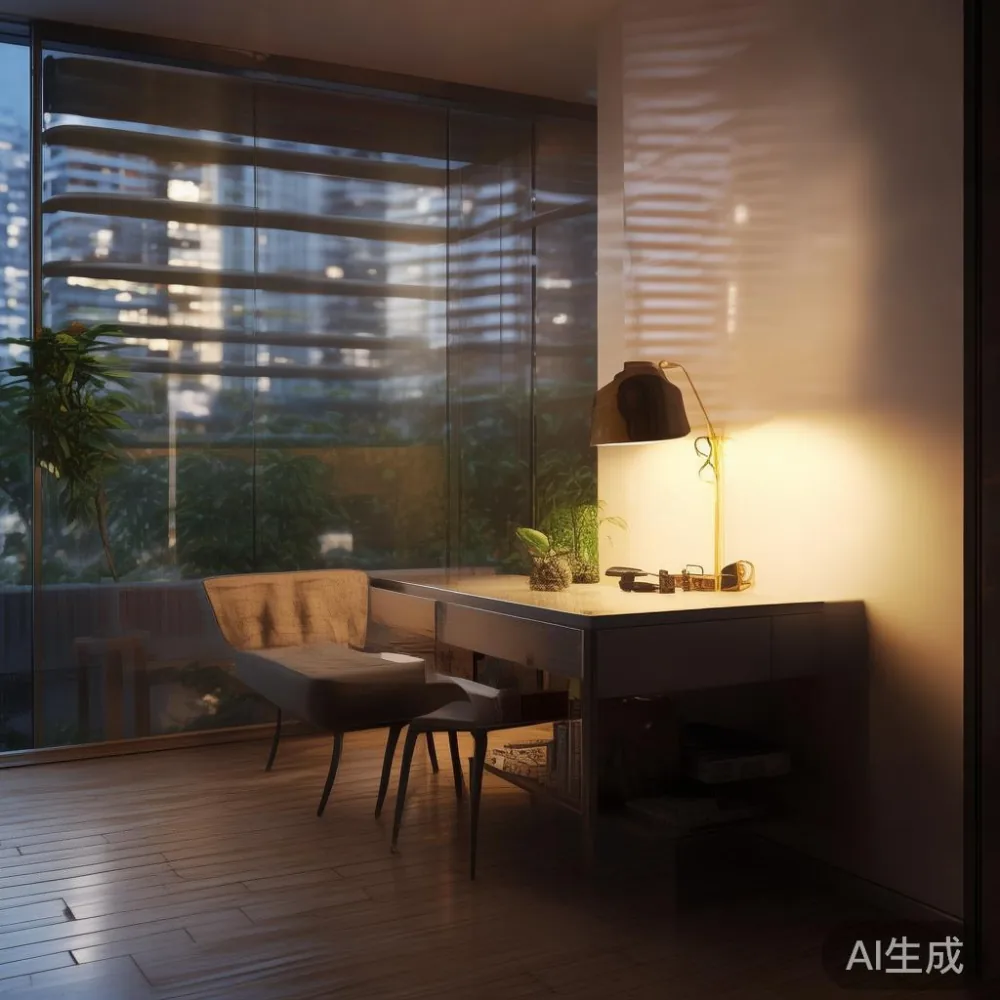
The piece of advice I now give to anyone styling a compact Singapore home starts with a counter-intuitive idea: put more glass furniture in, not less. A tempered-glass dining table at 1.4 m seats six without dominating the way a solid oak slab does. A 12 mm clear-glass console along the corridor bounces the downlight from the ceiling and visually pushes the wall back by 30–40 cm. A glass-top nightstand on slim brass legs disappears next to a fabric headboard. Glass furniture, used with intention, is the most reliable tool for creating depth where square metres are scarce. Below is the working method I shared with Priya, refined across roughly forty small-apartment consultations in the last two years, with hard numbers, Singapore-specific delivery realities, and budget ranges in SGD.
Why glass furniture changes the way a small room reads
Visual weight is the number that matters. A standard 1.4 m × 0.8 m solid wood dining table in walnut or teak carries roughly 55–70 kg and presents a continuous surface that the eye reads as a solid block, even when the room is empty. Replace the top with 12 mm tempered clear glass on a slim powder-coated steel base and the visual weight drops by what most people describe as "two-thirds," even though the table still seats six and still holds 40 kg of dinnerware. The room stops feeling furnished; it starts feeling dressed.
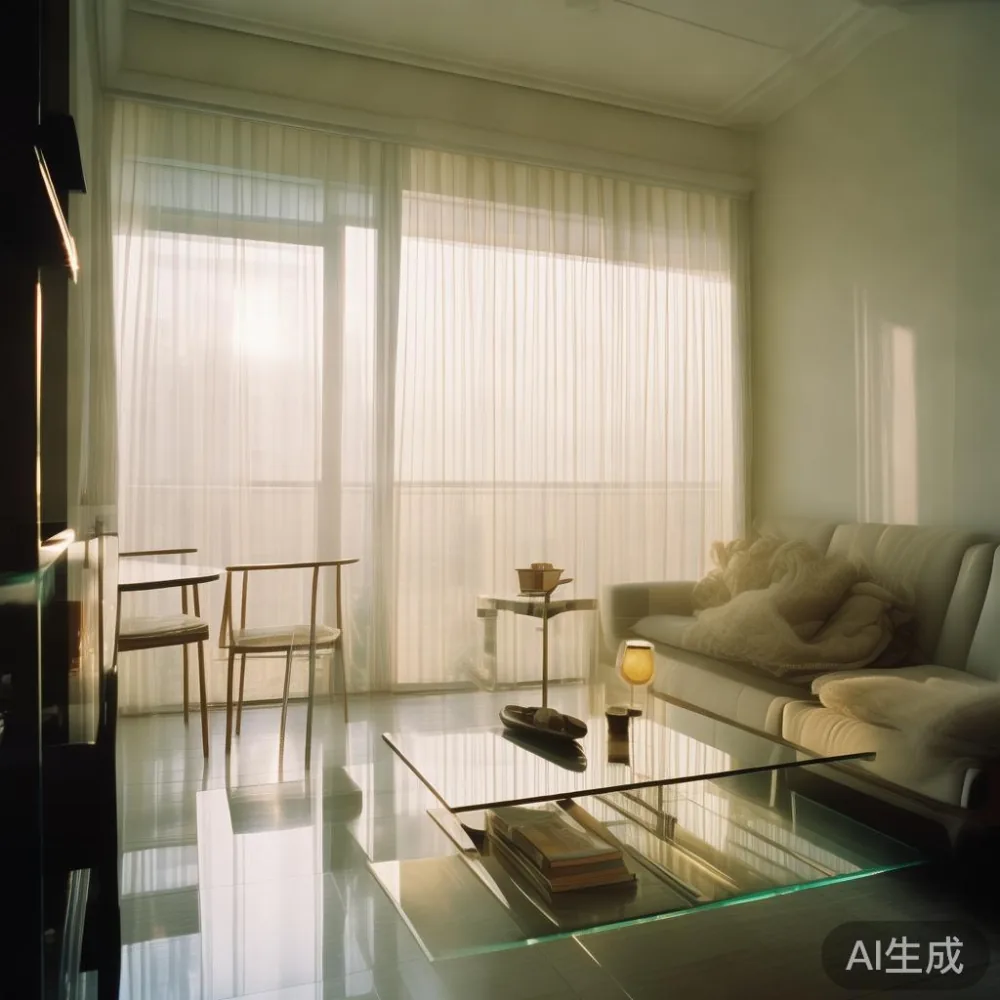
There is a second, less obvious benefit. Singapore HDB corridors from the 1980s and 1990s are typically 1.2 m wide, and lift doors on most HDB blocks are 0.9 m wide. A solid 1.6 m sideboard will not even enter the lift; it has to be partially disassembled, which adds 2–4 delivery days and around SGD 80–150 in labour. A flat-pack glass console wrapped to 1.65 m × 0.55 m × 0.18 m goes in on a single trolley, with no disassembly, no lift queue, and no scuffed corridor paint. For anyone ordering a full apartment set — sofa, bed frame, dining table, wardrobe, and a pair of nightstands — the cumulative time saved on logistics is what gets the home livable inside 7 days instead of 14.
Glass furniture also works in condo settings where the corridor width can drop to 1.1 m and ceiling heights run 2.8–3.0 m. A 10 mm clear-glass coffee table at 1.1 m × 0.55 m keeps a sightline under 60 cm, so a 55-inch wall-mounted TV across the room is still visible from the kitchen counter. That continuity is what makes a 65 sqm condo feel like a 75 sqm one.
How to plan a small-apartment furniture layout before you buy anything
Before Priya ordered a single piece, we measured everything with a 5 m laser tape and plotted it on graph paper at 1:50. The exercise took 90 minutes and saved roughly SGD 1,200 in pieces she would otherwise have returned under the 14-day return window. Three rules came out of that afternoon.
Rule one: leave a 70 cm walk-through lane between the largest object in the room and the next piece. In a 3.1 m wide living room, that means the back of the sofa sits 90 cm from the TV wall, and the glass coffee table is 45 cm deep, not 60 cm.
Rule two: pick one hero glass piece per room. In the living room, it can be the coffee table or the console; in the dining area, the dining table; in the bedroom, the nightstand. One transparent object per zone is enough — two start to compete.
Rule three: stack functions. A solid wood bed frame with two under-drawers (each 18 cm tall) replaces a separate blanket chest. A 1.8 m × 0.9 m lift-top dining table seats four closed and eight open. A wardrobe with a full-length mirror on the front removes the need for a separate standing mirror, which in a 9 sqm bedroom can save 0.4 sqm of floor area.
What should I pair glass furniture with so the room does not feel cold?
This was the question Priya texted me at 11 p.m. on a Wednesday, and it is the one I get most often. The honest answer: warm wood, soft textile, and one metallic accent. A pure glass room reads as a clinic. A glass-top dining table on a solid ash base, paired with a solid wood sofa frame in white-oak veneer and a 100% cotton linen-blend cover in oatmeal, lands in a register that the local design press usually calls "post-modern light luxury" — calm, considered, and quietly expensive without the heavy ornament of full traditional or classical European styles.
For the bedroom, the combination is even simpler. A Modern light luxury bed with a low-profile upholstered headboard (fabric in stone grey, foam density 28 kg/m³, headboard height 110 cm) sits well below most Singapore ceiling heights and leaves a 35–40 cm gap to the curtain rail. Glass nightstands at 45 cm wide flank the bed, and a slim 6 mm glass shelf runs along the wall above the headboard at 1.6 m for books and a reading lamp. The total material palette is three — fabric, glass, and brushed brass hardware — which is the discipline that keeps a small room from feeling like a furniture warehouse.
In the dining area, a 1.4 m clear-glass table on a brushed brass X-frame seats six, but visually it reads as four. A solid wood bench on one side (1.4 m, ash, SGD 320 locally) and two upholstered chairs on the other (each SGD 180) keep the silhouette open. Add a 35 cm wide glass console behind the bench for keys and mail, and the corridor wall stops looking like dead space.
Concrete pieces, concrete numbers: a room-by-room plan that works in a 92 sqm HDB
The full inventory below is what Priya eventually ordered, including a few pieces she swapped mid-process. Prices are in SGD and include 9% GST. Delivery inside mainland Singapore runs 4–7 working days for flat-pack items and 10–14 days for fully assembled pieces, because most of the heavier solid-wood items are made-to-order in Foshan, China, and consolidated onto a single 20-foot container out of Yantian port.
- Living room: 3-seater solid wood sofa in ash with removable linen covers (220 cm × 90 cm × 85 cm, 68 kg, SGD 1,890). 1.1 m × 0.55 m × 0.42 m tempered glass coffee table with a brushed brass base (22 kg, SGD 690). 1.6 m glass console against the corridor wall (SGD 540). 55-inch wall-mounted TV on a swivel arm.
- Dining area: 1.4 m × 0.8 m × 0.75 m clear-glass dining table on a powder-coated steel frame (28 kg, SGD 1,150). Four dining chairs in moulded plywood with a natural-oak veneer (each 4.2 kg, SGD 145 × 4 = SGD 580). One 1.4 m solid wood bench (SGD 320) for the side facing the window.
- Bedroom 1 (master): Queen-size Modern light luxury bed with a 110 cm upholstered headboard, solid rubberwood slats, under-bed drawer on each side (SGD 1,640). Two 45 cm × 40 cm × 55 cm glass nightstands with brass legs (each 6.5 kg, SGD 260 × 2 = SGD 520). 1.8 m × 0.6 m × 2.2 m three-door wardrobe with full-length mirror (SGD 2,180). A 6 mm glass floating shelf at 1.6 m × 0.25 m above the headboard (SGD 180).
- Bedroom 2 (study/guest): Single bed frame in solid ash with two drawers (SGD 980). 1.2 m × 0.6 m fold-down desk in white-oak veneer (SGD 420). Wall-mounted bookshelf in 18 mm plywood (SGD 340). A small marble table at 50 cm × 50 cm × 55 cm as a side accent (12 kg, SGD 380).
- Entryway: 1.2 m × 0.35 m × 0.8 m shoe cabinet in white-oak veneer with a frosted-glass top panel (SGD 540). Wall hooks in brushed brass (SGD 95). A 60 cm round mirror (SGD 140).
The total came to SGD 13,565 including delivery, 9% GST, and installation of the wardrobe and bed. A comparable set sourced from three different local boutiques would have run SGD 16,500–18,000, with three separate delivery slots, three separate return windows, and three different warranty policies. Sourcing a coordinated set from a single maker simplifies the after-sales side: a single 10-year structural warranty covers the sofa, bed frame, dining table, wardrobe, and nightstand, and a lifetime refinishing offer on the solid wood parts means the ash and rubberwood surfaces can be sanded and re-oiled every 8–10 years for a small service fee (around SGD 180 per piece).
Mid-century, Japandi, and other styles — which one suits a Singapore HDB?
Style talk in small apartments usually gets polarised between Mid-century modern and Japandi, and the honest answer is that the room dictates the call, not the trend. A 1970s-built HDB in Bedok with low 2.6 m ceilings and a single side window leans Japandi: low platform bed, fewer pieces, more negative space, light oak. A newer Punggol BTO with 3.0 m ceilings and a 1.5 m bay window can carry Mid-century modern without looking cramped, especially if you anchor the room with one statement piece — a walnut-and-glass sideboard, a 1.7 m credenza, or a solid wood sofa on tapered legs.
If you're working out how to choose Mid-century modern bed for a small flat, the practical checklist is short: slat height under 12 cm so the mattress sits low, headboard under 100 cm so it does not crowd the curtain rail, and a frame depth of 2.05 m for a queen — anything longer eats the walkway to the wardrobe. The same logic applies to Mid-century modern for office: a 1.4 m × 0.7 m desk is plenty for a 13-inch laptop and a 24-inch monitor, and the tapered legs keep the floor visible, which is the entire point.
For the Japandi crowd, the recurring question is is Japandi bed worth it at this price tier. The answer depends on the platform. A genuine low-platform Japandi bed in solid ash or rubberwood with a 5 cm slat and no under-storage is worth roughly SGD 1,100–1,400 for a queen. Below that, the platform is usually MDF wrapped in veneer, and the slat spacing is too wide for a latex mattress. If under-bed storage matters — and in a 9 sqm HDB bedroom it usually does — pay the SGD 200–300 extra for the drawer version; the storage is worth more than the visual purity of the open platform.
Living-room specifics: sofas, console tables, and the American light luxury register
The phrase american sofa set design usually points to deeper seats, higher armrests, and a slightly looser cushion fill than European or Scandinavian counterparts. In a Singapore context, "American" reads as casual and a touch more generous — the kind of sofa a family in Punggol can stretch out on at 9 p.m. after a long day. A 3-seater at 220 cm wide with a 95 cm seat depth, 28 kg/m³ foam wrapped in a feather-fibre topper, and a removable washable linen cover is the right size for a 3.1 m living room wall. The cover can be swapped (oatmeal, sage, charcoal, off-white) every 18–24 months, which is a cheap way to refresh a small room without buying new furniture.
The MIDHILL sofa in solid ash with a removable cover is one of the few options in this price bracket that ships with a 10-year structural warranty, which matters more in Singapore's humidity than most catalogues admit. A sofa frame that absorbs 5% of its weight in moisture over a wet season can rack slightly at the corner joints by year three; a 10-year warranty means the maker replaces the frame if the joint loosens, not just the cushion.
Pair the sofa with a glass coffee table at 1.1 m × 0.55 m, which is wide enough to hold a tray, a 30 cm vase, and a laptop, but narrow enough to leave 45 cm of clear floor on the rug side. The glass top should be 10–12 mm tempered, with the corners polished rather than square-cut, and the base should be a single piece of bent steel or a small brass X-frame, not four separate legs that have to be aligned.
Wardrobes, nightstands, and how to style a French wardrobe in a small apartment
The phrase how to style French wardrobe in apartment usually arrives in my inbox from owners of older HDB flats in Tiong Bahru or Queenstown, where ceiling heights of 3.2–3.5 m make a tall wardrobe possible without dwarfing the room. A full French-style wardrobe at 1.8 m × 0.6 m × 2.2 m with mirrored doors, crown moulding, and a slim brass pull is genuinely feasible in those proportions. In a standard 2.8 m Tampines or Bedok ceiling, the same wardrobe has to lose 20–30 cm in height, and the silhouette becomes more transitional than French — still elegant, just not strictly Parisian.
The styling rule is the same at any height: one statement object on top, one soft element in front, one glass element to the side. A 30 cm ceramic vase on top, a linen-covered blanket box at the foot (1.4 m × 0.45 m × 0.45 m, SGD 280), and a glass nightstand on the same wall. The nightstand should be 45–50 cm tall, which lines up with the mattress top on a standard 55 cm bed frame. A 50 cm glass nightstand on slim brass legs weighs about 6.5 kg — easy for one person to move, easy to wipe, easy to swap for a wooden one if the room later needs a warmer palette.
Glass, marble, and the one material rule for a calm room
Most small apartments in Singapore can carry three hard materials — glass, solid wood, and one stone — before the room starts feeling busy. The standard I use is: glass on horizontal surfaces (dining table, coffee table, nightstand, console), solid wood on vertical frames (sofa, bed, wardrobe carcass, dining chair), and a single stone accent per floor (a marble table, a marble lamp base, a marble tray on the console). Beyond that, the eye has to work too hard to read the room, and a 65 sqm condo starts feeling like a 45 sqm one.
For the entryway, a 60 cm round mirror paired with a 1.2 m shoe cabinet topped with a 6 mm frosted glass panel is a clean way to handle the first material. For the dining area, the glass table is the second material, and a single small marble table in the study (50 cm × 50 cm) is the third. Past those, stick to fabric and paint.
Final notes on delivery, warranty, and Singapore-specific logistics
Two practical points worth flagging for any small-apartment project in Singapore. First, lift and corridor widths still drive what can be delivered fully assembled. The standard HDB lift door is 0.9 m wide and 2.1 m tall, with an internal cabin of about 1.4 m × 1.5 m. Any piece that exceeds 1.4 m in any single dimension has to come flat-pack, or the delivery team has to plan a crane lift through a window — a service that adds SGD 350–600 and a 3-day window-crating step. Glass furniture, because it is mostly flat-pack by definition, sidesteps this.
Second, warranty and after-sales are not the same in this category. A 10-year structural warranty from a maker that has been exporting solid wood furniture since 2008 is a different proposition from a 1-year warranty from a marketplace reseller. The lifetime refinishing offer on solid wood parts — sanding and re-oiling at a small service fee — is what keeps an ash or rubberwood piece looking honest in year twelve. The 14-day return window covers the early period when most sizing mistakes show up, and free shipping above SGD 350 means a single full-room order clears that bar easily. For anyone planning a complete small-apartment fit-out, those three numbers — 10-year structural warranty, lifetime refinishing, 14-day returns — are the filter to apply before anything else.
For Priya's Tampines flat, the entire set was delivered across two slots four days apart, the wardrobe and bed were installed in 90 minutes by a two-person team, and the lift lobby got zero scuffs. The room reads open, the corridor still feels 1.2 m wide, and the glass dining table reflects the window light enough that the dining area does not need its own pendant. That, in 92 sqm, is the goal.