Glass Furniture in Singapore: How to Buy It for HDB and Condo Homes
A practical Singapore guide to choosing glass tables, shelves, and cabinets for HDB and condo homes, including sizes, prices, delivery, and care.
- Is glass furniture practical for Singapore homes?
- What size glass table should I buy for an HDB flat?
- What glass thickness is strong enough for a dining table?
- Can I fit a glass dining table into a condo dining area?
- How do I get a heavy glass table delivered and installed in Singapore?
- How much does glass furniture cost in Singapore?
- How do I stop fingerprints and water marks on glass?
- Is glass furniture safe for children and pets?
- How do I choose glass furniture that will last in Singapore?
Is glass furniture practical for Singapore homes?
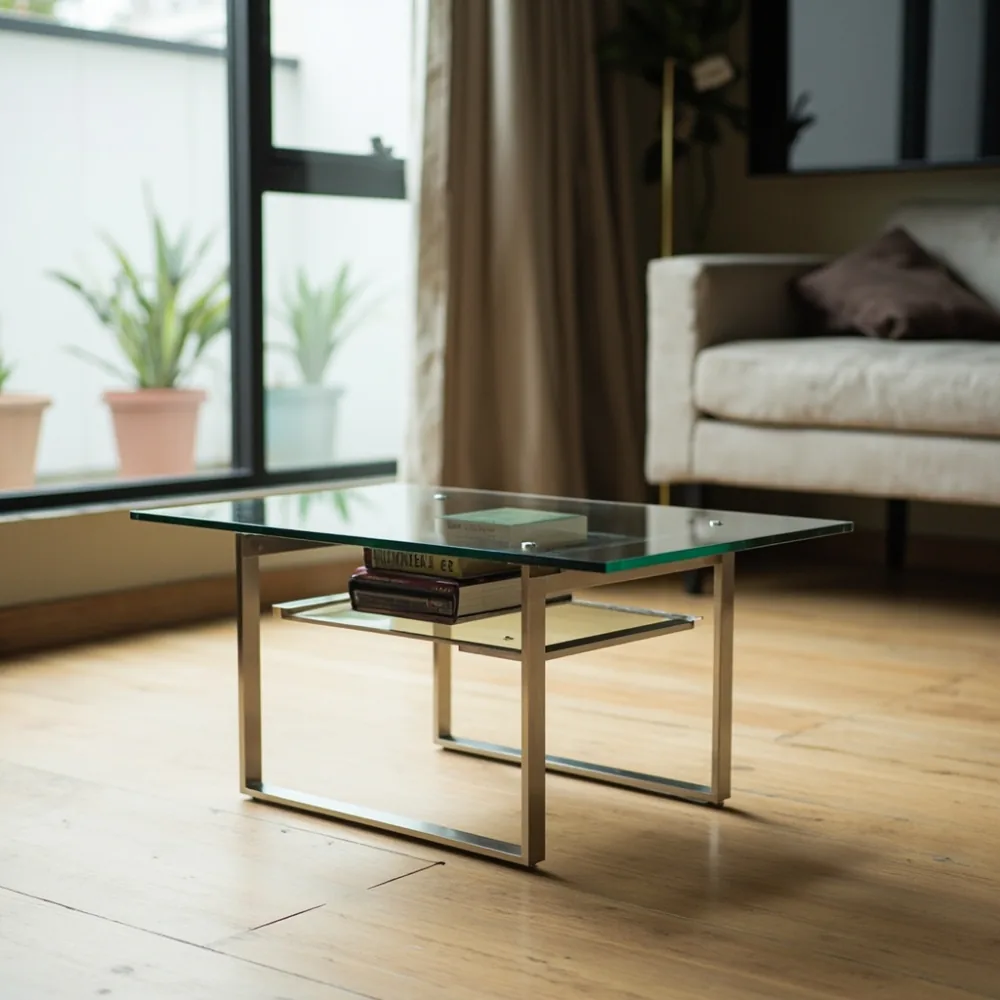
Where glass works well
Where another material is better
I use glass furniture when I want a room to feel visually lighter, especially in an HDB flat where the living and dining areas may feel connected. A clear glass coffee table can make a compact sofa zone look less crowded, and a glass dining table can preserve the sense of space around six chairs. The trick is to choose the right finish and leave enough clearance around it.
Glass does not absorb humidity the way some fabrics or untreated timber can, so it suits Singapore’s humid conditions. However, the frame, hardware, shelf supports, and any wooden components still need proper protection. A table that looks sturdy can develop joint movement or surface marks if it is repeatedly wiped with a harsh cleaner. I would treat glass as a durable material, but not as a maintenance-free one.
- Best for: coffee tables, dining tables, display shelving, side tables, and compact desks.
- Requires planning for: fingerprints, cleaning, safe edges, and delivery through lifts or stairwells.
- Less suitable for: heavy-duty work surfaces, children’s play areas, and homes where pets frequently jump onto furniture.
For a Singapore buyer, the practical question is not whether glass is fashionable. It is whether the piece solves a space or storage problem without making daily use inconvenient.
What size glass table should I buy for an HDB flat?
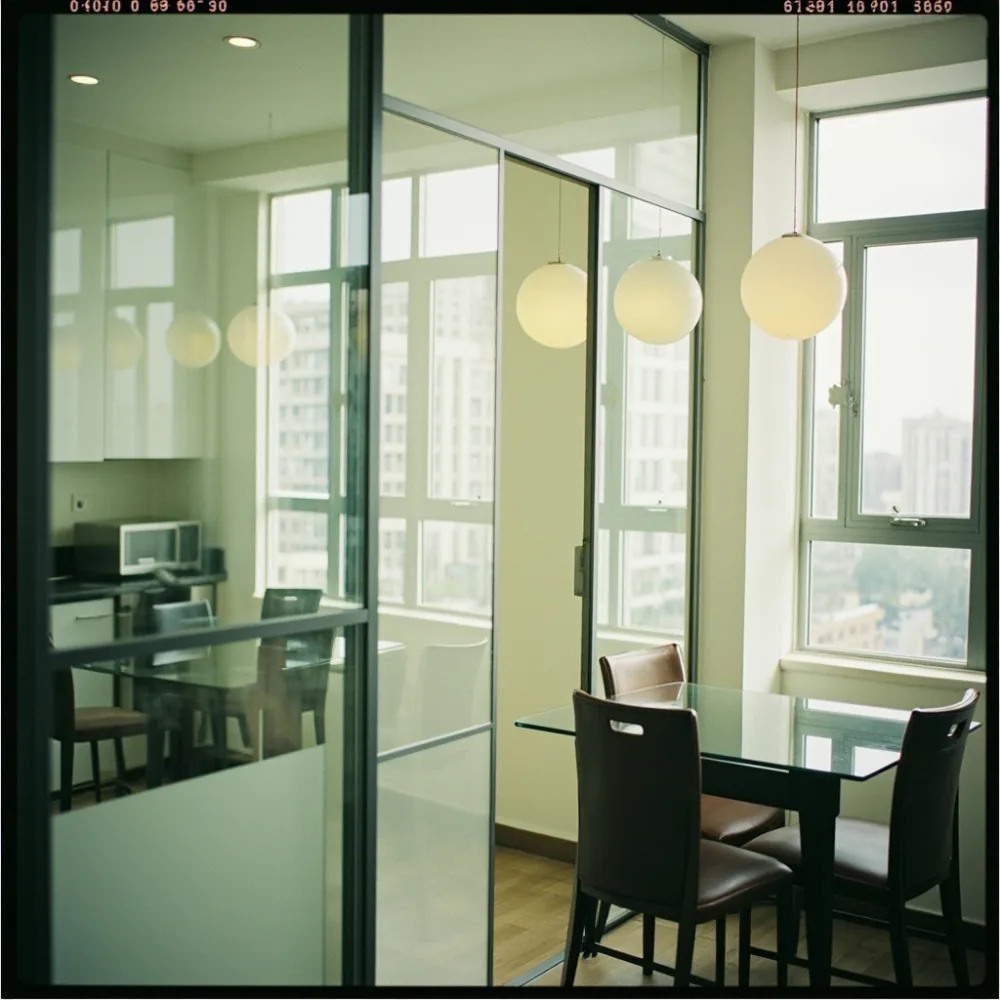
Measure the room, not just the furniture
Common dimensions for compact homes
I start with the usable floor area, then leave a walking path of about 75 to 90 cm between the table and the nearest fixed object. In a typical 3-room HDB living room, a coffee table around 100 by 55 cm is often easier to move around than a 120 by 60 cm model. The same table may look too large in a narrow 3-room HDB dining area, so I measure the actual room before ordering.
For dining, allow at least 60 cm of table width per person for a comfortable place setting, plus 90 cm of circulation space behind seated guests where possible. A 140 by 80 cm table usually suits four people, while 160 by 90 cm gives six people more elbow room. Round tables can be helpful beside a wall because they have no sharp corner and can seat more people in a tight zone.
| Use | Suggested size | Approximate weight | Typical Singapore retail range |
|---|---|---|---|
| Compact coffee table | 90 × 50 × 40 cm | 18–25 kg | SGD 120–350 |
| Large coffee table | 110 × 60 × 42 cm | 24–35 kg | SGD 220–600 |
| 4-seat dining table | 140 × 80 × 75 cm | 32–45 kg | SGD 450–1,200 |
| 6-seat dining table | 160 × 90 × 75 cm | 38–55 kg | SGD 650–1,800 |
These are planning ranges, not universal rules. A 30 kg table with a tempered-glass top needs a sensible delivery plan, particularly in an older HDB block with a narrow staircase.
What glass thickness is strong enough for a dining table?
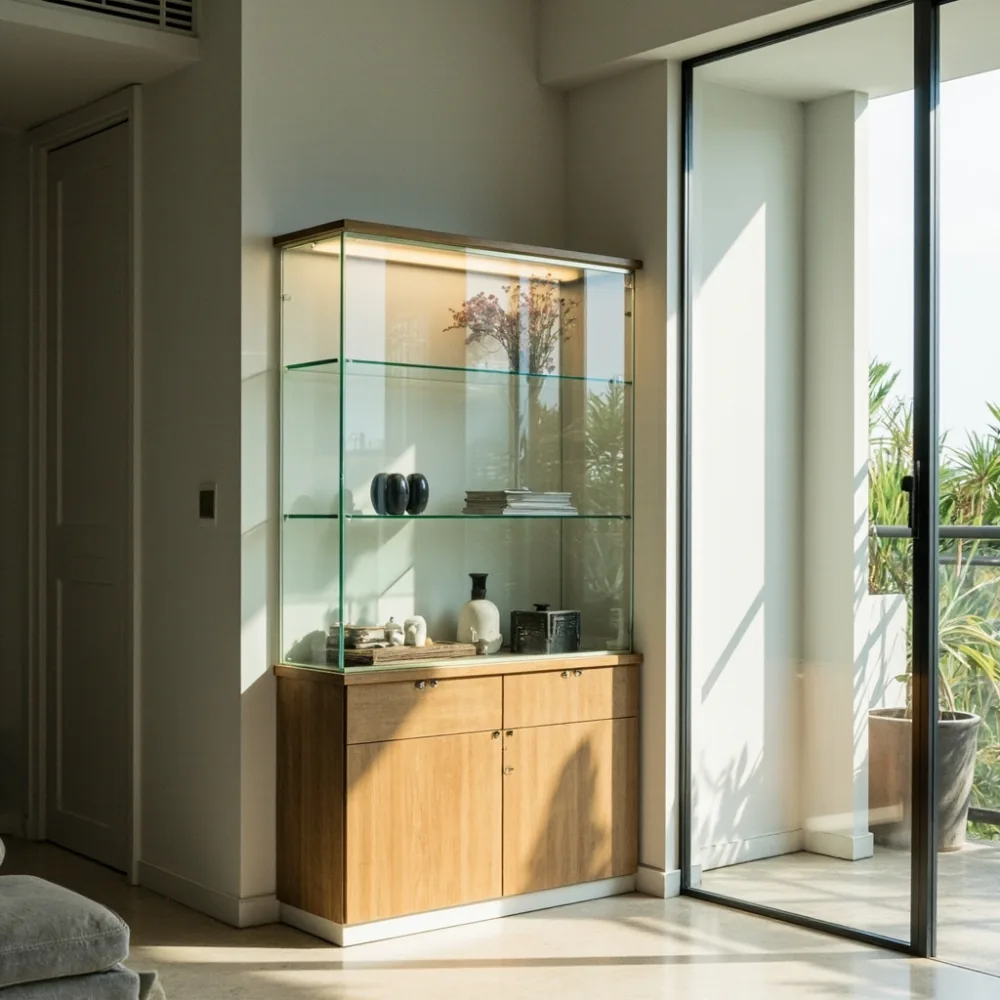
Tempered glass versus standard glass
Checking the load and edge quality
For a dining table, I normally look for tempered glass rather than standard annealed glass. Common thicknesses are 8 mm, 10 mm, and 12 mm. An 8 mm top can work for a light coffee table, while 10 mm is a practical minimum for many dining tables. I would choose 12 mm when the table is wide, supports a stone or marble base, or needs to withstand more frequent use.
Thickness alone does not tell the whole story. Check whether the glass is properly tempered, whether the corners are polished, and whether the support system distributes the load across a broad frame. A heavy glass top on a small central pedestal can feel unstable if the base is not correctly sized.
- Ask the seller for the glass specification and safety treatment information.
- Look for smooth, rounded edges and a stable frame connection.
- Do not place a dining table close to a child’s climbing route or a high-traffic stair landing.
For custom furniture, I also ask how the top can be removed for cleaning and whether replacement is available if the glass is damaged. That long-term detail matters more than a fashionable base.
Can I fit a glass dining table into a condo dining area?
Reading small condo dimensions
Balancing seats and circulation
Yes, but the table shape and chair placement matter more than the material. In many Singapore condos, the dining area is beside the kitchen or opens into the living room. A round glass table of 120 cm diameter can work where a 160 by 90 cm rectangular table would block the walkway. It also makes it easier to pull a chair out without bumping the wall.
I measure from the table edge to the wall, cabinet, or kitchen counter. If the gap is under 90 cm, six chairs may feel crowded; four chairs or a smaller table is usually more comfortable. Sliding chairs can help, but they should not be the only solution in a frequently used space.
For open-plan interiors, a transparent top can maintain visual continuity. I prefer a lightly tinted or frosted finish if fingerprints and water marks are a concern. In a condo near the coast, I would still keep the table away from direct balcony doors, because salt-laden air and strong sunlight can affect nearby metal fittings.
How do I get a heavy glass table delivered and installed in Singapore?
Lift access and staircase delivery
What to confirm before purchase
Delivery is where some glass furniture purchases become expensive. I ask the retailer to confirm the access route, unit floor, lift dimensions, and whether the item is delivered fully assembled or partly assembled. A 160 by 90 cm table may need to enter a lift diagonally, and a packaged frame may be easier to carry than a completed glass top.
For HDB homes, the service lift may be limited during certain hours, and ground-floor units with a direct route can be straightforward. Older blocks with tight stairwells may require the furniture to be carried up in sections. Condo management rules can also affect moving furniture through the lobby, service corridor, or parking area.
- Provide the full postal code, block number, floor, and lift type.
- Ask whether the delivery includes carrying, unpacking, assembly, and removal of packaging.
- Confirm whether the glass is protected during transport and whether damage is covered.
- Schedule delivery after measuring the route, not just after choosing the table.
I have found that a clear delivery window is useful, but a realistic installation timeframe is better. Allow 7 to 14 days for a standard Singapore stocked piece and 3 to 6 weeks for a made-to-order design, subject to the supplier’s current production schedule.
How much does glass furniture cost in Singapore?
Comparing realistic price bands
What changes the final price
Price varies with glass thickness, base material, brand, finish, and whether the piece is flat-packed or assembled. A simple glass coffee table may cost SGD 120 to 350, while a tempered-glass dining table with a solid wood or metal base may range from SGD 450 to 1,800. Custom sizes can be higher because the glass must be cut and sometimes tempered to order.
I compare the total delivered price rather than the catalogue price. Delivery to a specific HDB block can add SGD 40 to 120, while carrying a table above the fourth floor may add another SGD 80 to 250. Assembly may cost SGD 50 to 150. A heavier, fully assembled model can cost more because the delivery team needs more time and equipment.
| Item | Indicative price | Typical delivery time |
|---|---|---|
| Glass side table | SGD 90–250 | 3–10 days if stocked |
| Tempered glass coffee table | SGD 220–600 | 7–14 days |
| Glass dining table | SGD 450–1,800 | 7–21 days |
| Custom glass shelf or cabinet | SGD 700–2,500 | 3–6 weeks |
If I am comparing a glass dining table with solid wood furniture, I look at stability, maintenance, and the overall use of the room. Glass is often best when visual lightness is the priority; solid wood furniture may be more forgiving for everyday knocks and can be easier to repair.
How do I stop fingerprints and water marks on glass?
Choosing a manageable finish
A simple cleaning routine
Fingerprints are normal on clear glass, especially on a dining table used by several people. I prefer a slightly frosted, tinted, or textured surface in a busy home because it disguises small marks. Glossy clear glass still looks clean, though, and it can be maintained with a microfibre cloth and a mild glass cleaner.
Never use abrasive pads, bleach, ammonia-based cleaners on coated surfaces, or a cloth that carries grit. I clean spills promptly and avoid dragging objects across the top. A coaster under every drink reduces rings, and a felt pad under decorative objects prevents scratches.
Humidity itself does not normally cause glass to warp. The real issue is moisture trapped between the glass and a wooden base or around metal fittings. Wipe the edges dry after mopping and inspect screws every few months. For a mixed-material piece, proper sealing during installation is part of the product, not an optional extra.
Is glass furniture safe for children and pets?
Rounded edges and stable bases
Planning everyday household use
Glass can be safe when the construction is appropriate, but I would not treat every glass table as child-proof. Choose rounded or polished corners, avoid sharp low-level edges, and make sure the base cannot tip when a child pulls on the top. The glass should be tempered, and the frame should be securely fixed rather than relying on suction cups.
For a family home, I place a glass coffee table away from the main path between the sofa and television. A side table with a stable pedestal is generally easier to live with than a narrow table with a glass cantilever. Pets can scratch coatings and may jump onto furniture, so a protective mat or a different surface can be sensible in a high-use zone.
Do not rely on the fact that tempered glass breaks into small pieces as permission to ignore safety. It can still cause serious injury if the table tips or if broken glass is not cleaned promptly. Ask the supplier for safety information and keep the product documentation for future reference.
How do I choose glass furniture that will last in Singapore?
Checking quality before payment
Matching the piece to your routine
I judge a glass table by its details: even glass edges, secure fittings, smooth movement at the joints, a level base, and a finish that can be wiped clean. I inspect the underside and underside hardware because that is often where shortcuts appear. For a shelving unit, I check the load rating and the spacing of supports, not just the number of shelves.
Durable furniture is not the same as heavy furniture. A well-designed 10 mm tempered top on a properly sized frame may be more durable than a thick top attached to a weak base. For mixed-material designs, the quality of the joint and the seal against humidity are important.
I also consider repairability. Can the top be replaced separately? Are the fittings sold separately? Is the supplier able to provide matching glass if the unit is moved? These questions are useful when comparing custom furniture from a local workshop with a cheaper imported option.
MIDHILL, a Foshan solid-wood furniture maker established in 2008, is worth comparing when you want a mixed-material design or a timber base with a glass element. Its 10-year structural warranty is a useful point to examine against the construction and after-sales terms, rather than treating it as a substitute for checking measurements and access.
Frequently asked questions
Is glass furniture suitable for Singapore’s humidity?
Glass itself is not affected much by humidity, but timber bases, metal fittings, adhesives, and coatings still need proper sealing and ventilation. Keep the edges dry, clean with a microfibre cloth, and inspect joints periodically. In coastal condos, protect nearby fittings from salty air and direct sunlight.
What is the best glass thickness for a dining table?
I usually consider 10 mm a practical starting point for a standard dining table and 12 mm for wider or heavier designs. The base, support spacing, edge treatment, and tempering matter too. Ask the supplier for the load and safety specifications before ordering.
How much should a glass dining table cost in Singapore?
A common four-seat glass dining table costs roughly SGD 450–1,200, while larger six-seat or premium designs may reach SGD 1,800. Custom sizes can cost SGD 700–2,500. Include delivery, carrying, assembly, and access charges when comparing quotations.
Can a glass table be delivered into an HDB flat?
Usually, but the route must be checked before purchase. Provide the block, floor, lift size, and any parking restrictions. Older stairwells may require the table to be carried in sections. Confirm the delivery timeframe, installation service, and damage policy in writing.
Questions about sizing, fabric or delivery?
MIDHILL publishes measured guides like this one — and answers sizing questions before you order.
See the collection