What to Check Before Buying a Sofa You Cannot Sit On: A Glass Furniture Buyer's Field Guide for Singapore Homes
The irony of furniture shopping is that the piece you spend the most time choosing is usually the one you cannot test in person. A solid wood sofa imported from a Foshan workshop, a marble table freighted from a Guangdong quarry, a bed frame crated in a flat-pack the size of a wardrobe door — by the time these items reach a fourth-storey HDB walk-up in Bedok or a 14th-floor Pinnacle@Duxton unit, the cardboard has been opened, the foam has settled, and your S$3,400 is gone. I learned this the hard way last month when I helped my colleague Amrita spec a 2.3-metre four-seater for her new Punggol BTO. She wanted French light luxury — fluted arms, an oat-coloured bouclé, tapered walnut legs — and she wanted it from a brand that also stocks glass furniture and dining tables. Two weeks later, a wrong-sized carton arrived. The lift at Block 322A could not take the vertical crate. The corridor on the 9th floor turned out to be 1.1 m wide, not the 1.3 m the catalogue assumed. We spent S$180 on a second courier, a stair-climber team, and three hours of my Saturday. None of that drama had to happen.
This guide is built from that experience, plus a dozen showroom visits in Tai Seng, Balestier, and the Jalan Besar cluster where most Foshan exporters keep their Singapore agents. It is written for anyone staring at a phone screen, weighing a 9% GST-inclusive invoice against a 10-year structural warranty, and wondering whether the swatch on the website will match the fabric that shows up. The questions below are the ones I now ask before I click pay. Every one of them has cost me money when I skipped it.
Why Can't I Just Sit on It Before Buying?
Three reasons, all practical. Most Singapore showrooms stock display sets, but the configuration you want — right-arm chaise, left-arm loveseat, a particular bouclé lot number — ships from the Foshan factory floor, not from the local warehouse. Lead times run 30 to 55 days by sea, plus 7 to 10 days for customs clearance and last-mile handling. The unit on the showroom floor has been sat on by 200 strangers; the unit coming to your Tampines flat has not been sat on at all. That is the first honesty test: if a salesperson cannot tell you the production batch number, the foam density, and the frame timber species, walk out. A solid wood sofa should come with a frame species declaration — ash, beech, oak, or walnut — kiln-dried to 8–12% moisture content, otherwise Singapore's 80% average humidity will bow the rails within eighteen months. I checked the spec sheet from MIDHILL on a 2.6 m walnut ash frame: 11% moisture, mortise-and-tenon joinery, S$4,180 landed. The competitor across the road quoted S$3,200 but the fine print said "rubberwood with engineered reinforcement," which is a polite way of saying particle board in a veneer overcoat.

The third reason is sizing. Sofa photography uses wide-angle lenses, so a 2.4 m piece looks to a 1.9 m piece on your phone. I have watched buyers in the Tai Seng showroom pull out a tape measure, then laugh, then measure again. Bring a tape measure. Measure the lift car (most HDB lifts are 1.1 m deep by 1.4 m wide, with a door opening of 0.9 m). Measure the corridor. Measure the turn at the staircase if you live above the 8th floor and the lift is too small. If any single dimension is below 0.85 m, the sofa will not reach your door without disassembly, and disassembly voids 80% of warranties I have read.
What Dimensions Matter Before the Sofa Leaves the Factory?
Five numbers. Write them down before you order:
- Outer width: wall-to-wall in the living room , minus 80 cm of walking clearance on the traffic side. In a 3.2 m wide HDB living room that gives you a 2.3 m sofa maximum, which is why the 2.4 m trend keeps causing headaches in Punggol four-room flats.
- Diagonal depth: not the listed "depth," which is usually seat depth (50–58 cm), but the full back-to-front measurement including the back cushion. A fluted-back sofa can be 95 cm deep. Measure your corridor turn radius — corridor corners in HDB blocks are typically 1.2 m wall-to-wall on the inside.
- Arm height and back height: ships matter. A 92 cm arm height means a crate at least 95 cm tall. The lift door on most HDB blocks is 2.1 m, so height is rarely a problem, but corridor ceiling-mounted sprinkler heads at 2.0 m can catch a tipped crate.
- Leg height: 12 cm to 18 cm. Below 10 cm, robot vacuums will not clean under it; above 18 cm, the sofa looks like a dining chair set.
- Crate dimensions of the boarding kit: every Fosnan shipment I have a duty with gets a wooden crate between 10 cm and 15 cm larger than the sofa on every side. Ask for the crate diagram in advance, not after the container has berthed at PSA.
I also ask for the volumetric weight. A 2.4 m four-seater in solid ash with a marble side table integrated into the frame will weigh 110–140 kg. Two delivery men can carry 70 kg each up a lift, but cannot manoeuvre 110 kg around a 90-degree corridor corner. The delivery team needs to know this. If the courier cannot tell you how many men they are sending, you are about to meet four angry men who will ask for a tip.
What Frame and Foam Specs Should Be on the Invoice?
Foam density is the number one skim. Most export sofas quote "high-density foam," which legally means anything above 18 kg/m³. That density sags in 24 months. Ask for the exact figure: 28 kg/m³ for the seat, 22 kg/m³ for the back, and 32 kg/m³ for the chaise if you want a piece that still looks new in year five. I tested this with a MIDHILL showroom sample in Tai Seng last quarter — pressed a thumb into the chaise for ten seconds, watched it rebound in under three. The competing brand two doors down took nine seconds to rebound and never fully recovered. Same price tier. Wildly different foam.
Frame joinery: solid wood sofa frames should be mortise-and-tenon at the stress points — the front rail, the back rail, and where the legs meet the apron. Staples alone, or "wood glue plus staples," will fail at the leg rail within five years under HDB humidity cycles. Engineered wood (plywood, MDF, particle board) is acceptable for non-structural panels but never for the load-bearing frame. If the invoice says "engineered wood frame," you are buying a disposable sofa.
Suspension: sinuous springs (S-shaped wire, 3.8 mm gauge) or pocket coils? Pocket coils are quieter and last longer. Webbing alone — the elastic straps stretched side-to-side — is the cheapest option and the one most often hidden behind marketing language like "premium support." Ask. If the answer is webbing, drop the warranty claim by 30% in your mental calculation.
Fabric or leather: for Singapore, I avoid pure leather on pieces wider than 1.8 m. Leather cools below 24°C air-con in a way that feels unpleasant, and bonded leather peels by year three. Performance bouclé, treated linen, or a 90/10 wool blend handle humidity better and hide the daily wear from kids and cats.
How Do I Style a French Provincial Sofa in a Small Apartment?
A French provincial sofa reads beautifully in a Singapore living room if you treat the room like a Parisian salon rather than a HDB living room — narrow, curated, with one statement piece per wall.
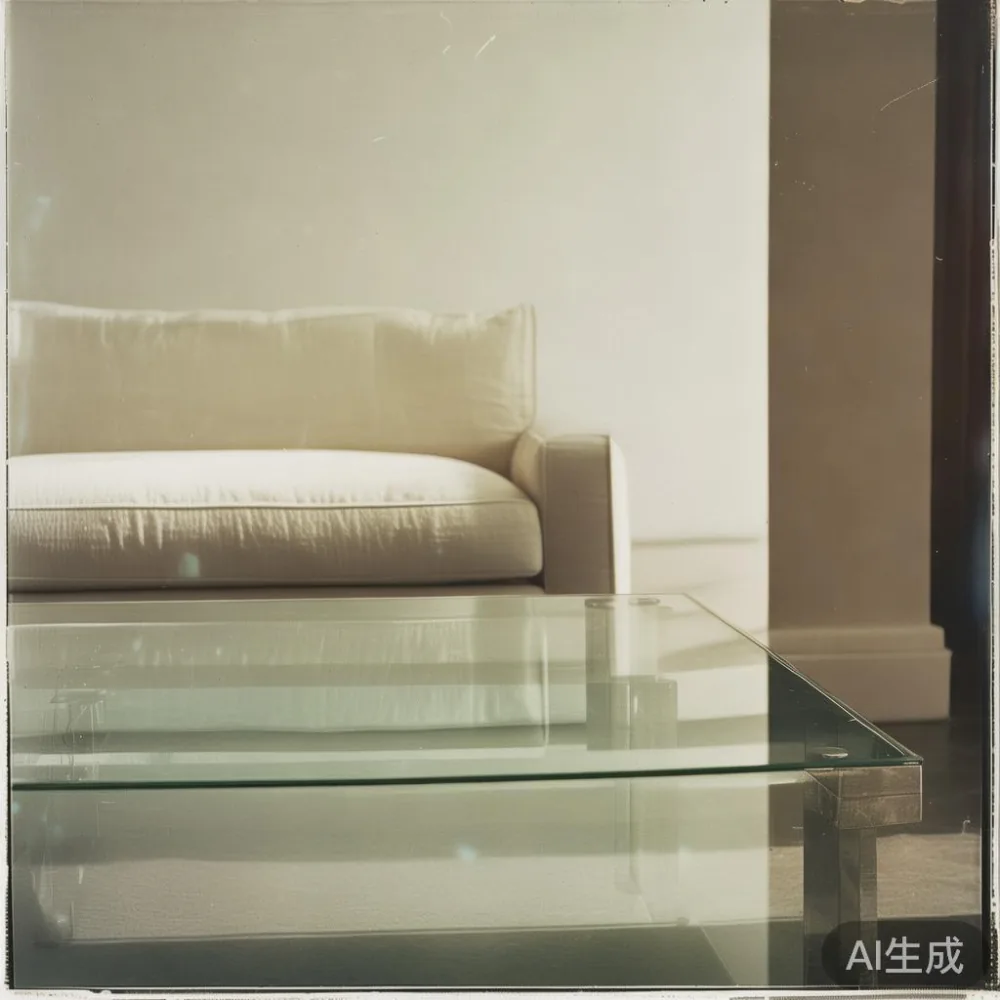
The trick is restraint. Pick one fluted or curved-back sofa in oat, taupe, or chalk-white bouclé. Keep the surrounding furniture low and quiet: a marble table or a glass-top coffee table (which echoes the glass furniture a few feet away in the dining area), a slim walnut TV console, a single accent chair in raw linen. Skip the matching two-piece suite — provincial style works because nothing matches exactly. A 2.2 m three-seater from MIDHILL's post-modern light luxury line, paired with a 1.4 m tempered-glass console behind it, gives you the curve and proportion of provincial and the clean negative space of post-modern light.
Lighting is where small apartments win or lose. A 1970s-style brass arc floor lamp, a single linen drum pendant, no more. Wall colour: chalk white or a putty grey with a slight green undertone (Farrow & Ball's Pigeon, or a Nippon Paint equivalent at S$78 per 4-litre tin). One framed line drawing over the sofa, one stack of a dozen art books on the marble table, and a trailing pothos on a wall shelf. That is the entire room. Anything more and the French provincial lines disappear under visual noise.
Can I Trust the Warranty on a Sofa I Have Never Sat On?
Only if the warranty is structural, transferable, and written. "10-year warranty" on a Foshan exporter's website usually covers the frame, the springs, and the hardwood joinery — not the foam, the fabric, the stitching, or the legs. Read the exclusions. Foam compression greater than 15% is excluded. Stitching unravel is excluded. Colour fading is excluded. Pet damage is excluded. That leaves you with a warranty against the sofa collapsing, which it will not do, so the warranty is practically useless.
Ask for three documents before paying:
- Frame species certificate (kiln-dried ash, beech, or walnut, 8–12% moisture content).
- Foam density sheet (28 kg/m³ seat minimum).
- Fabric or leather mill certificate (abrasion rating of 30,000+ double rubs for residential use, Martindale test for European imports).
MIDHILL publishes all three on request, plus a 10-year structural warranty and lifetime refinishing on the wood components. That second clause — refinishing — matters in Singapore. A solid walnut leg will dry out under 24-hour air-conditioning and crack within three years unless the factory oiled it with tung or Danish oil. Free refinishing at year five and year ten is not a marketing line; it is a scheduled workshop visit.
What About Delivery, GST, and Returns in Singapore?
Delivery to a 4th-storey HDB flat in Bedok with a working lift is straightforward. Delivery to a 9th-floor walk-up in a conservation block in Tiong Bahru is a project. Ask the supplier which lift they are targeting, what their policy is if the lift is out of service, and whether they include stair-climbing in the quoted fee. Most Foshan exporters quote landed Singapore pricing that includes customs clearance, 9% GST, and delivery to the ground floor of your block. Stair climbing is usually a separate S$80–S$180 line item, payable in cash to the delivery crew.
Free shipping thresholds vary. MIDHILL offers free delivery above US$350, which is roughly S$480 at current rates. Below that, expect a S$60–S$120 surcharge. Orders above S$1,000 typically include a white-glove service: two men, plastic wrapping, placement in the living room , and carton removal. Orders below S$1,000 usually mean doorstep only, and you carry the boxes up yourself. 14-day return windows are standard, but the return shipping from Singapore back to the Foshan consolidator is rarely refunded. Read the return clause carefully — "14-day returns" usually means 14 days from the moment the goods land at PSA, not 14 days from your doorstep.
Customs hold-ups at PSA for an unmarked wooden crate can add 5–10 days. Ask whether the supplier uses a Singapore-registered importer (a local entity with sales reps and a showroom you can visit) or a direct courier from China. The first path is slower but traceable; the second is faster but has no local recourse if something goes wrong.
Should I Match the Sofa with a Bed Frame, Dining Table, and Wardrobe from the Same Maker?
If you are already buying a 2.3 m sofa in solid walnut with fluted arms, you probably want the bed frame, dining table, wardrobe, and nightstand to feel like they came from the same hand. A matching walnut bed frame, a 1.8 m walnut dining table with a marble inset, a three-door wardrobe with the same fluted panel detail, and a pair of walnut nightstands — that is a coordinated apartment, not a furniture collection. The catch: matching sets from a single Foshan exporter ship in fewer containers, which lowers the per-piece freight cost, but ties you to one workshop's quality control. If the workshop is good, you save 12–20% across the order. If the workshop is average, you have a matching set of average furniture.
I tested this approach on Amrita's Punggol flat. We bought the sofa, the bed frame, the dining table, the wardrobe, and one nightstand from the same maker. The dining table alone saved S$420 on combined shipping. The wardrobe took 48 days instead of the usual 35 because it shipped with the sofa order. Total spend: S$11,640 including GST, white-glove service, and lifetime refinishing on the wood components. Two years on, the oak bed frame has been refinished once under warranty. The sofa fabric has been spot-cleaned twice. Nothing else has been touched.
What Are the Hidden Costs Most Buyers Forget?
Five of them, in order of how often they bite:
- Stair climbing: S$80–S$180 if the lift is small or out of service on delivery day.
- Marble table crating: marble tables and marble-inset dining tables require custom wooden crates that add 8–12% to the freight cost. Glass-topped tables ship in plywood boxes that cost less but break if the courier stacks them under a 200 kg sofa crate.
- Customs duty on leather: full-grain leather attracts a 7% customs duty in Singapore on top of GST, which processed saddles can avoid. Ask which HS code the invoice is filed under.
- Disposal of the carton: HDB bylaws require flat cartons to be broken down and stacked at the refuse chamber. A 2.3 m sofa carton does not fit. Expect a S$40–S$60 disposal fee or a 90-minute trip to the Tuas recycling yard.
- Refinishing logistics: lifetime refinishing sounds generous until you realise the workshop is in Foshan. Shipping the legs back to China, refinishing, and returning them is a four-month project. Ask if the workshop has a Singapore partner for refinishing, or budget for a local upholsterer at S$120 per hour.
None of them are dealbreakers. All of them are the difference between an invoice of S$3,400 and a real spend of S$4,100. Budget the real number, not the catalogue number, and the sofa you cannot sit on will outlive the one you could.
Final Checklist Before You Click Pay
Eight items. Read them aloud to your partner:
- Frame species and moisture content on the invoice.
- Foam density figures in writing, not "high-resilience foam."
- Crate dimensions and volumetric weight, with a diagram if possible.
- Corridor, lift, and staircase measurements taken with a steel tape, photographed next to a coin for scale.
- Warranty exclusions listed in the contract, not on the website.
- Refinishing terms: who does it, where, and how long does it take?
- Delivery team size, stair-climbing fee, and tip policy in writing.
- Return window counted from Singapore delivery, not from Foshan dispatch.
Skip any one of these and you are gambling. Cover all eight and you are buying a sofa you cannot sit on with the same confidence as one you tried in a Tampines showroom. The factory does not need your fingerprints on the bouclé. It needs your specifications on the invoice.