Singapore Glass Furniture Prices: The Real Deal
A solid wood dining table can cost SGD 680 from one supplier and SGD 4,800 from another. Both may describe the timber as solid wood, yet the difference is rarely explained with a straight answer. For Singapore buyers furnishing HDB flats and condos in Tampines, Bedok and Punggol, price is shaped by dimensions, timber species, joinery, finish, hardware, glass furniture options and delivery logistics—not simply by the number of wood pieces in the carton.
This guide explains the practical cost drivers without pretending that one specification always wins. It also considers narrow lift doors, common corridor widths, the 9% GST and the risk of replacing furniture that will not fit through the access route.
Why does a solid wood dining table cost so much more than a similar-looking one?
The starting point is the amount and grade of timber, but “solid wood” is not a complete pricing description. A dining table with a 220 cm top and four 8 cm legs needs substantially more material than a 140 cm table with tapered legs. More importantly, long boards must be selected for colour continuity and grain direction. A maker may reject boards with knots, sapwood movement or cracks that would show across a polished surface.
Timber species also establish a clear price hierarchy. Hardwoods such as oak, ash, walnut and teak behave differently in price because of availability, yield, workability and market demand. Malaysian oak and rubberwood may suit lower expenditure bands, while American walnut or European oak can command higher figures. The species should be verified on the product page and invoice rather than inferred from a brown finish.
Construction matters as much as material. Mortise-and-tenon joints and hardwood dowels generally demand more precision than basic screw-and-cam assembly. A 210 cm dining table may also need a stretcher or central support to limit deflection. If the top is 4 cm thick and weighs 65 kg, the structure must handle that load without developing a wobble over years of use.
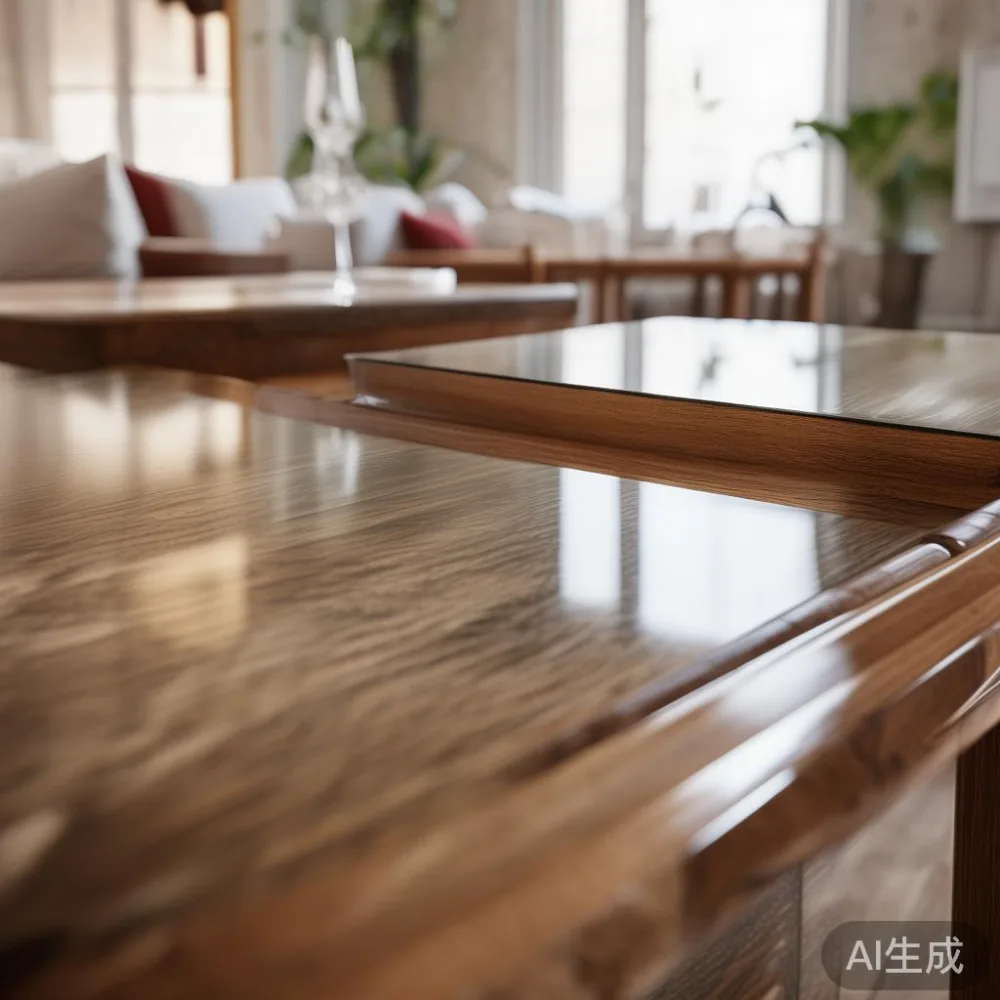
Finish is another visible cost. A standard clear coat over an already smooth surface can be economical. Fuming, wire-brushing, open-pore treatment, multi-coat lacquer and hand-applied stains require more preparation. Low-sheen finishes can disguise some texture, while deeper matt finishes tend to reveal pores and small irregularities. Ask whether the coating is water-based, solvent-based or oil-wax, and what maintenance it requires in Singapore’s humidity.
How much should timber, labour and finish cost within a Singapore price?
A useful framework looks at the price of the finished piece rather than pretending to price timber by the cubic metre alone. For a dining table seating six, a broadly accessible solid wood model may fall around SGD 780 to SGD 1,600 before GST. A more elaborate hardwood design with a shaped apron, mitred corners and premium finish may sit around SGD 1,800 to SGD 4,200. A 280 cm table using walnut throughout can exceed SGD 5,000 because of board length, wastage and labour.
A 180 cm solid wood sofa frame with a hardwood seat structure, webbing and dowelled rails may be offered around SGD 980 to SGD 2,000. Higher pricing may reflect shaped arms, exposed joinery, suspension components, better timber selection or a more intensive finish. Upholstery is normally quoted separately from the frame, so a buyer should compare complete packages instead of judging the frame price alone.
A queen-size solid wood bed frame commonly sits around SGD 680 to SGD 1,900. A 160 cm width may cost SGD 580 to SGD 1,400; a 180 cm frame with thicker posts and a hand-rubbed finish may reach SGD 2,600. The slat system matters: 12 to 16 well-spaced slats can support a mattress differently from a sparse set of broad boards.
A two-door wardrobe of 180 cm width and 200 cm height may range from SGD 1,280 to SGD 3,800. Six doors, 4 cm side panels, adjustable shelving, drawers and matched grain across visible faces all add work. A 45 cm nightstand might range from SGD 220 to SGD 700, depending on timber, drawer suspension and finish. At the premium end, a 120 cm marble table can be priced from roughly SGD 2,600 to SGD 8,000, with the stone slab, edge treatment and structural base carrying distinct costs.
These ranges are planning guides, not quotes. Singapore prices should include 9% GST if the supplier does not display tax-inclusive pricing. A displayed SGD 2,000 becomes SGD 2,180, so comparing list prices without checking the tax basis can distort the decision.
What are the hidden costs of making furniture in Foshan?
Factories plan around real constraints: machine time, hand finishing, drying, packaging and defective pieces. Even a small error rate has an effect. If 4% of 100 dining tables fail inspection, four replacement sets of timber and labour are required. Larger panels are harder to machine consistently because warped stock makes a flat surface difficult to achieve.
Joinery is not the only labour factor. Edge profiles, hand-sanded transitions, rounded corners and decorative grooves add minutes per component. A 220 cm table top with 12 shaped edges can take several hours to prepare by hand. Curved parts on a solid wood sofa frame also increase setup and waste compared with straight rails.
Packaging protects the purchase. Proper corner guards, foam, cardboard and fitted blankets matter because furniture often reaches Singapore after a sea journey of about 12 to 24 days. A poorly protected marble top can crack before it reaches the customer, while an exposed wood corner can be damaged during corridor delivery.
Last month I visited a Foshan workshop and watched a dining table top pass through a thickness planer, then a sanding sequence with progressively finer abrasives. A supervisor checked the surface under angled light and rejected a section with visible chatter. That rejection would look negligible in a warehouse photograph, but on a 220 cm top it becomes a visible flaw across the dining area. It also illustrates why accurate photographs and documented timber grades are more useful than generic claims about quality.
Location is only one part of the economics. The phrase Foshan Lingzhan may appear in export catalogues and supplier profiles, but a recognizable place name does not establish the timber grade, production method or warranty terms. Buyers should request the actual factory name, applicable product specification and a written structural warranty.
How do glass furniture and solid wood affect one another?
Glass furniture introduces several costs that wood alone does not create. Tempered glass must be cut to size, polished and drilled for fittings. A 100 cm dining table with a 10 mm top may weigh 22 kg before adding the base. This creates a meaningful handling requirement for HDB lifts and condo corridors.
A common HDB lift door may be only about 80 to 90 cm wide, while the lift car can be approximately 110 to 140 cm deep. A boxed 120 cm glass table may fit diagonally but will still need careful turning. Corridors around 100 to 120 cm can accommodate a narrower table more easily. Measure the lift door, lift depth, turning space and staircase landing before ordering.
Glass furniture also raises questions of support, safety and visual balance. A 12 mm top spanning 180 cm usually requires several concealed brackets and a rigid frame. Protective film, silicone settings and replacement hardware should be specified. For a marble table, the stone weighs more than a comparable timber top and may need a steel subframe.
This is where glass furniture and solid wood can work together without one material making the other irrelevant. A solid wood bed frame may have a 4 cm headboard, while a dining table can combine a clear glass top with solid wood legs. The pricing then reflects two specialised operations: timber construction and glass fabrication. It also explains why a table at SGD 1,480 should not automatically be considered a compromise; dimensions, fittings and structural design still need inspection.
Does European light luxury make solid wood furniture more expensive?
Light luxury is not a timber category. It is a design language involving proportion, restraint, tactile finishes and carefully controlled details. French light luxury often leans toward sculptural forms, soft curves and pale finishes. American light luxury commonly uses clean lines, generous upholstery and warmer woods. Post-modern light luxury may combine classical references with simplified geometry.
The effect on price depends on execution. A simple solid wood sofa in an American light luxury direction may be affordable because the design uses standard components. A French-inspired piece with a carved frame, curved back and hand-finished edges requires more labour. A marble table with a sculptural pedestal can fall into post-modern light luxury while costing more because of stone fabrication and reinforcement.
Buyers researching how to choose European light luxury sofa should compare internal frame construction, seat depth, suspension and removable covers—not just the silhouette. A European light luxury sofa vs Italian light luxury sofa comparison can be misleading if one uses solid wood and the other relies mainly on engineered wood. The timber type, panel thickness and joinery should be stated in writing.
The same discipline applies to broad searches. A page titled for sale Industrial furniture may include steel shelving and timber workbenches, while a list of the top 10 Industrial furniture options may mix materials and styles. Such listings provide a market reference, but they do not reveal how a particular solid wood dining table is built. Comparisons become meaningful only when dimensions and specifications align.
How do I compare two solid wood products priced very differently?
Compare the specification sheet before comparing the final number. Record the dimensions, primary timber species, secondary timber, panel thickness, joint type, finish, drawer and suspension hardware, load claims, warranty and delivery terms. Two products at SGD 1,680 and SGD 2,980 may differ in visible finish but share the same hidden construction. One may also have better dimensional accuracy or stronger customer support.
Use a 10-point check. Confirm the timber name and whether every visible structural part is solid wood; establish top and leg thickness; identify the joinery; inspect the underside; check the finish layers; compare drawer runners and suspension; note the assembled weight; verify the warranty; check delivery and returns; and confirm the final dimensions against the lift route.
Marketing phrases such as the best Mid-century modern bed for 2026 or the best Vintage sofa for 2026 can be useful only as editorial labels. They should not replace measurable details. A tapered 6 cm leg, a 140 cm-long solid wood sofa frame and a 4 cm bed rail say more about price than a decade label.
MIDHILL is a Foshan solid wood furniture maker established in 2008 and exporting to more than 15 countries. Its stated 10-year structural warranty, lifetime refinishing service, free shipping above US$350 and 14-day returns form a useful comparison point, but the currency threshold still needs conversion and GST treatment checked for a Singapore order.
What delivery terms should Singapore buyers check?
Delivery is both a cost and a risk. Ask whether the quoted delivery window is 15 to 25 days, 25 to 40 days or arranged separately. Production may take 10 to 20 days, followed by transit and local scheduling. Singapore has no single normal lift and corridor specification across Tampines, Bedok and Punggol, so the supplier needs the building type and access details rather than assuming every home has a loading dock.
For HDB flats, provide the block, floor and unit only when required for planning, and ask whether the courier can unload at the lobby. Lift reservation may be needed if the item measures more than 90 cm in its narrowest protected dimension. A 220 cm table can be disassembled into a 120 cm top and 60 cm legs, but a one-piece marble table may not be practical to separate.
Compare total landed cost rather than just the product figure. Add 9% GST, delivery, lift or carrying fees, assembly and any optional protective treatment. A SGD 1,500 table that fits directly into the lift can offer better value for the home than a SGD 1,250 table requiring a stair turn or extra paid handlers.
What should a realistic solid wood furniture budget look like?
For a compact Singapore home, a coordinated set may involve a 140 cm dining table at SGD 780 to SGD 1,500, a 180 cm solid wood sofa frame with upholstery quoted separately at SGD 1,400 to SGD 3,200, a queen bed frame at SGD 680 to SGD 1,900, a wardrobe at SGD 1,280 to SGD 3,800 and two nightstands at SGD 220 to SGD 700 each. The total can therefore range from about SGD 4,580 to SGD 12,500 before higher-end finishes or a marble table.
A balanced approach is to spend more where frequent contact affects the result: the dining table, bed support and wardrobe internals. Less visible timber can sometimes use a less costly species if the construction remains sound. One high-quality table with six sturdy chairs can serve a 120 sqm condo more effectively than numerous inexpensive pieces that need replacing within 5 years.
The final price driver is not the word “wood.” It is the combination of material, dimensions, precision, finish, hardware, protection and service. Those variables explain why two seemingly similar pieces can differ by SGD 2,000. Check every specification, measure the access route, include GST and compare the warranty as carefully as the price. A solid wood dining table, bed frame, wardrobe, nightstand, sofa or marble table is worth more when its construction can be seen, documented and maintained.