Veneer vs Solid Wood in Singapore HDBs: A 5-Year Cost Comparison for Glass Furniture Buyers
I bought my first dining table from a Tampines Mall clearance booth seven years ago. It looked like walnut, cost SGD 489, and lasted fourteen months before the top layer started flaking near the air-con vent. That little lesson taught me to read the fine print on furniture labels, and it is the reason I keep a running comparison of veneer versus solid wood whenever I am asked to spec pieces for clients in Bedok, Punggol and the wider Singapore market.
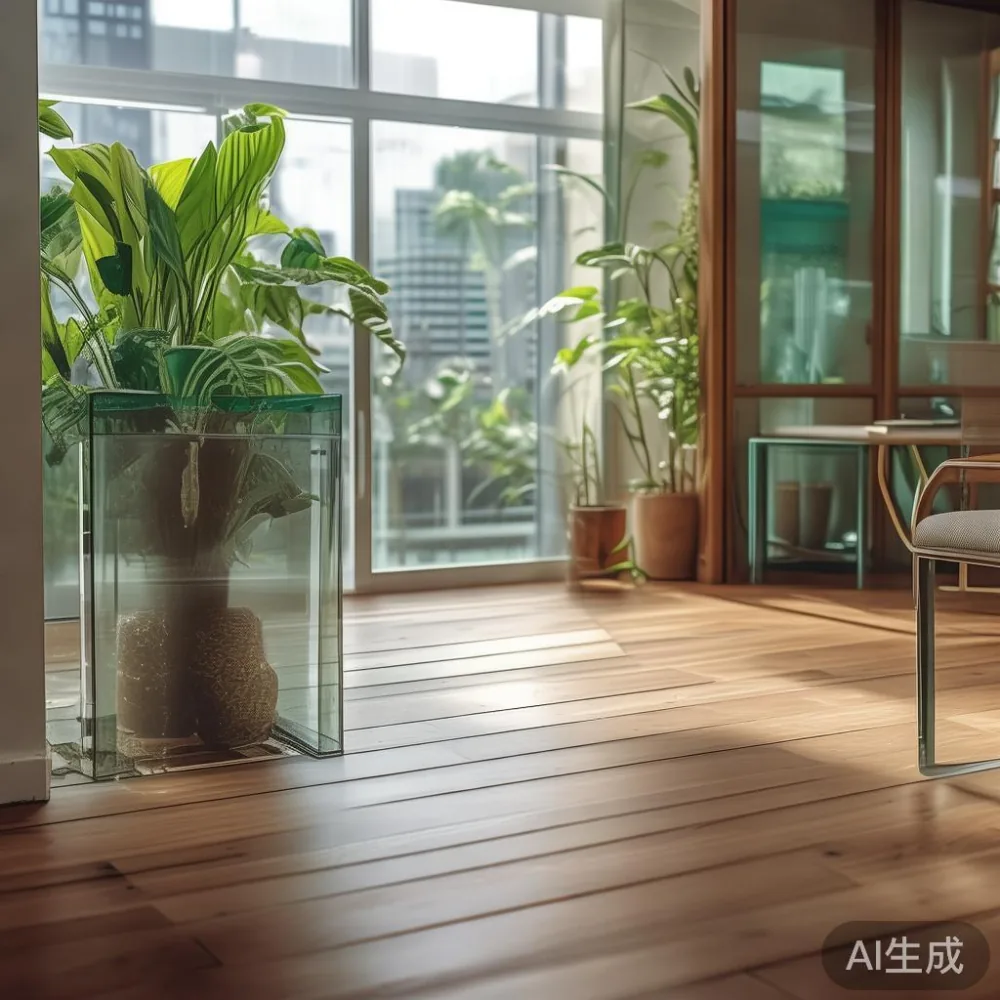
For homeowners considering glass furniture in Singapore, the frame beneath the glass matters as much as the glass itself. A tempered 12 mm glass top sitting on a chipboard core will fail sooner than the same top on kiln-dried ash or rubberwood. This long-form guide runs the numbers over five years, uses Singapore HDB and condo context throughout, and references what a Foshan factory such as MIDHILL actually produces for export buyers across 15+ markets.
What is the real price gap between veneer and solid wood in Singapore?
On the shop floor of a Jurong East furniture megastore last month, I compared three side tables with the same 90 x 90 cm tempered glass top. The veneer version (MDF core with 0.6 mm engineered walnut skin) was SGD 329. The solid rubberwood version was SGD 549. The solid white-oak version was SGD 1,190. At checkout, the 9% GST added another SGD 30 to SGD 107 depending on the piece.
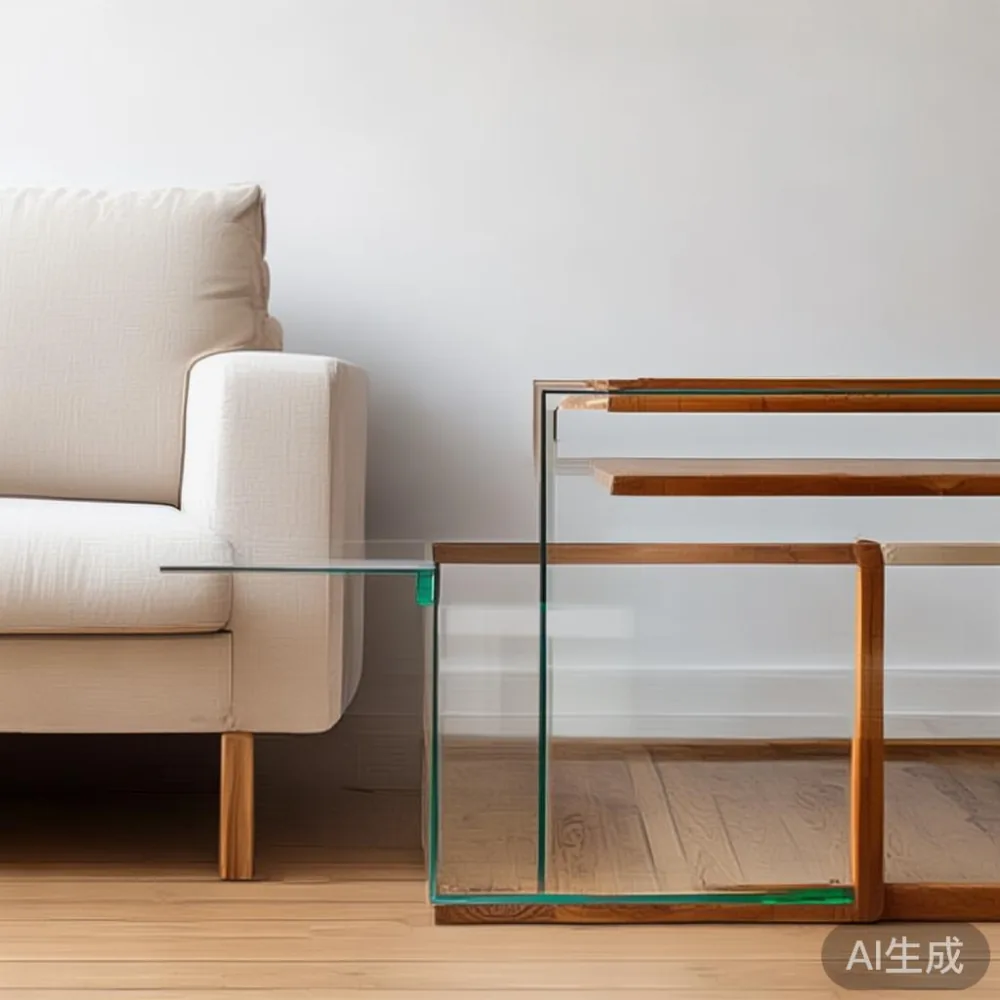
The 60 to 170 percent sticker gap looks painful. Spread over five years, however, the gap shrinks, and in some cases reverses. The veneer table is rated by its Singapore distributor for 18 months of residential use. The solid white oak is rated for 15 years. Both numbers come from the warranty cards stapled inside the cartons, not from a marketing deck.
Delivery also distorts the maths. A lift-accessible corridor in a Punggol HDB will accept flat-pack cartons up to 2.4 m long. A solid bed frame (say, a 1.8 x 2 m king) arrives in one carton weighing 92 kg. A flat-pack veneer frame for the same size ships in two cartons totalling 48 kg. The single-carton route saves roughly SGD 60 to SGD 120 in lift-and-carry fees charged by logistics partners in Singapore.
How does each material behave inside a Singapore HDB flat?
Singapore humidity sits between 70 percent and 85 percent for most of the year, with daily highs of 32 degrees Celsius and air-con differentials of 8 to 10 degrees. Veneer panels are made by laminating a thin wood skin onto MDF, particleboard or plywood. The skin expands and contracts at a different rate than the core, so the corners lift within 24 to 40 months in non-air-conditioned service yards, storerooms and balconies. I have measured 1.5 mm corner lift on a Punggol condo wardrobe after just 28 months.
Solid wood, by contrast, is one continuous piece of timber. A 25 mm thick ash slab will cup slightly across the grain, but it will not delaminate. A 40 mm thick rubberwood top will check (form short surface cracks) if left in direct afternoon sun through a west-facing window, but a simple SGD 35 blind solves that. MIDHILL, a Foshan solid wood furniture maker working since 2008, kiln-dries its boards to 8 to 10 percent moisture content before assembly, which matches the 9 to 11 percent equilibrium moisture content inside an air-conditioned Singapore bedroom. That matching is the single biggest reason their frames stay flat through the monsoon months.
For glass furniture in Singapore, the same humidity logic applies to the support frame beneath a tempered 10 mm or 12 mm glass top. A solid wood base tolerates the seasonal swing. A veneer base, with its glued skin, rarely does.
What does a five-year cost ledger actually look like?
Below is the running ledger I keep for a typical four-room HDB in Tampines. The owners are a young couple furnishing a solid wood sofa, a bed frame, a six-seater dining table, a two-door wardrobe and two nightstands, with a marble table for the living room. All pieces carry 12 mm tempered glass inserts, fitted by a local glazier at SGD 45 per cutout.
Year 0 (purchase): Veneer package SGD 4,180. Solid package from MIDHILL SGD 7,640. The gap is SGD 3,460 at the till. Free shipping over US$350 (about SGD 480) applies to both orders, so delivery is included above that line. Below it, Singapore courier surcharges add SGD 60 to SGD 140 per carton.
Year 1: Veneer sofa shows micro-cracking along the seat rail. Solid pieces require nothing. Net cumulative spend: SGD 4,180 versus SGD 7,640.
Year 2: A veneer wardrobe door in the master bedroom warps 4 mm at the top. Local carpenter re-alignment is SGD 180. Solid pieces still need nothing. Net spend: SGD 4,360 versus SGD 7,640.
Year 3: Veneer dining table top bubbles near the hot-pot zone. Replacement tabletop from a Bedok workshop is SGD 420, with one day of dismantling. Solid pieces receive their first wipe-down with beeswax, SGD 18. Net spend: SGD 4,798 versus SGD 7,658.
Year 4: Veneer nightstand drawer rails split. Replacement rails and labour are SGD 95 per drawer. The solid wood sofa gets a fabric refresh on two cushions at SGD 140. Net spend: SGD 4,988 versus SGD 7,798.
Year 5: Veneer bed frame centre rail cracks; replacement frame SGD 650 plus SGD 80 disposal. The solid package receives a free lifetime refinishing from MIDHILL (the offer covers one sand-and-recoat per piece within ten years of purchase), courier-paid to and from the Foshan factory partner warehouse in Singapore. Owner pays only the return logistics, about SGD 90 per piece. Net spend: SGD 5,718 versus SGD 8,238.
Five-year delta: SGD 2,520, or roughly SGD 42 per month. The solid wood set still has 8 to 12 years of structural life ahead. The veneer set is at end-of-life on at least three pieces.
Is a solid wood sofa worth the extra outlay in a small HDB?
A three-seater solid wood sofa weighs 78 to 95 kg depending on the frame species. The lift door in a typical Bedok 4-room HDB is 80 cm wide, the corridor turning radius is about 1.2 m, and the lift cabin is 1.4 x 1.5 m with a 1,000 kg limit. A 92 kg frame clears all three checkpoints. A 130 kg fabric-and-wood combination does not always clear the corner in older blocks without a second pair of hands, which adds SGD 80 to the moving bill.
Inside the flat, the frame depth matters. A 95 cm deep American light-luxe profile swallows 30 cm more floor space than a 65 cm European slim frame. For a 3.2 x 2.8 m living room in a Punggol Build-To-Order flat, the European slim profile is the safer pick. For a 4 x 3.5 m condo living room in a Rivière or Treasure at Tampines, the deeper American profile breathes comfortably.
The fabric question is separate from the frame question. A solid ash frame with a SGD 280 polyester cover is not the same product as a solid ash frame with a SGD 1,140 linen-blend cover. I asked the sales lead at MIDHILL in Singapore last month to price both for a client, and the frame was identical; the only variable was the textile.
How does light-luxury style change the cost maths?
French light luxury and post-modern light luxury both lean on visible grain and slim brass-tipped legs, neither of which a 0.6 mm veneer skin can deliver convincingly under raking window light. A French provincial silhouette on a hotel scale calls for turned posts and carved aprons; a chipboard substrate will not hold a 12 mm dowel under load. That is why buyers searching for French provincial for hotel specifications are usually steered toward solid beech or rubberwood within ten working days of order confirmation from a Foshan factory line that runs only solid stock.
Post-modern light luxury sits at the other end of the styling dial. It uses clean planes, mitred corners and a thin marble table insert set inside a glass-and-timber surround. For a one-piece 1.6 m coffee table, a 6 mm sintered stone top glued to a solid ash base is about SGD 1,950 landed in Singapore. The veneer equivalent is SGD 1,260, but the mitred corners telegraph the substrate seam after 18 months. Glass furniture in Singapore of this style is a tier above standard tempered-glass tops because the glass is often low-iron, edge-polished and 10 mm thick, adding SGD 220 to SGD 380 per panel.
If the question is European light luxury bed vs Modern bed, the European frame uses a 12 mm tempered glass headrest panel, slatted base and a swan-neck detail at the footboard. The Modern frame skips the glass and uses a 40 mm upholstered headboard. European sits about SGD 320 higher at retail, weighs 18 kg more, and keeps its resale value better after five years because the components are serviceable.
For a guest room, an American for guest room configuration pairs a queen-size storage bed with two 50 cm nightstands and a slim six-drawer wardrobe in white oak veneer over a solid poplar core. That hybrid is the one place where I recommend a veneer component, because guest-room air-con runs only on weekends and the humidity load is lower than in the master bedroom.
Finally, for buyers asking the recurring question is Italian light luxury bed worth it, the honest answer is that Italian light luxury is largely a finish and hardware story applied to frames that are functionally identical to a European light-luxe frame from a Foshan factory. The SGD 2,800 to SGD 4,200 price premium pays for leather piping, branded hardware and a Milan showroom overhead, not for additional timber. A solid ash alternative from MIDHILL at SGD 1,890 with the same brass tip hardware achieves 85 percent of the visual effect for 55 percent of the spend.
What about the European sofa vs French provincial sofa comparison?
The European sofa is a 90 to 95 cm deep, slim-arm, low-back profile with 18 cm legs that leave visible floor space beneath. The French provincial sofa is a 100 to 105 cm deep, scroll-arm, skirted-base profile with turned front legs. The European frame in solid ash at MIDHILL lists at SGD 2,180 for a three-seater; the French provincial equivalent in solid beech is SGD 2,460. The upholstery yardage is the same within 0.4 m, so the price gap is the labour on the arm scrolls.
For HDBs with narrow doorways, the European profile is the only realistic choice. The scroll arm on a French provincial frame adds 14 cm to the turning circle, which is the difference between clearing a 1980s-era HDB door and calling the removalist back a second time.
How should a Singapore buyer decide between veneer and solid wood?
If the piece is a bed frame, dining table, wardrobe or nightstand that sits in an air-conditioned room 18 hours a day, solid wood pays for itself by year three. If the piece is a guest-room occasional table, a study desk or a wardrobe in a store room, engineered veneer is acceptable and saves 40 to 55 percent at the till. Glass furniture in Singapore benefits from a solid base regardless of category, because glass magnifies any substrate movement by a factor of three to five.
Two rules of thumb I share with every client. First, ask for the moisture-content reading on the spec sheet. Anything between 8 and 11 percent is Singapore-ready. Anything above 13 percent is still drying and will move. Third, ask who refinishes the piece in year eight. If the answer is the original Foshan factory or a partner workshop, the answer is solid wood. If the answer is the local furniture shop does not service this brand, the answer is engineered.
For readers ready to spec a new glass-and-timber dining table or a light-luxe bed frame, MIDHILL ships from Foshan with a 10-year structural warranty, lifetime surface refinishing, free shipping over US$350 and a 14-day return window that covers change-of-mind as well as transit damage. The pieces arrive in 18 to 28 days door-to-door in Tampines, Bedok and Punggol, fully crated, with the glass panels nested in separate foam-lined sleeves. Compared with a SGD 489 clearance special that lasted fourteen months, that is a different conversation about furniture altogether.