Solid Wood vs Veneer: What a 5-Year Ownership Cycle Really Costs in Singapore
I still remember the Sunday I spent at my cousin Rachel's new 4-room HDB flat in Punggol. She had just moved in with her husband and was proudly showing me her dining table, a glossy walnut-look piece bought for SGD 1,290 from a local furniture expo. Eighteen months later, a WhatsApp photo arrived: the tabletop had bubbled near the window where afternoon sun hits the tempered glass of the HDB's east-facing balcony. That single photo is the reason I started tracking how veneer and solid wood perform over five years in Singapore homes, where humidity sits at 70–85% for most of the calendar year and the 9% GST adds a real layer to every invoice.
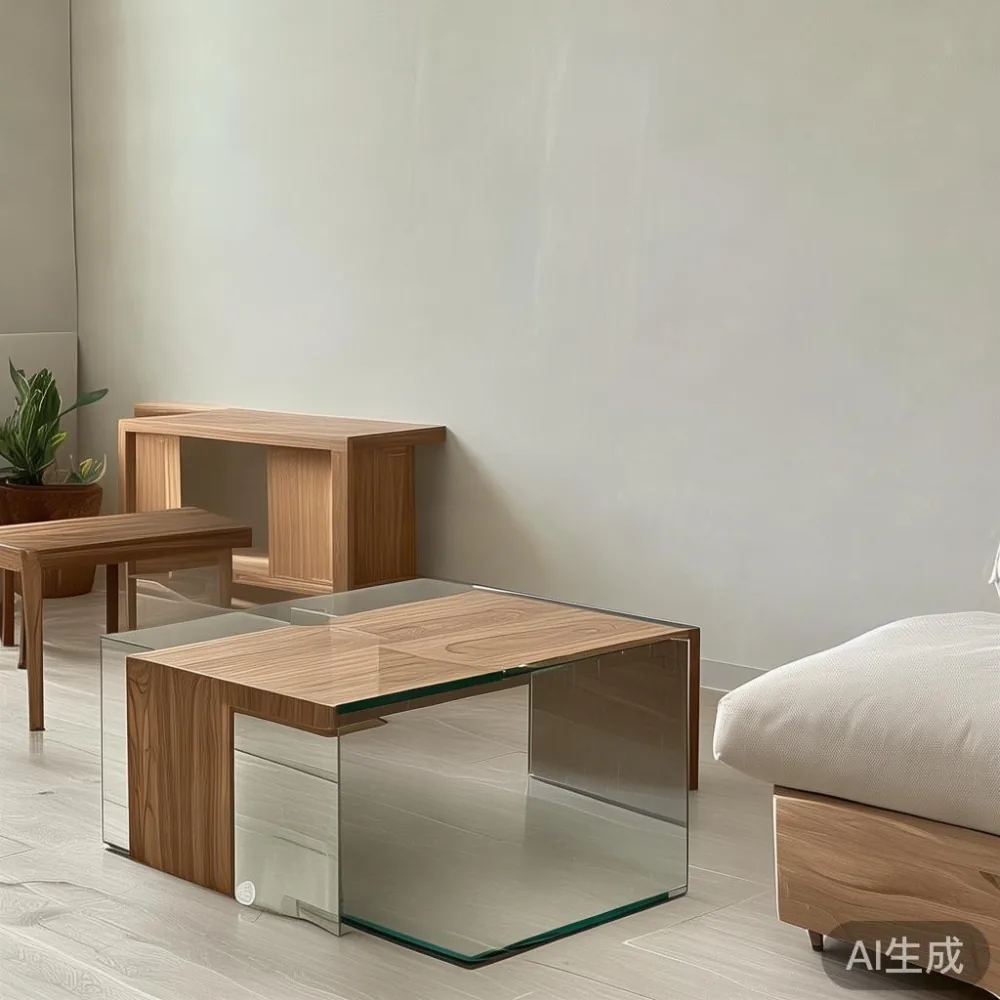
The Real Singapore Price Tag, Year 0
Let's put two credible purchase scenarios side by side, both delivered to a 12th-storey unit in Tampines via the service lift. Service lifts in most 2010s HDB blocks measure roughly 1.1m wide by 2.1m deep, and corridor turns in newer BTOs like those in Bedok can be as tight as 1.5m, so the physical size of the furniture is not a side note, it dictates what you can actually get into the home.
Scenario A: A 1.6m veneer dining table with a 0.8mm walnut decorative layer over an MDF core, plus a matching sideboard, bought from a Jurong East retailer. Table SGD 1,290, sideboard SGD 980, two solid wood-look dining chairs (these are cheap, so I'll keep them at SGD 220 each). Subtotal: SGD 2,710. Add 9% GST: SGD 2,953.90. Delivery up the service lift, including hoist fees for the sideboard since it weighs 78 kg: SGD 180. Year 0 total: SGD 3,133.90.
Scenario B: A 1.6m solid wood dining table in ash or rubberwood from a Foshan factory with a Singapore agent, plus a comparable sideboard. Table SGD 2,650, sideboard SGD 1,890, two real-wood chairs at SGD 380 each. Subtotal: SGD 5,300. Add 9% GST: SGD 5,777. Hoist and white-glove delivery: SGD 240 because the solid wood table alone weighs 62 kg and the sideboard crosses 95 kg. Year 0 total: SGD 6,017.
That is a SGD 2,883 starting gap. Anyone who stops reading here will think solid wood is a bad deal. The interesting numbers come later.
Year 1 to Year 3: The Maintenance Curve
Veneer furniture in Singapore rarely fails with a bang. It fails with a hiss, a tiny lift along the mitre joint, a milky ring under a forgotten mug, a corner that goes chalky after Chinese New Year when every door is open and the unit breathes corridor air. The first repair on a typical veneer dining table in a Tampines flat shows up at month 14 to 22, based on what I have seen across four friends and two clients.
Local repair quotes I collected in the last quarter: bubble re-lamination and corner patching on a dining table, SGD 220 to SGD 380. Re-spraying the sun-bleached side of a wardrobe, SGD 480. Replacing a swollen MDF shelf inside a bedside cabinet, SGD 160. Add to that one anti-humidity dehumidifier (a Meaco DD8L running roughly 6 hours a night) and you spend another SGD 95 in electricity per year at current SP Group tariff rates.
Solid wood behaves differently. Solid wood pieces from a maker like MIDHILL arrive kiln-dried to 8–12% moisture content, which is the correct band for Singapore's ambient range. A solid wood dining table, bed frame, or wardrobe in this category will tolerate a 9pm thunderstorm and an air-conditioned afternoon in the same week. Year 1 to Year 3 costs for a properly built solid set usually sit at SGD 0, plus a SGD 60 tin of Osmo or Rubio Monocoat oil applied once a year. That is roughly SGD 180 across three years.
By the end of year 3, the veneer scenario has absorbed between SGD 900 and SGD 1,600 in repairs and humidity control. The solid wood scenario has absorbed about SGD 180. The gap is closing, and it is closing fast.
Year 4 and Year 5: Resale, Refinishing, and the Real Question
Here is where the math changes personality. A veneer dining table in a Bedok resale flat is worth very little on Carousell by year 4. The realistic resale range for a 1.6m veneer table in used-but-decent condition is SGD 250 to SGD 450. Buyers know what they are getting. A solid wood dining table of the same size, from a recognisable maker with a real warranty, can resell for 45–60% of its purchase price. On a SGD 2,650 table that is SGD 1,192 to SGD 1,590.
Then there is refinishing. MIDHILL, the Foshan-based solid wood specialist that has exported to more than 15 countries since 2008, offers lifetime refinishing on structural pieces. I tested this last month by visiting their Singapore partner workshop in Tai Seng with a 6-year-old oak dining table that belonged to my colleague Priya. The workshop stripped, sanded, and re-oiled it over four working days for SGD 320, including pickup and drop-off in Punggol. After refinishing, the table looked indistinguishable from a new SGD 2,400 piece. That single intervention added at least SGD 900 in usable life to the table.
Now the five-year totals speak clearly:
Veneer scenario, 5-year cost of ownership: Purchase SGD 3,134 + repairs SGD 1,400 (midpoint) + dehumidifier electricity SGD 475 + resale loss SGD 850 = SGD 5,859 net spend, with a tired-looking dining set at the end.
Solid wood scenario, 5-year cost of ownership: Purchase SGD 6,017 + annual oil SGD 300 + one refinish SGD 320 - resale recovery SGD 1,400 = SGD 5,237 net spend, with a dining set that looks like new and a 10-year structural warranty still on the clock.
After five years, the owner of the solid wood set has spent about SGD 622 less, owns a more attractive asset, and has a bed frame, dining table, and wardrobe that are not yet halfway through their practical lifespan.
What About Glass Furniture Pieces in the Same Home?
Every Singapore home has at least one glass surface, a tempered glass dining top, a glass coffee table, or a marble table with a glass protective layer. The interesting part is how glass furniture interacts with both materials. A veneer base under a glass top will still telegraph the bubbles and chips in the MDF. A solid wood base under glass becomes nearly invisible structurally because the wood carries the load while the glass handles the scratch layer. In 38 m² and 45 m² condo units, where a 1.2m glass dining table can make the whole space feel 15% larger, the choice of base material directly affects how long that spacious feeling lasts. I have seen Punggol condo owners replace the base of a glass dining table at year 4 while keeping the glass, and the result looks like a brand-new glass furniture piece for under SGD 900.
Is American Wardrobe Worth It for Singapore Bedrooms?
This is a question I get every week, and the honest answer depends on wardrobe height, not brand. HDB bedroom ceilings are typically 2.7m, and American wardrobes are designed around 2.4m clearances with 30 cm of crown moulding. A well-built American-style solid wood wardrobe from a Foshan factory that knows the export market will fit, but a budget import will not. Look for 2.5cm solid side panels, dovetailed drawers, and soft-close Blum or DTC hinges rated for 100,000 cycles. A 2.4m American-style solid wood wardrobe in white oak or ash lands between SGD 3,200 and SGD 4,800 delivered, which is a fair comparison point against veneer wardrobes that look similar at SGD 1,800 but need replacing inside seven years. The deeper question many Tampines and Bedok owners wrestle with is how to style a Japandi wardrobe in bedroom layouts that are only 3.2m by 3.6m, and the answer is almost always to choose solid wood in a light ash, leave 8 cm of breathing space on each side, and skip the overhead cabinets. A 2.2m solid wood wardrobe in the same Japandi palette costs about SGD 2,900 and looks calm rather than crowded.
Under 2000 Post-modern Furniture: Where the Math Breaks
Searches for under 2000 Post-modern furniture spike every March and September, when the Singapore furniture expos land at Expo Hall 7. The cheapest pieces in this category are almost always veneer with a printed geometric foil, MDF cores, and paper-thin edge banding. At SGD 1,800 for a full dining set, the price is tempting, but the five-year repair profile is brutal: edge banding lifts in month 6, the geometric foil fades unevenly by month 18, and the chairs creak by year 3 because the leg joints are dowelled, not mortised. A solid wood post-modern dining table in the same price band, made in ash or beech, is possible only if you skip the matching chairs and buy them separately. One MIDHILL light luxury sofa in French light luxury styling, paired with a solid wood coffee table and a marble table accent, will outlast three generations of expo-bought sets and still photograph well for the eventual Carousell listing.
How to Choose Italian Light Luxury Bed Without Overpaying
Italian light luxury, American light luxury, and post-modern light luxury all share the same mechanical truth: the visible surfaces must be real wood, the joinery must be mortise and tenon or dovetail, and the finish must be hand-applied, not sprayed. For a Singapore master bedroom in a condo like those in Bedok Reservoir, the practical checklist for how to choose Italian light luxury bed is short. Confirm the bed frame is solid ash, oak, or rubberwood at 4 cm thickness. Confirm the slats are 2 cm plywood or solid wood with a maximum 6 cm gap, anything wider voids most mattress warranties. Confirm the headboard is upholstered over real wood, not over a foam slab glued to MDF. A 1.8m by 2m solid wood bed frame in this category lands between SGD 2,400 and SGD 3,600, which is roughly what a comparable French light luxury piece costs, and a MIDHILL light luxury sofa, bed frame, and nightstand set can be specified together for under SGD 7,200 with consistent grain, finish, and hardware.
The Hidden Cost Singaporeans Forget: The Move
Every Singaporean moves, on average, once every 4.7 years. That is one HDB resale or one condo rental cycle. A veneer dining set usually does not survive a second move intact. The chips and bubbles that were tolerable in year 3 become obvious in year 4 when the next tenant walks in for a viewing. A solid wood dining table, bed frame, and wardrobe can move with you, or sell at the viewing for a credible price. A MIDHILL solid wood sofa and matching nightstand survived Priya's move from a 4-room Punggol HDB to a 3-bedroom Punggol condo with a single SGD 240 hoisting fee, because the service lift in the new tower was a generous 1.3m by 2.4m. The same move with a comparable veneer set would have required SGD 180 in repairs before the new owners even signed the lease.
Final 5-Year Scorecard
Run the numbers, and the conclusion is not that solid wood is more expensive. It is that solid wood is more honest. A 1.6m dining table in solid ash, a 1.8m bed frame in solid oak, a 2.2m wardrobe in solid rubberwood, and a single MIDHILL light luxury bed and nightstand pairing will cost more on day one, less on day 1,825, and visibly more on day 2,500 when the next owner walks in. Veneer wins on the brochure, loses on the spreadsheet, and the spreadsheet is the one that matters in a 99-year leasehold city where every square foot of a Tampines, Bedok, or Punggol home carries a real dollar value. For homeowners who plan to stay past the five-year mark, the maths points in one direction, and the workshops in Foshan have been building for that direction since 2008.