Glass Furniture Delivery and Assembly in Singapore HDBs: A Practical Guide
I still remember the Thursday morning my colleague received two crates of glass furniture at her Tampines HDB. The lift lobby on the ninth floor measured roughly 1.1 m wide, the service lift accepted only 1.3 m of depth, and her dining table base arrived in a box that weighed 48 kg. By the time the movers left, she had learned three things every Singaporean online furniture buyer should know before clicking checkout. Glass furniture is heavier than the website photos suggest, the corridor dimensions in most HDB blocks were designed in the 1970s and 1980s for human traffic, not flat-pack crates, and the assembly step matters more for glass than for any solid wood sofa or bed frame you have bought before.
Why glass furniture behaves differently during delivery than solid wood pieces
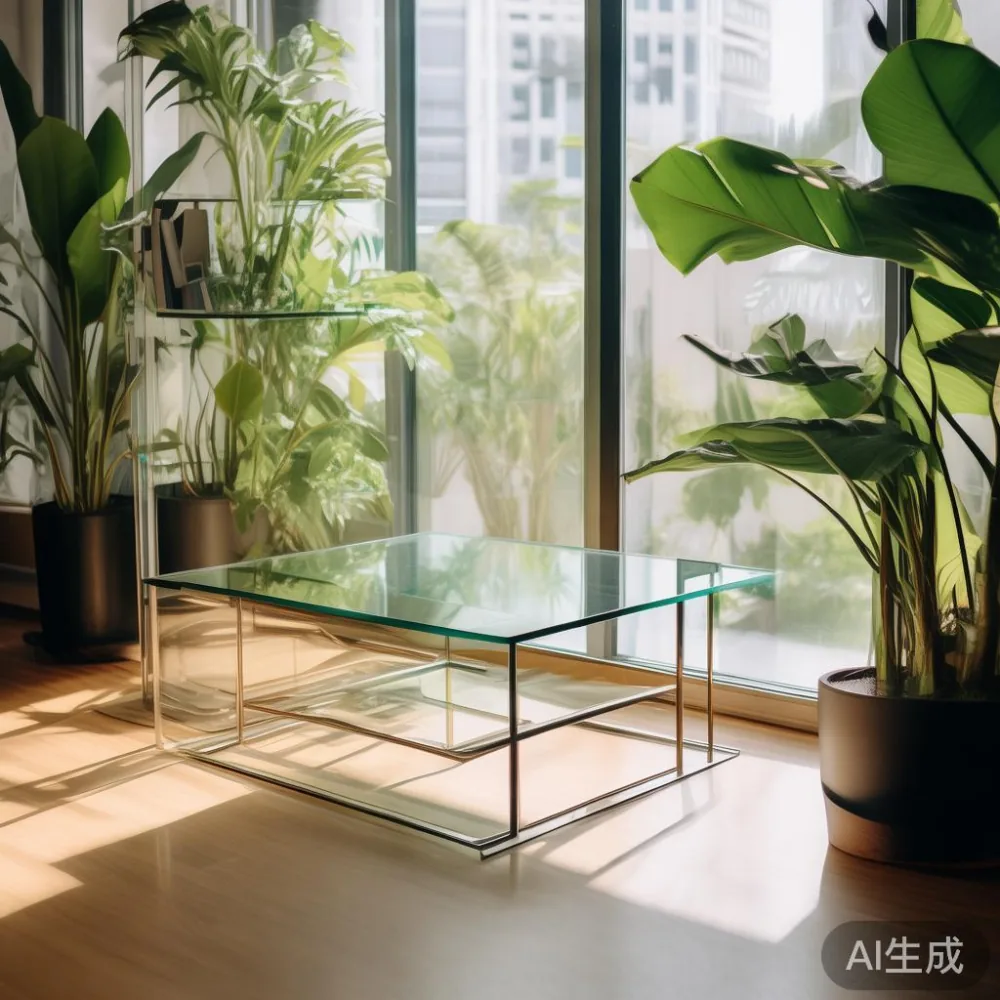
Glass furniture carries concentrated weight in the top rather than distributing it across a frame. A 1.4 m tempered glass dining table top can weigh 38 kg on its own, while the marble table base it sits on adds another 24 kg. Compare that to a comparable solid wood dining table in oak or ash, which usually lands between 28 kg and 35 kg in total. The total weight climbs past 60 kg once you add the protective foam, the wooden crating, and the corner guards. MIDHILL, a Foshan solid wood furniture maker established in 2008, ships its glass-topped collections in reinforced plywood boxes with internal foam rebates that hold the panel at 15 mm clearance from every wall. That clearance is not decoration; it absorbs vibration during the 4 to 6 day sea transit from Shenzhen to Singapore's PSA terminal, then another 2 to 3 days for customs clearance and final-mile scheduling.
Buyers often ask why a tempered glass panel costs more to ship than a solid wood nightstand of the same size. The answer is geometry. A glass panel cannot flex under pressure, so the entire crate must remain rigid. Insurance premiums on glass furniture shipments run roughly 1.8 percent of declared value, compared with 0.6 percent for a comparable wooden wardrobe. That difference is one reason local pricing in SGD can shift by S$120 to S$220 between two glass-topped dining tables that look identical in photos.
What are the real corridor and lift numbers for a Tampines or Punggol HDB?
Singapore HDB corridor widths and lift openings follow published HDB guidelines. A standard 4-room HDB block built between 1985 and 2000 has corridors roughly 1.2 m wide, with right-angle turns at the lift lobby that tighten the usable diagonal to about 1.6 m. Newer BTOs in Punggol and Bedok opened after 2015 widened corridors to 1.4 m, but the lift car interior often stays at 1.4 m deep by 1.1 m wide. A 1.8 m long dining table crate will not fit through that opening without tilting it past 45 degrees, which is exactly what movers are trained to do, but which requires two people and a cleared corridor.
Last month I visited a Punggol Waterway Isles BTO where the buyer had ordered a 1.6 m glass dining table, a 1.8 m solid wood wardrobe, and a queen-size bed frame with hydraulic storage. The corridor outside the unit was 1.35 m wide, the lift opening was 0.9 m, and the internal lift measured 1.5 m by 1.3 m. The wardrobe crate, at 1.85 m tall, had to be stood upright and angled through the lift door, which added 12 minutes of handling time. The glass tabletop, by contrast, was the easiest item because it had been pre-cut by the manufacturer to fit a standard 1.2 m crate, then re-assembled on site using the included 304-grade stainless steel brackets and a 4 mm hex key.
How do I choose a missing parts for a small apartment?
The single best answer is to measure every doorway, lift, and corridor before you order, then email the seller a floor plan with the dimensions marked in centimetres so they can confirm the crate sizes against your layout. Missing parts usually mean wrong parts, and wrong parts almost always mean a measurement was missed somewhere between the showroom render and the corridor outside your unit.
In practical terms, a 480 sq ft two-bedder in Bedok Reservoir typically gives you a main door of 0.9 m, a service yard gate of 0.7 m, and a corridor turn of 1.1 m. Anything longer than 1.5 m in its longest single dimension will need either a two-piece assembly or a knock-down design. Glass furniture fits this constraint better than most people expect, because the top and the base ship separately. MIDHILL's glass collections are designed around a 1.2 m maximum crate length for the panel, which keeps the longest single piece under the lift diagonal. A solid wood sofa frame, by comparison, ships in three boxes that each measure under 1.5 m and stack cleanly in a standard lift.
When a part does go missing, the recovery path matters more than the apology email. A reliable supplier carries replacement hardware for at least ten years after a model is discontinued, ships spares from a regional warehouse in Johor Bahru or Shenzhen within 5 working days, and includes a 10-year structural warranty on every joint and bracket. Lifetime refinishing on wooden surfaces, offered by the same maker, becomes relevant only if a bed frame or wardrobe arrives with a dent that no replacement part can fix. For glass, replacement is the only path, since a chipped or cracked panel cannot be refinished in place.
What does assembly actually involve for glass furniture?
Assembly for glass furniture is shorter than for solid wood but more precision-driven. A standard 6-seat dining table with a tempered glass top and an American light luxury style brushed brass base arrives in two boxes: one for the base at 22 kg, one for the glass top at 31 kg. The base assembly takes about 35 minutes using the included Allen key, a rubber mallet, and a spirit level. The glass top placement takes another 10 minutes, but two people are required because the panel weighs as much as a full suitcase and cannot be slid across the frame once the suction cups are attached.
French light luxury style glass consoles, with tapered marble bases and 12 mm tempered tops, add another 15 minutes for the marble base alignment. The base ships in a wooden crate with foam inserts that hold the marble at 20 mm of clearance, and the assembly manual walks through three torque settings on the underside brackets. Tightening past the specified 8 Newton-metres will crack the marble; under-tightening will let the glass top micro-shift during use. A French light luxury piece in this category typically retails between S$1,480 and S$1,950 in Singapore, before the 9 percent GST and any delivery surcharge for non-lift-level units.
Post-modern light luxury style, by contrast, uses thinner 8 mm glass and powder-coated steel frames that bolt together with hand-tightened thumbscrews. The lighter materials cut the total weight by roughly 30 percent, which makes them a better choice for studio apartments above the fourth floor where the lift capacity is shared with heavy renovation traffic. A post-modern light luxury coffee table in this style typically weighs 14 kg total, fits in a single box under 1.1 m long, and assembles in under 20 minutes with no tools.
How long does delivery actually take, and what does it cost?
Standard sea freight from a Foshan factory to a Singapore HDB takes 18 to 25 days from order confirmation to doorstep. Express air freight on stocked SKUs trims that to 9 to 12 days but adds S$280 to S$420 per dining table, depending on weight. Most Singapore buyers sit in the middle: a 21-day delivery window with a tracked container ship and free curbside drop-off over US$350 of order value, which converts to roughly S$475 at the current exchange rate.
Local last-mile delivery inside Singapore is priced in three tiers. Tier 1 covers ground-floor HDBs and lift-accessible units and runs S$45 to S$65 per order. Tier 2 covers upper-floor HDBs without direct lift access, walk-up blocks, and units with more than 15 steps at the corridor; the surcharge is S$25 to S$45. Tier 3 covers condo units with service lifts narrower than 1.3 m or with loading bay time restrictions, and costs an additional S$55 to S$90. For buyers in District 18 (Tampines, Pasir Ris) and District 19 (Hougang, Punggol, Sengkang), most Tier 1 deliveries fall on a Wednesday or Saturday between 9 am and 4 pm, with a 2-hour tracking window sent via WhatsApp the morning of the drop.
Returns are governed by Singapore's Consumer Protection (Fair Trading) Act for any defect claim, plus the retailer's own policy on change-of-mind. A 14-day return window applies to unused items in their original crate, with a 15 percent restocking fee deducted from the refund. Glass items with opened crates are non-returnable for change-of-mind, which is one more reason to measure before you order. Defective panels, brackets, or marble bases are replaced free of charge within the warranty window, and the supplier covers the return shipping both ways.
What should you check the day your glass furniture arrives?
Three checks keep most problems from becoming return trips. First, photograph every face of every crate before opening, while the delivery team is still on site. Second, count the foam inserts and the hardware bag against the parts list taped to the outside of the crate; missing parts must be noted on the delivery receipt before the team leaves, otherwise the claim window closes in 48 hours. Third, lift the glass panel with both hands using the included suction cups, never by the edge, and rest it on a folded blanket rather than directly on the floor.
A solid wood sofa, bed frame, dining table, wardrobe, or nightstand will tolerate a small scratch during unboxing and still look acceptable after a light refinishing. Glass furniture will not. The same lifetime refinishing that restores a wooden nightstand has no equivalent for a tempered glass top, which is why the unboxing ritual matters more for glass than for any other category in your home. Keep the original crate for at least 90 days in case a return is needed, store the spare suction cups and the spare set of rubber pads in a labelled bag, and register the warranty online the same evening so the 10-year coverage is on file from day one.