How Humidity Affects Wood Furniture in Singapore
Singapore’s warm, humid climate can make solid wood furniture move, swell, develop small surface marks or lose its original finish faster than furniture kept in drier environments. In HDB flats, HDB condos, landed houses and compact urban apartments, the combination of high relative humidity, air-conditioning cycles and restricted air circulation can be especially demanding. Glass furniture also reacts to condensation, mineral deposits and frame movement around glass panels, so protecting a solid wood dining table or bed frame means managing the whole piece rather than focusing only on its visible top.
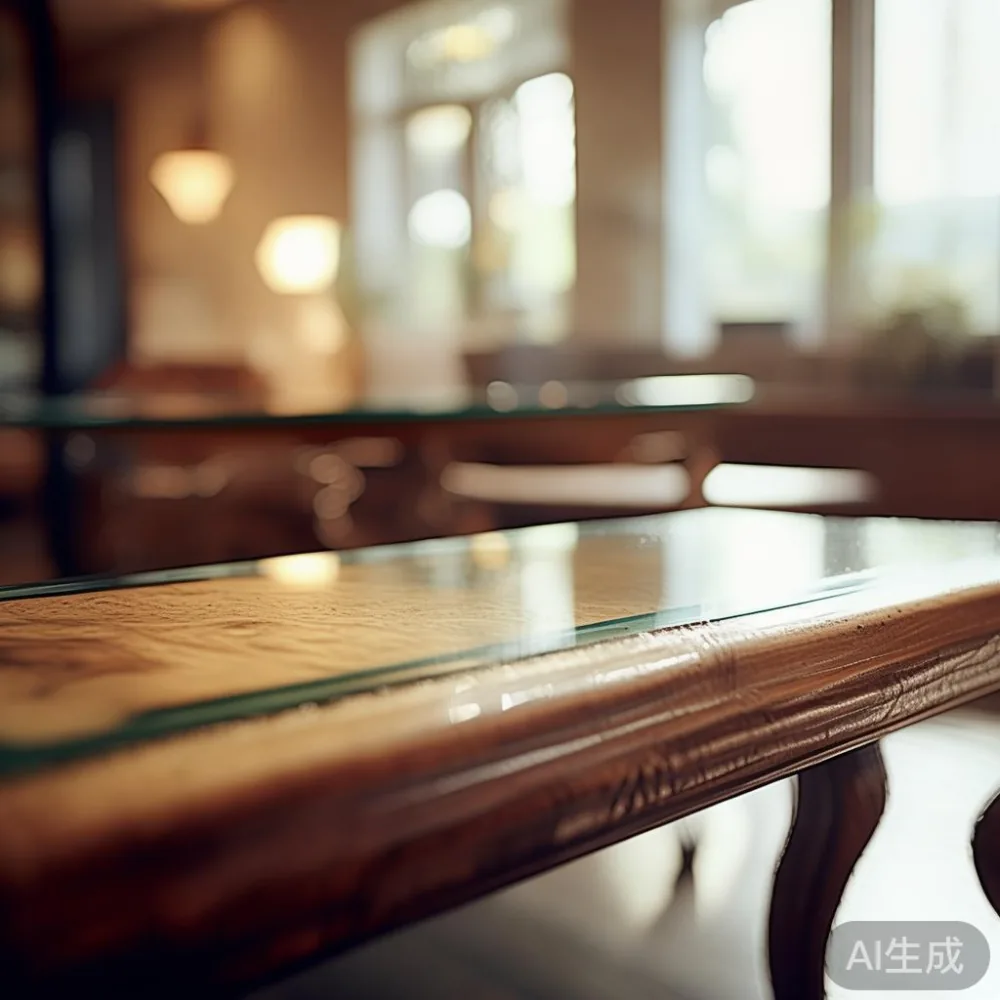
I tested several pieces during a humid week in Singapore last month, including a solid wood dining table with glass insets and a timber-framed wardrobe that had been kept near a bedroom window. A calibrated hygrometer registered 78% relative humidity in one Tampines living room at 9 p.m., while a corridor in Bedok measured 72%. The difference was not the material alone: airflow, wall proximity, sun exposure and how often the air conditioner cycled all affected the readings.
This guide explains how humidity affects wood, glass and metal fittings, with practical guidance for households in Punggol, Tampines and Bedok. MIDHILL is a Foshan solid wood furniture maker established in 2008, exporting to more than 15 countries. Its pieces are backed by a 10-year structural warranty, with lifetime refinishing available for eligible furniture. Orders over US$350 qualify for free international shipping, while Singapore customers should expect GST to be added at checkout.
What does 70–80% relative humidity do to solid wood?
Wood is a natural hygroscopic material. It absorbs moisture when the surrounding air is humid and releases it when the air becomes drier. This exchange can cause expansion across the grain, contraction along it, slight bowing and stress around joints. A change of 10 percentage points in relative humidity can produce visible movement in many domestic hardwoods and engineered solid-wood components.
Singapore sits within the tropics, and indoor relative humidity often ranges from 65% to 80% during humid periods. Air-conditioned rooms may fall to 45% or 50%, especially at night. Repeated cycling between those conditions can stress drawer runners, wardrobe doors and bed frames. It can also cause finished wood to lose sheen unevenly or develop a pale, hazy appearance commonly described as moisture bloom.
A dining table should not be positioned directly against an exterior wall in a Tampines HDB flat if air can barely circulate around it. Leave approximately 15–30 cm from walls where practical, especially near windows, bathroom-adjacent walls and air-conditioner outlets. For solid wood sofas and bed frames, keep fabric, rugs and mattresses from trapping moisture against timber legs or low storage sections.
Use a hygrometer rather than guessing. Place one near the actual furniture, not beside an air-conditioner vent. Readings ideally remain stable, with less than a 5% difference between nearby samples. Ventilation helps more than aggressive heating: open windows only when outdoor humidity and rain conditions are suitable, and use exhaust fans where available. Dehumidifiers are useful in persistently damp wardrobes, but they should be used conservatively so that the room does not swing from 75% to 45% within a few hours.
Is humidity a problem for glass furniture?
Glass itself does not absorb much atmospheric moisture, but humidity can affect the materials around it. Condensation forms when glass or a polished surface is colder than the surrounding air. Droplets can leave temporary water spots, and repeated wetting may encourage dirt to settle around silicone joints or metal clips. Glass furniture therefore needs both humidity control and careful cleaning.
For a glass-top dining table or marble table, wipe condensation promptly with a soft microfibre cloth. Use pH-neutral diluted soap—about 5 ml per 1 litre of water—and dry the surface twice. Avoid ammonia, abrasive pads and acidic cleaners on marble, since they can dull the finish. On tempered glass, check the edges for chips and inspect fixing points every 6 months. A 120 cm table should have its load evenly distributed rather than concentrated at one corner.
Glass furniture can also transmit movement from its frame. If a wooden dining table expands, brackets or clamps around a glass top may develop stress. The correct assembly should allow small dimensional movement while keeping the panel secure. Do not tighten screws beyond the manufacturer’s specification. In a busy HDB dining area, keep hot serving dishes off untreated timber and use coasters or trivets rated for at least 80°C.
How should I prevent moisture damage in a Singapore HDB flat?
Start with location. Avoid placing a solid wood bed frame, nightstand or wardrobe directly beneath a window that receives frequent rain-driven condensation. In Punggol, some rooms have east-facing windows with long periods of filtered sun; elsewhere in Bedok, a top-floor unit may experience stronger heat and humidity than a lower floor. Measure rather than generalise: check conditions over a 7-day period before moving a large wardrobe.
Maintain sensible temperature separation. A sensible target is around 24–27°C during the day, with relative humidity commonly managed between 50% and 65% where the building’s systems permit. These are operating targets rather than promises that every HDB unit can maintain identical readings. Keep air-conditioner filters clean, as restricted airflow reduces dehumidification. Schedule 30 minutes of ventilation after showering or cooking, and close nearby doors so moisture does not travel into bedrooms.
For furniture care, lift items rather than pushing them across tiled floors. Dragging a 70 kg solid wood dining table can damage its legs and stress the floor. Use felt pads beneath every leg, renew them every 6–12 months and rotate pieces occasionally. Wardrobe doors should not be left open for hours in humid conditions, because the inner face can absorb moisture while the outer side remains dry.
Watch for early warning signs: a sticky drawer, a door that catches at the bottom, a faint musty smell or a cloudy patch on a lacquered top. Respond before timber visibly warps. Keep timber dry with coasters, blot spills within 10 minutes and clean glass surfaces every 1–2 weeks in visible cooking areas. Annual inspection of fixings and finish gives a homeowner time to address minor movement before it becomes a structural issue.
Can an air conditioner fully protect furniture in a condo?
Air conditioning lowers humidity while it operates, but a thermostat set to 24°C does not guarantee 50% relative humidity. Some systems cool quickly and then cycle off, allowing humidity to return. A separate hygrometer is therefore more informative than the thermostat display. In a studio condo, place the sensor 1–1.5 m above the floor and 30 cm away from walls, vents and direct sunlight.
Large wardrobes need particular attention because their interior air changes slowly. Leave doors ajar for 15–30 minutes after a room has been ventilated, and avoid storing damp clothing or linen inside. Add a small moisture-absorbing product only if the manufacturer’s capacity suits the wardrobe volume; replace or regenerate it according to its instructions. Strong-smelling chemicals are unnecessary and can affect finishes.
For a solid wood sofa, keep it at least 30 cm from an external wall where space allows. This reduces condensation and makes inspection easier. For a solid wood bed frame, check the centre rail and slats every 6 months. Replace damaged fasteners rather than tightening all joints aggressively. The frame may flex slightly under normal use, especially in a queen-size bed rated for 250–300 kg.
Condo owners with balcony doors should manage the transition zone. A glass balcony door can create warm, humid air beside a cooler interior surface. Keep doors closed when outdoor relative humidity exceeds indoor levels and rain is approaching. This simple habit prevents warm moist air from settling on nearby timber or glass furniture.
Which wood finishes and construction details handle humidity better?
No finish makes wood immune to humidity. A sealed lacquer, hardwax oil or conversion varnish can slow moisture exchange and simplify cleaning, but each requires maintenance. Film finishes often have a more uniform sheen; oil finishes look tactile but may need more frequent care in humid conditions. Ask for the exact finish used on the piece, then follow its maintenance interval rather than applying an incompatible product.
Look for solid wood joinery, controlled gaps and hardware designed for dimensional movement. Drawer boxes should use wood runners where appropriate, while a dining table’s base should be assembled with mechanical fasteners and durable adhesives. Mid-century and post-modern light luxury designs can remain visually restrained while using stable hardwood components and slim profiles suited to urban rooms.
The phrase how to choose American bed is often used when comparing upholstered frames, but construction and humidity performance matter more than nationality. Ask whether the frame is solid wood, how the slats are spaced and whether upholstery can be removed for cleaning. For example, slats spaced no more than 8–12 cm apart provide suitable support for a queen mattress, subject to the bed’s stated rating.
For those comparing shapes, French bed vs Mid-century modern bed is largely a question of proportions and room context. A French-style platform with a 30 cm headboard may need 90–120 cm of clearance behind it; a slimmer mid-century frame can reduce that requirement. The practical comparison should include rail height, mattress clearance, corridor fit and moisture care—not only appearance.
How do glass, marble and solid wood behave in the same room?
A dining arrangement can combine a solid wood base with a marble table top, while a glass cabinet uses transparent panels within a timber frame. Each material needs a different response to humidity and cleaning. Timber needs controlled moisture exposure, glass needs dry wiping and periodic fitting checks, and marble needs pH-neutral products. These routines can be assigned different frequencies: glass every 1–2 weeks, marble after spills, and wood finish inspection every 3–6 months.
Humidity may also reveal workmanship problems. Poorly aligned glass clips can create noise or pressure marks; uneven silicone joints can collect residue; a wardrobe with flat-pack particleboard may swell more noticeably than a well-made solid wood component. Inspect a delivered wardrobe for warped panels, rubbing doors and misaligned hinges before accepting it. Kitchen and dining cabinetry should also be checked against wall alignment, especially in older HDB blocks with uneven plaster.
French light luxury often uses pale woods, reflective glass and slender metal lines. The material mix looks airy in a compact flat, but glass should not be positioned where condensation repeatedly forms. American light luxury tends toward generous upholstery and substantial timber frames. For a solid wood sofa in a 35 m² living room, allow approximately 90 cm of circulation behind it and keep it clear of damp exterior walls.
When sourcing distinctive pieces, the phrase for sale Japandi furniture may bring up broad showroom descriptions, yet local dimensions still matter. Confirm a nightstand is no more than 45–50 cm wide, a dining table has at least 75 cm around each seated position, and a bed frame fits the lift and corridor. These figures prevent delivery-day surprises in older estates where lift openings can measure only about 90 cm wide.
How do you get furniture through narrow HDB lifts and corridors?
Measure the entire route before ordering. Record the lift door width, lift car dimensions, corridor turns and the width of the HDB flat’s entrance. A queen bed frame may be 150–180 cm wide and impossible to turn through a 90 cm opening unless the frame disassembles. A dining table with a 180 cm top should separate into sections of roughly 90 cm or less. Ask for packaging dimensions, component weights and delivery terms before confirming the order.
For a solid wood dining table weighing 65–95 kg, more than 2 people may be needed for lifting. Wardrobes can exceed 80 kg, so professional assembly is sensible. Keep packaging off wet floors and inspect cartons immediately. Delivery within Singapore commonly takes 3–7 business days after production, although custom finishes and remote addresses can extend this to 7–14 days. Confirm the exact schedule, GST and assembly charges in writing.
Protect the route as well as the furniture. Measure stair and corridor clearances in centimetres, reserve a turning area of at least 150 cm for a long wardrobe where possible, and check whether the lift has a 1,000–1,500 kg capacity. A nightstand may fit easily, but its access path can still be blocked by shoes, bicycles or a bulky neighbour’s delivery.
Once inside, let solid wood acclimatise to room conditions for 24–72 hours before fitting doors or tightening moving parts. Keep protective covers on for 1–2 weeks in humid weather, but avoid trapping moisture beneath them. The furniture should be positioned for stable conditions, not merely for the most attractive photograph.
How should a bedroom be styled around an American bed?
If you are learning how to style American bed in apartment, begin with scale and moisture exposure. A queen bed with a 25–35 cm headboard works in many Singapore bedrooms, while a 45–60 cm upholstered frame may crowd a compact HDB room. Place timber legs away from exterior walls, allow air to circulate beneath the bed and keep the headboard 15–30 cm from a cold glass surface where possible.
A nightstand should be large enough for a 30 cm lamp and a 15 cm book without overloading a narrow surface. Keep electronics away from humid window areas, and route cables so they do not restrict ventilation. The Italian light luxury bed is another useful reference for buyers who want a refined upholstered frame, but check fabric composition, removable covers and local cleaning costs before making a choice.
For design comparisons, the phrase best Scandinavian bed for 2026 points to clean lines and pale timber, yet shoppers should examine joinery and finish durability rather than rely on a trend label. A compact 120 cm-wide bed may suit a child’s room; a queen at 150–160 cm is more practical for adults. Confirm the mattress size, internal storage clearances and access to wall outlets.
Humidity control should complement the layout. Use a bedside hygrometer if a room feels persistently damp, inspect under-bed areas monthly and clean upholstered panels every 2–3 months. Keep bedding dry before making the bed after airing, and avoid placing laundry dampness against the headboard. These habits reduce both moisture exposure and trapped dust.
What maintenance routine suits Southeast Asian conditions?
Create a simple calendar rather than waiting for damage. Check hygrometer readings daily during humid spells, glass surfaces weekly, drawer and door movement every 3 months, and structural fixings every 6 months. Reapply the specified wood-finish care product at the maker’s recommended interval, usually every 6–12 months depending on finish, exposure and use.
Blot water immediately, use coasters beneath drinks and avoid leaving damp objects on a nightstand or wardrobe top. For glass furniture, clean with a microfibre cloth and inspect seals and clips every 6 months. For a marble table, use a separate soft cloth and a pH-neutral cleaner. Do not mix cleaning products, and keep silicone away from children and pets.
Monitor seasonal changes. During the more humid months, increase ventilation and inspect furniture near windows every 2–4 weeks. During drier periods, avoid sudden heating that causes rapid moisture loss and cracking. Gradual adjustments of 5–10 percentage points are easier for timber than abrupt changes from 75% to 35%.
MIDHILL offers lifetime refinishing for eligible solid wood furniture, which can be valuable after years of tropical use. The 10-year structural warranty supports confidence in joinery and load-bearing construction, but it is not a substitute for indoor care. Customers should retain the order record, follow care guidance and report movement, joint failure or finish defects promptly.
For practical purchasing decisions, compare delivered dimensions with the lift, corridor and doorway measurements. Expect local prices to be shown in SGD with GST added where applicable. A 180 cm solid wood dining table may cost around SGD 2,800–4,600 depending on timber, finish and design; a queen solid wood bed frame may range from SGD 1,500–3,200. Glass furniture may add SGD 400–1,500 depending on panel construction and fittings. These are planning ranges rather than fixed quotations.
The best protection is consistent: stable humidity, sensible placement, careful cleaning and an inspection routine. Singapore’s climate does not make solid wood furniture impractical. It does mean that owners should account for moisture movement, condensation and delivery access from the beginning. For glass furniture, timber frames and marble surfaces, a little disciplined care can preserve appearance and structural integrity across many years.