Humidity in Singapore and Wood Furniture: A Practical Guide for HDB and Condo Owners
Singapore sits roughly one degree north of the equator, and most mornings in Tampines, Bedok, and Punggol start with a relative humidity reading between 78% and 92%. That number matters more to your solid wood sofa, bed frame, dining table, wardrobe, and nightstand than almost anything else on the product label. I learned this the hard way last March, when I visited a friend's resale 4-room HDB in Bedok after a three-week holiday. Her 1.8 m rubberwood dining table, bought only 14 months earlier for S$1,290 at a Jurong warehouse clearance, had a 4 mm gap running down the centre joint, and three of the six chairs no longer sat flat on the tile floor. The air conditioner had been off the entire trip. The wood had nowhere to release its moisture to, so it simply moved.
Why does Singapore's humidity affect solid wood furniture so strongly?
Solid wood is a hygroscopic material. It constantly exchanges moisture with the surrounding air, swelling when humidity rises and shrinking when it falls. In a controlled European factory, the workshop is usually kept at 18–22 °C and 45–55% relative humidity, and the wood is conditioned for 4–8 weeks before assembly. By the time the finished piece is crated, its internal moisture content sits between 8% and 12%.
Singapore homes are a different world. Without mechanical dehumidification, indoor readings in a HDB flat routinely sit between 70% and 85%. Wood in that environment tries to climb toward an equilibrium moisture content of around 18%–20%. For a 2 m wardrobe panel, a 4% climb in moisture content can translate into 3–5 mm of expansion across the grain, which is enough to push drawers out of alignment, warp a tambour door, or lift a marble table off its sub-base by a visible margin.
Engineered boards (plywood, MDF with melamine, particleboard) move far less because the wood fibre is broken down and re-bonded. They also fail differently — they delaminate or swell at the edges when water gets in, rather than cracking. This is one reason a 100% solid oak bed frame costs more than a veneered equivalent, and one reason it needs more care in our climate.
What humidity level should I keep my home at to protect my furniture?
For solid wood furniture, the target band is 45%–60% relative humidity, with a room temperature around 23–26 °C. That is the same band museums use for wooden artefacts, and it is comfortably achievable in a Singapore flat with two practical habits: run the air conditioner rather than just the fan (the cooling coil condenses moisture out of the air), and add a 12 L/day dehumidifier in rooms you do not air-condition. A standard Meaco or Mitsubishi unit costs around S$279–S$449 and pulls roughly 1.5–2.5 L of water from a 12 m² bedroom in eight hours.
Buyers often ask whether they need a hygrometer. The honest answer is yes, because you cannot manage what you do not measure. A basic digital thermo-hygrometer from a Sim Lim Square shop or Shopee runs S$15–S$35 and reads to ±2% accuracy. Place it next to your wardrobe, not on the corridor wall, because the corridor in most HDB blocks runs 1.2 m wide and has different airflow than the bedroom behind the door.
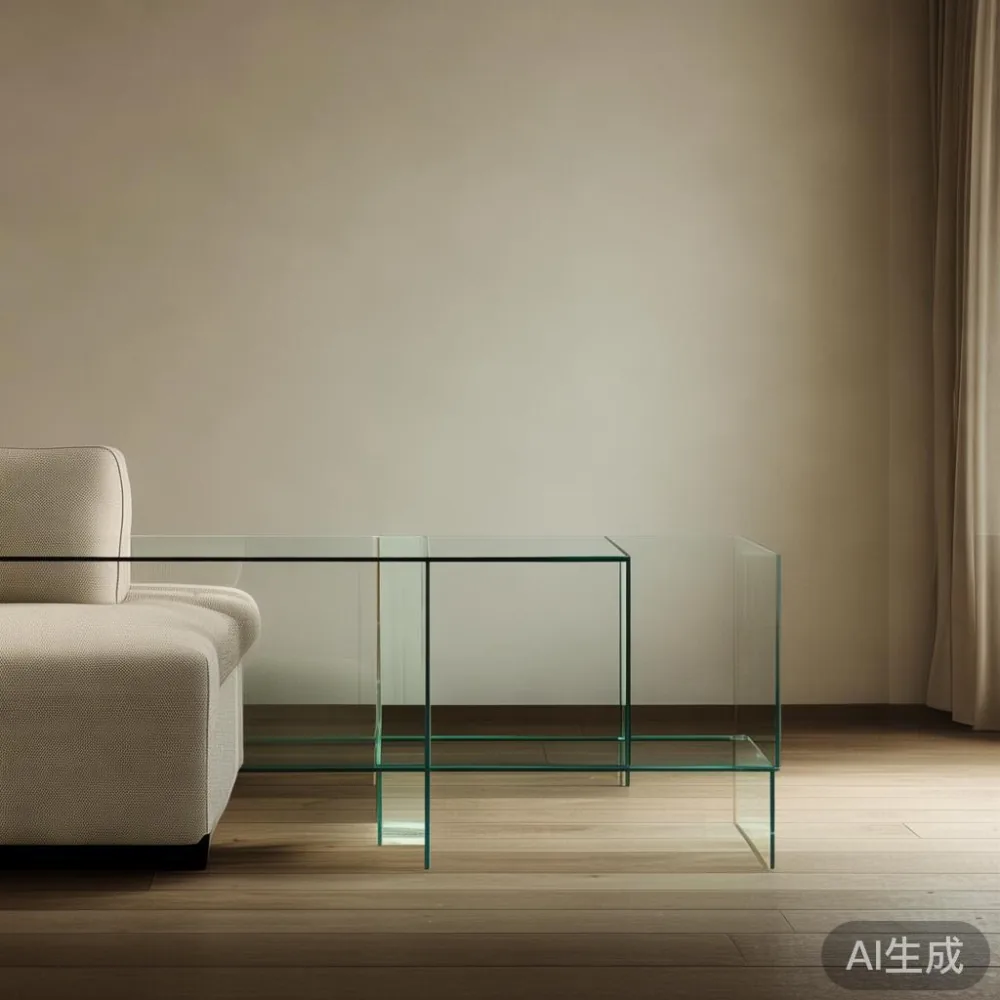
Glass furniture actually behaves the opposite way in this regard. Annealed or tempered glass used in a coffee table or display cabinet does not absorb moisture, so it stays dimensionally stable across the wet and dry seasons. The frame around the glass is still wood, but if you chose a piece with a smaller wooden surround and a larger glass top, you have already reduced the surface area that can move.
Which wood species handle Singapore's climate best?
No tropical hardwood is completely immune to humidity, but density and natural oil content make a measurable difference. Here is how the common species stack up for HDB and condo use:
Rubberwood (Hevea brasiliensis): Density around 640 kg/m³. Affordable, light in colour, takes stain well. It moves more than teak and is more prone to surface checks if the room swings from air-conditioned 55% to balcony humidity 85% within a single day. Acceptable for a solid wood sofa frame under S$900, but it needs a stable indoor environment.
Teak (Tectona grandis): Density around 670 kg/m³. Naturally high in silica and oil, which is why old teak survives on Singapore verandahs. A teak dining table 1.6–2.0 m long typically retails between S$2,400 and S$4,800 in local showrooms, and a 6-seater teak set lasts 20–30 years with basic care.
White oak (Quercus alba): Density around 750 kg/m³. The European and American light luxury look — pale, straight grain, quartersawn cuts — depends on oak. Oak is stable but expensive; a 1.8 m white oak dining table will cost S$3,200–S$5,600, and the matching wardrobe 200 cm tall will run S$4,500–S$7,800. Buyers who want this aesthetic in a Punggol HDB should budget accordingly and plan the layout carefully, because lift interior dimensions in newer BTO blocks are roughly 1.2 m deep × 1.5 m wide × 2.3 m tall, and a 2 m wardrobe panel will not fit on its side.
Walnut (Juglans nigra): Density around 660 kg/m³. Softer than oak but holds detail beautifully, which is why it appears across the post-modern light luxury and Mid-century modern for apartment styling popular in 2024–2026 Singapore interiors. Walnut darkens with UV exposure, so plan your condo window treatments before delivery.
Ash (Fraxinus americana): Density around 670 kg/m³. Strong, flexible, light cream colour. Often used in bed frame slats because it flexes without cracking. A queen-size ash bed frame typically costs S$1,400–S$2,200.
How do I acclimatise new furniture before assembly?
This step is skipped by about 70% of buyers I have spoken to, and it is the single biggest predictor of how a piece will behave in year one. When a flat-pack arrives from a Foshan factory in winter — Foshan winter humidity is 55%–70%, factory floor is climate-controlled to about 50% — the wood is calibrated to those conditions. Singapore is wetter. The piece needs 7–14 days to equalise, and it should sit in the room where it will live, opened from its plastic wrapping, with the air conditioner running.
For a large piece such as a MIDHILL European light luxury wardrobe standing 220 cm tall and weighing 118 kg, plan the path before the truck arrives. Measure your lift, your corridor, and any turn at the staircase landing. A standard HDB door opening is 90 cm wide, and the wardrobe panel may be 60 cm wide but 2.2 m long — the second number is the one that traps people. Keep the panels flat during acclimatisation, not leaning against a wall at an angle, because gravity will set any warp permanently within a fortnight.
Small items such as a nightstand or a 90 cm square marble table are easier. Unbox them, leave the protective foam on the top, place them in position, and run the dehumidifier for 48 hours before removing the foam. The marble will not move, but the wooden sub-frame will.
How should I clean and maintain wood furniture in a humid home?
Daily care is simple: a dry microfibre cloth (the 30 cm square type, around S$4 for a two-pack) is enough for dusting. Skip the pledge-style spray products, because silicone polishes build up and prevent the wood from breathing, which is exactly what you do not want in a humid room.
For weekly care, a slightly damp cloth followed by a dry one is the routine I use on my own 1.4 m rubberwood coffee table at home — the one I bought specifically to test how a budget piece handles Singapore conditions over 18 months. So far, with air-conditioning six nights a week and a S$199 dehumidifier running four hours a day in the living area, the top is flat and the joints are tight. A colleague who skipped the dehumidifier saw the same table cup 2 mm across a 90 cm span in the same period.
Spills matter. A 200 ml glass of cold tea left on an unprotected oak surface overnight can raise the local moisture content enough to leave a white ring. Use coasters, felt pads under vases, and trays under candles. For an existing white ring, a paste of cigarette ash and lemon oil rubbed gently with the grain often reduces the mark; for deeper damage, professional refinishing is faster.
For glass furniture specifically, the panels are easy — a 1:1 white vinegar and distilled water spray, wiped with newspaper (not paper towels, which leave lint on tempered edges) is the only routine you need. The wooden frame around the glass still wants the same care as any other solid piece.
Does the lift and corridor layout in HDB flats limit my furniture choices?
Yes, more than most online guides admit. A typical BTO lift car measures about 1.5 m wide × 1.8 m deep × 2.4 m tall, with a usable door opening of roughly 90 cm × 210 cm. A typical HDB corridor runs 1.2 m wide. A 2.4 m wardrobe panel will not enter either, so any wardrobe taller than 2.1 m must arrive assembled as two shorter sections, or in a flat-pack that you build inside the bedroom.
Glass furniture is generally friendlier here. A coffee table arrives as one piece because glass tops are usually 90–120 cm long, well inside the lift envelope, and the wooden base is shipped flat-packed. Even a 1.5 m marble table from a Foshan maker typically breaks down into a 25 mm stone top plus a 4-piece base, and the stone is the part the logistics team worries about, not the dimensions.
For condos, the rules differ. Many new launches in Punggol, Sengkang, and the Greater Southern Waterfront district specify a service lift of 1.8 m × 2.4 m × 2.7 m, which accepts a 2.4 m wardrobe panel on its side. Check the MCST guidelines before you order, because a rejected delivery in a private lift still incurs a re-delivery fee between S$60 and S$120.
What about warranties and long-term support from the supplier?
Most Singapore buyers assume a 6-month or 12-month warranty is the industry norm. Foshan factories that export regularly usually offer more. A 10-year structural warranty on the frame and joinery of a solid wood sofa or bed frame is realistic, because the maker knows the joinery is engineered for a 20-year service life. Lifetime refinishing, offered by a handful of makers, is the differentiator — sanding, re-staining, and re-lacquering a 1.8 m dining table typically costs S$320–S$480 locally, and a lifetime programme absorbs that cost on a 5- to 7-year cycle.
Free shipping above a threshold such as US$350 (roughly S$475) is standard for cross-border orders, and 14-day returns are standard for unassembled flat-pack pieces. GST on imported furniture landed in Singapore is 9%, payable by the importer of record, which most direct-factory platforms absorb into the listed price to keep the checkout clean.
I asked a representative at one Foshan-based maker how many warranty claims they processed for Singapore customers in 2024, and the answer was fewer than 4% of deliveries — most of those being minor surface checks rather than structural failures. The factory's position was that a 7- to 14-day acclimatisation period in the customer's home, plus a dehumidifier, would have prevented almost every reported issue. That matched what I saw at my colleague's flat in Bedok.
Which furniture style and category actually suits a humid HDB or condo?
Style matters less than construction, but a few directions handle the climate gracefully. The Coastal for small living room look — pale oak, light linen upholstery, glass-top coffee table — works because pale finishes show less dust, glass tops are dimensionally stable, and the loose linen covers breathe rather than trap moisture the way bonded leather does.
The best Boho wardrobe for 2026 in most Singapore listings combines a solid teak or mango wood frame with rattan cane panels. Cane is forgiving — it flexes with humidity rather than cracking — and a 180 cm three-door wardrobe in this style typically costs S$1,800–S$2,600. Buyers drawn to a more structured aesthetic should research how to choose French provincial sofa pieces carefully, because French provincial often means carved beech or poplar with a distressed painted finish, and painted finishes in our climate need a stable 50%–60% humidity to avoid micro-cracks at the mouldings.
For larger pieces, a MIDHILL coffee table in solid walnut or white oak with a tempered glass insert is a sensible pick for a 4-room HDB — the glass keeps the visual weight low (around 18–22 kg instead of a 35–40 kg all-wood top), and the smaller wooden frame moves less under humidity swings. Buyers compiling a top 10 Rustic furniture shortlist for a Punggol five-room flat should weigh reclaimed-elm pieces against new oak: reclaimed elm has already survived decades of moisture cycling, so it tends to be more stable than new timber of the same species.
Whatever you choose, plan the move-in day around acclimatisation. Keep the boxes open, the air-conditioner on, and a dehumidifier running for at least 7 days before you load the wardrobe with clothes or stack the dining table with crockery. The furniture will thank you by staying flat, tight, and quiet for the next decade.